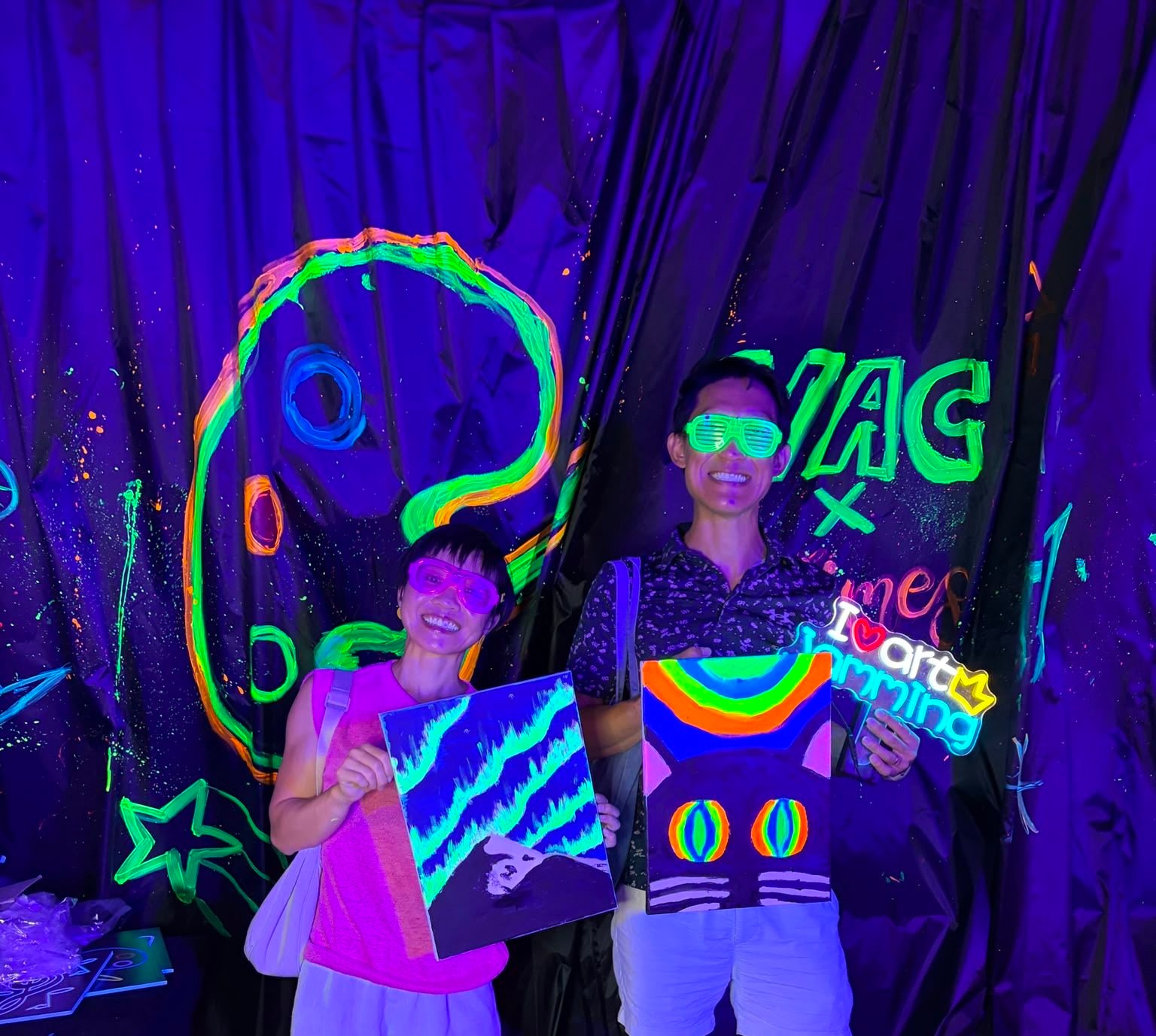
Acrylic Painting on Canvas Team Bonding Art Jamming Singapore Visual Arts Centre


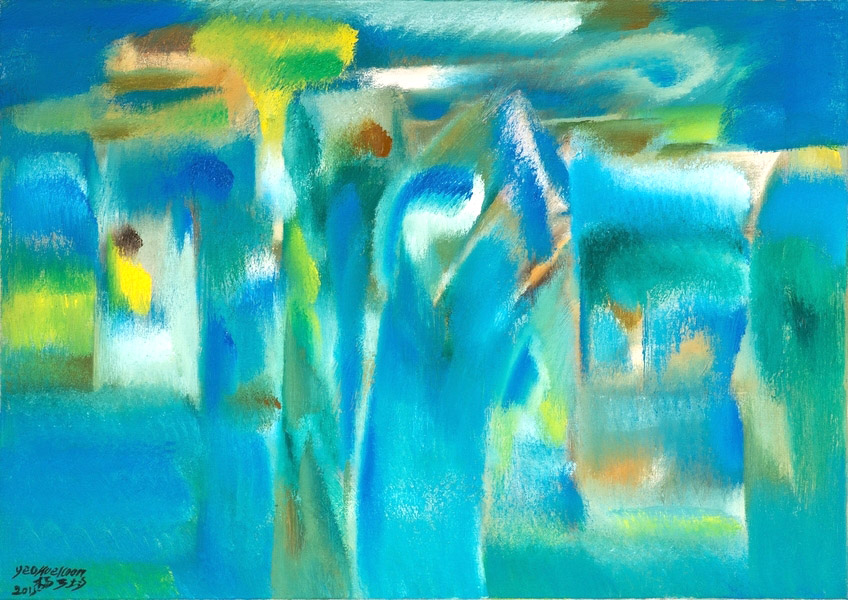
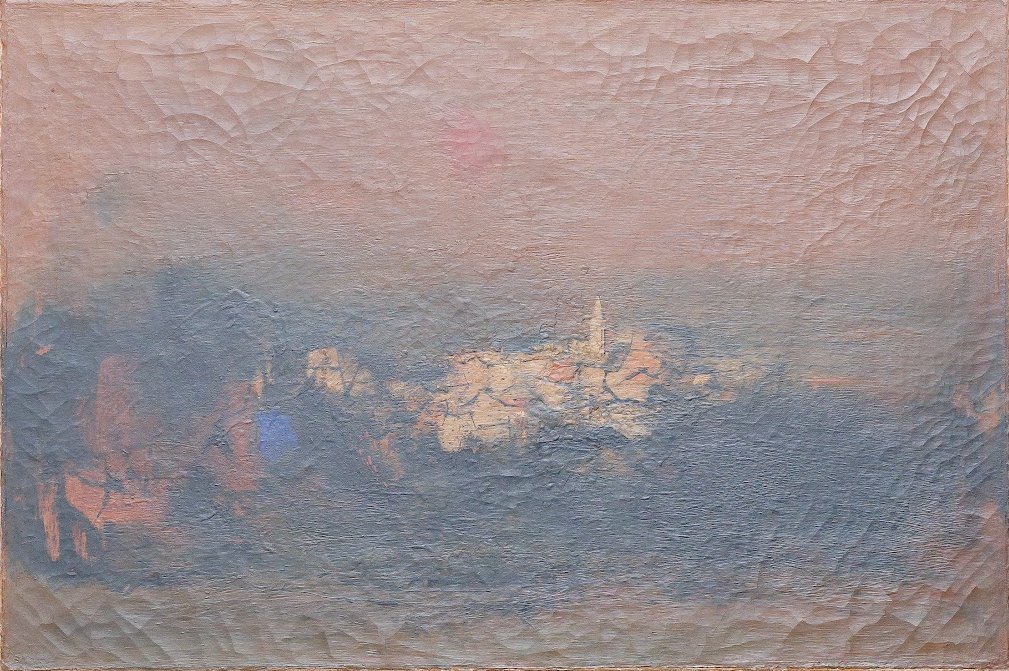
Yeo Hoe Koon
Oil on Canvas
64 x 89.5 cm
Price Range: $16,000 - $20,000
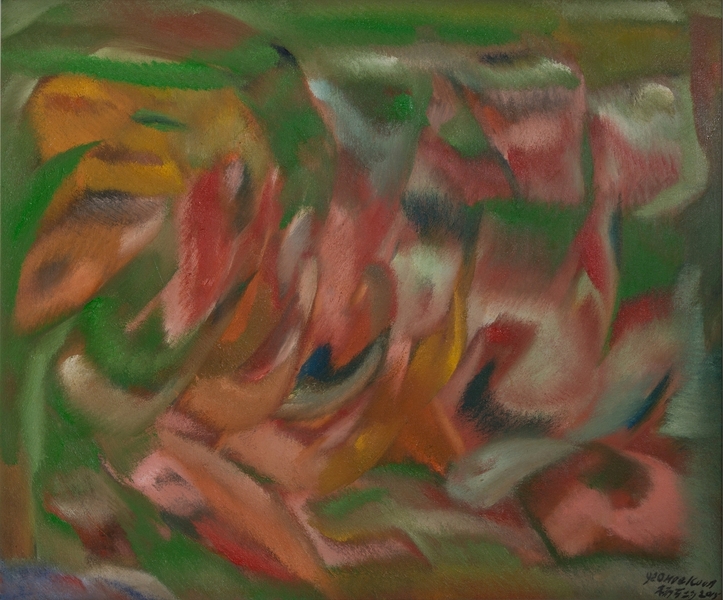
Yeo Hoe Koon
Oil on Canvas
101 x 123 cm
Price Range: $26,000 - $32,000
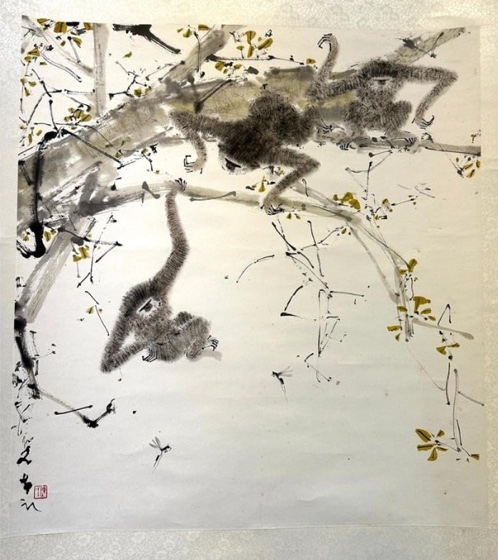
Chen Wen Hsi
Chinese Ink and Color on Paper
50 x 54cm
Price Range: SGD $42,000 - $50,000
Cheong Soo Pieng
Red Tone
61 x 91.5cm
Price Range: SGD $108,000 - $138,000
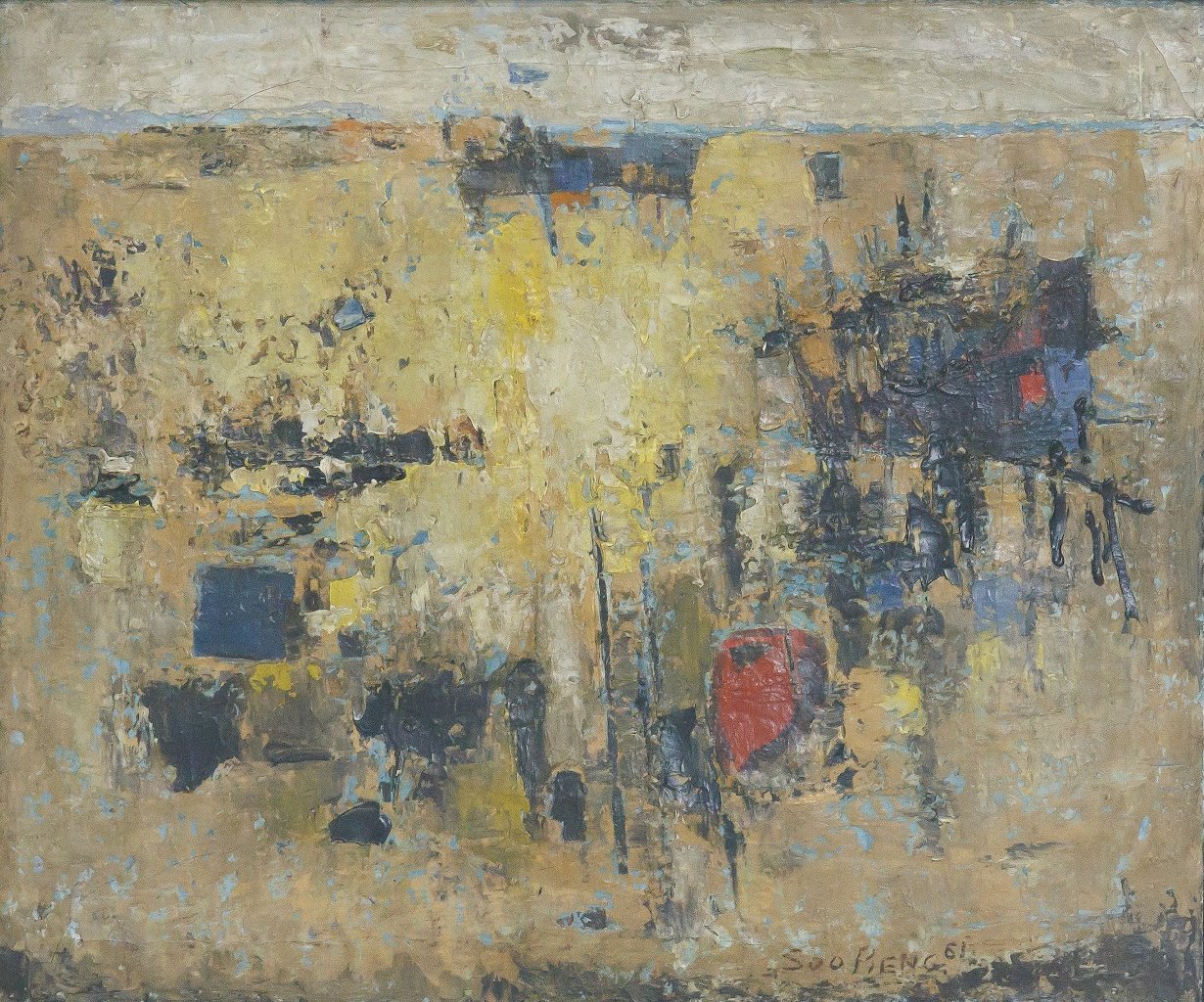
Cheong Soo Pieng
Abstract Landscape
50 x 61cm
Price Range: SGD $95,000 -$128,000
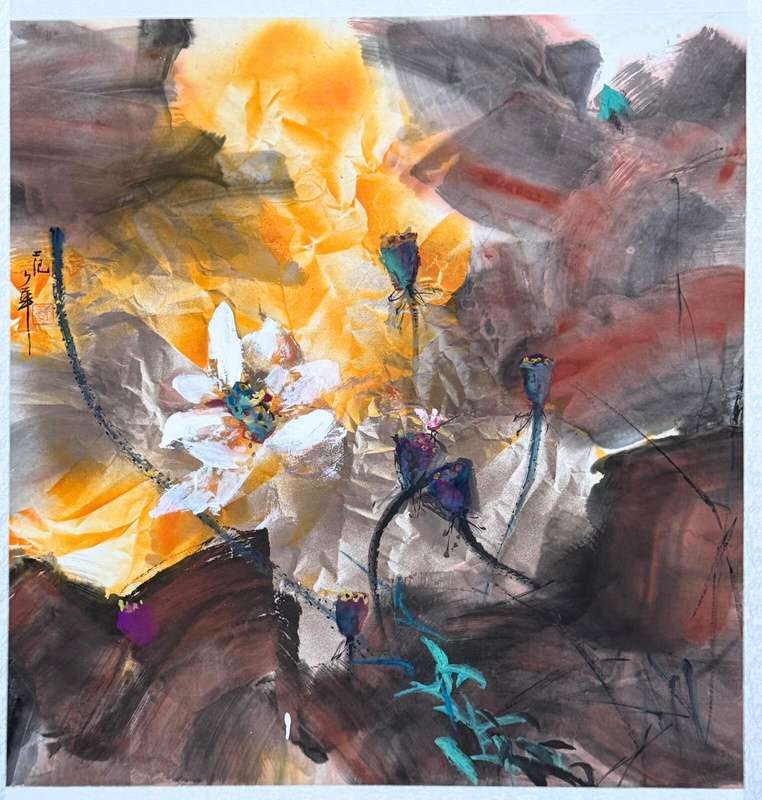
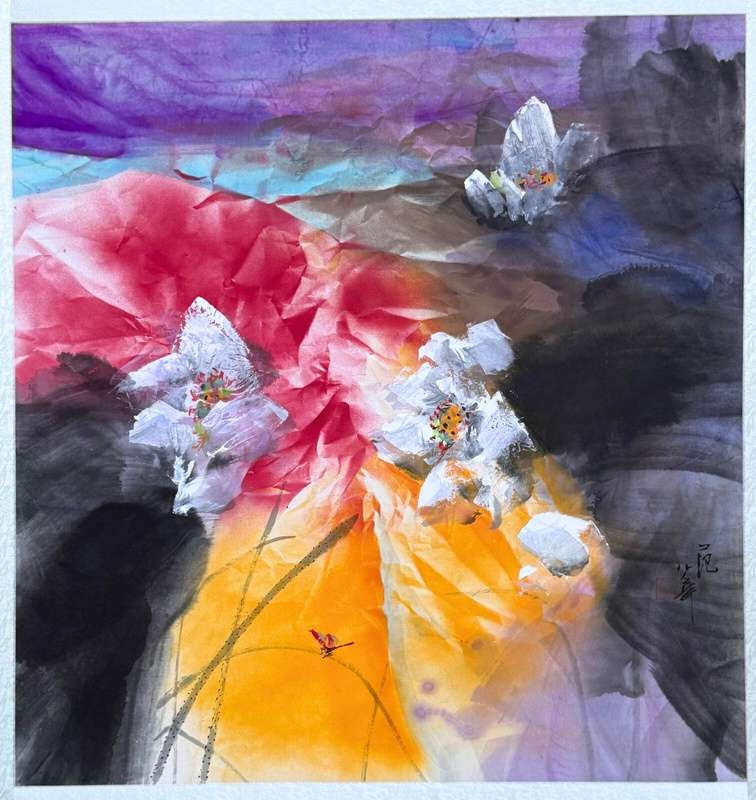
Fan Shao Hua
Chinese Ink and Colour on Paper
100 x 100cm
Price Range: SGD $9,800 - $14,800
Fan Shao Hua
Chinese Ink and Colour on Paper
100 x 100cm
Price Range: SGD $8,800 - $13,800
Navigating the DSA-SOTA & DSA-MOE Visual Arts admission process in Singapore can be complex, with each school setting its own expectations and standards. This complete guide breaks down the key visual arts portfolio requirements for both DSA-SOTA and DSA-MOE applications, giving you a clear understanding of what schools are really looking for, from artwork selection and structure to process work and interview readiness. Whether you are just starting or refining your visual arts portfolio, this guide will help you build a submission that stands out.
All students applying for DSA-SOTA & DSA-MOE Visual Arts must submit a visual arts portfolio showcasing their talent, potential and passion for art, which demonstrates their technical skills, creativity and originality, and ability to communicate ideas visually. Students will also be required to attend interviews and/or art tests during their application, depending on the school’s requirements.
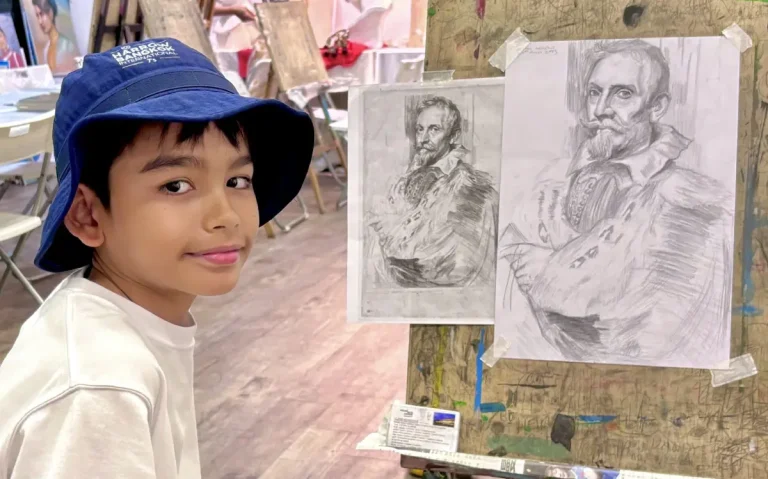
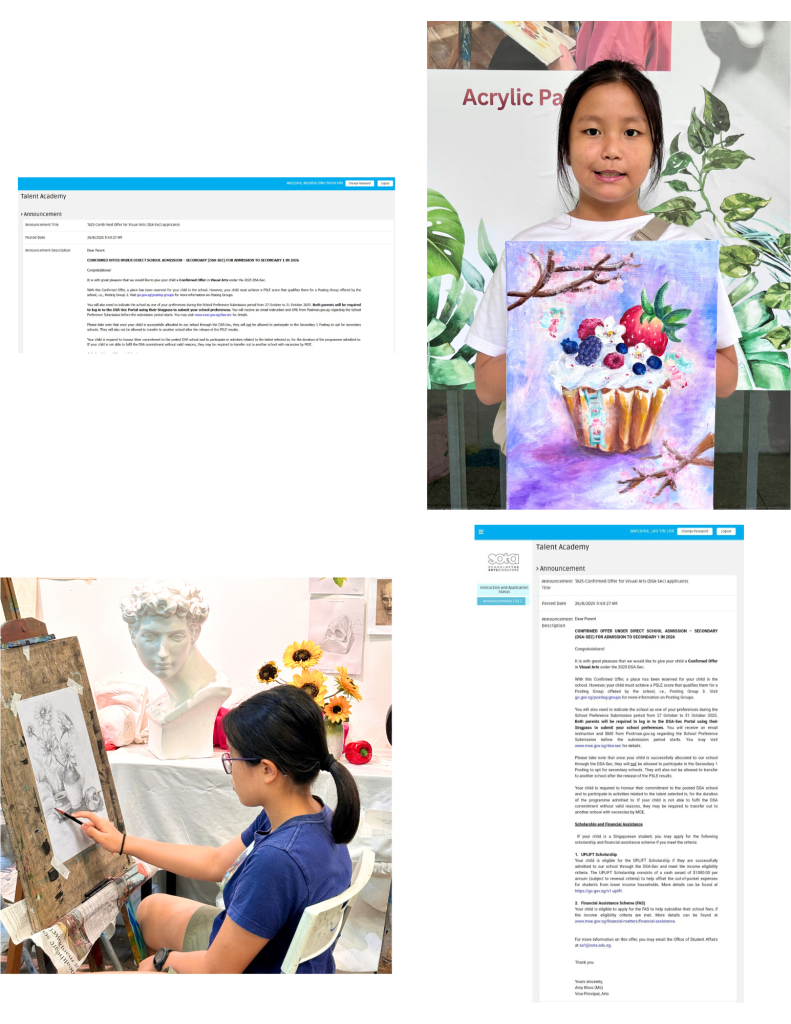
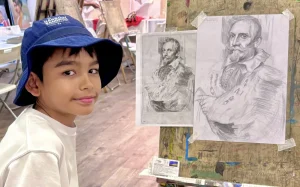
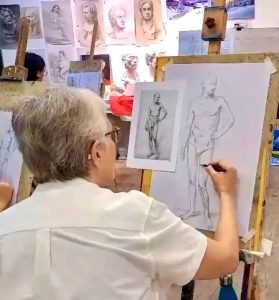
Portfolio Preparation – Our Visual Arts Centre DSA (Kids) Portfolio student showcasing his artwork
A strong DSA-SOTA & DSA-MOE Visual Arts portfolio must show:
A well-prepared DSA-SOTA & DSA-MOE visual arts portfolio should include the following key components, aligned with both SOTA and MOE expectations.
1. Number of Artworks required in DSA-SOTA & DSA-MOE Visual Arts Portfolio
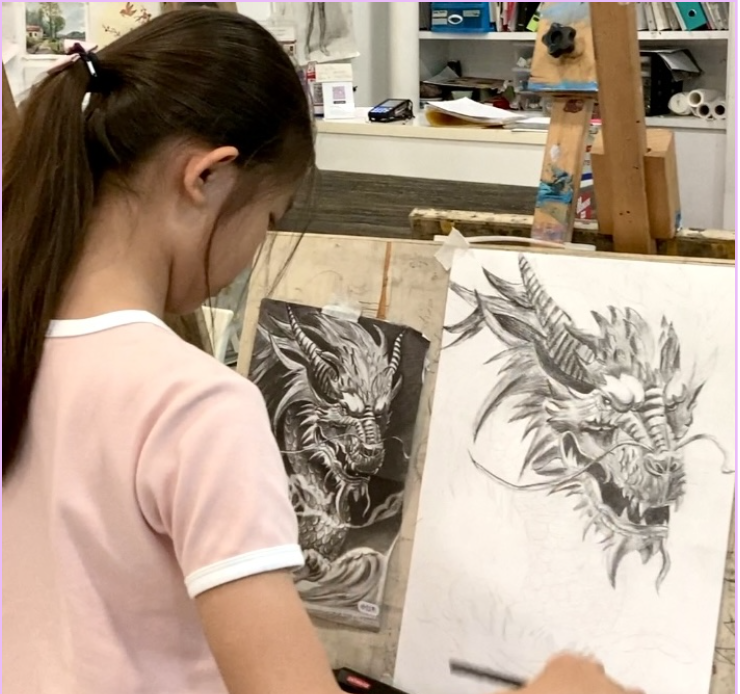
Portfolio Preparation – Our Visual Arts Centre DSA (Kids) Portfolio student working on her pencil drawing
2. Types of Artworks
Observational Drawings
Observational drawings, such as Still Life Drawings, Landscape Drawings, and Figure Drawings, are essential in visual art portfolios, as they showcase the student’s understanding of proportion, perspective, light and shadow, and accurate observation
Creative / Imaginative Artworks
Artworks covering personal themes, such as memories, culture or identity, conceptual storytelling, and original ideas are also great to add to your visual art portfolio. Schools look out for the creativity and imagination of students, and the meanings behind their artworks.
Variety of Mediums
Students must show range and versatility in the mediums they use, such as Pencil Drawing, Acrylic Painting, Watercolour Painting, Digital Art, Mixed Media, etc.
Personal / Expressive Artworks
Students can also show their identity, individuality and personality through their artworks via a self-portrait or an emotional expression piece.
3. Process Work
Many schools value the sketches, drafts, development process, and idea exploration of your artworks. These processes showcase your thinking ability, your artistic growth over time, and your problem-solving skills.
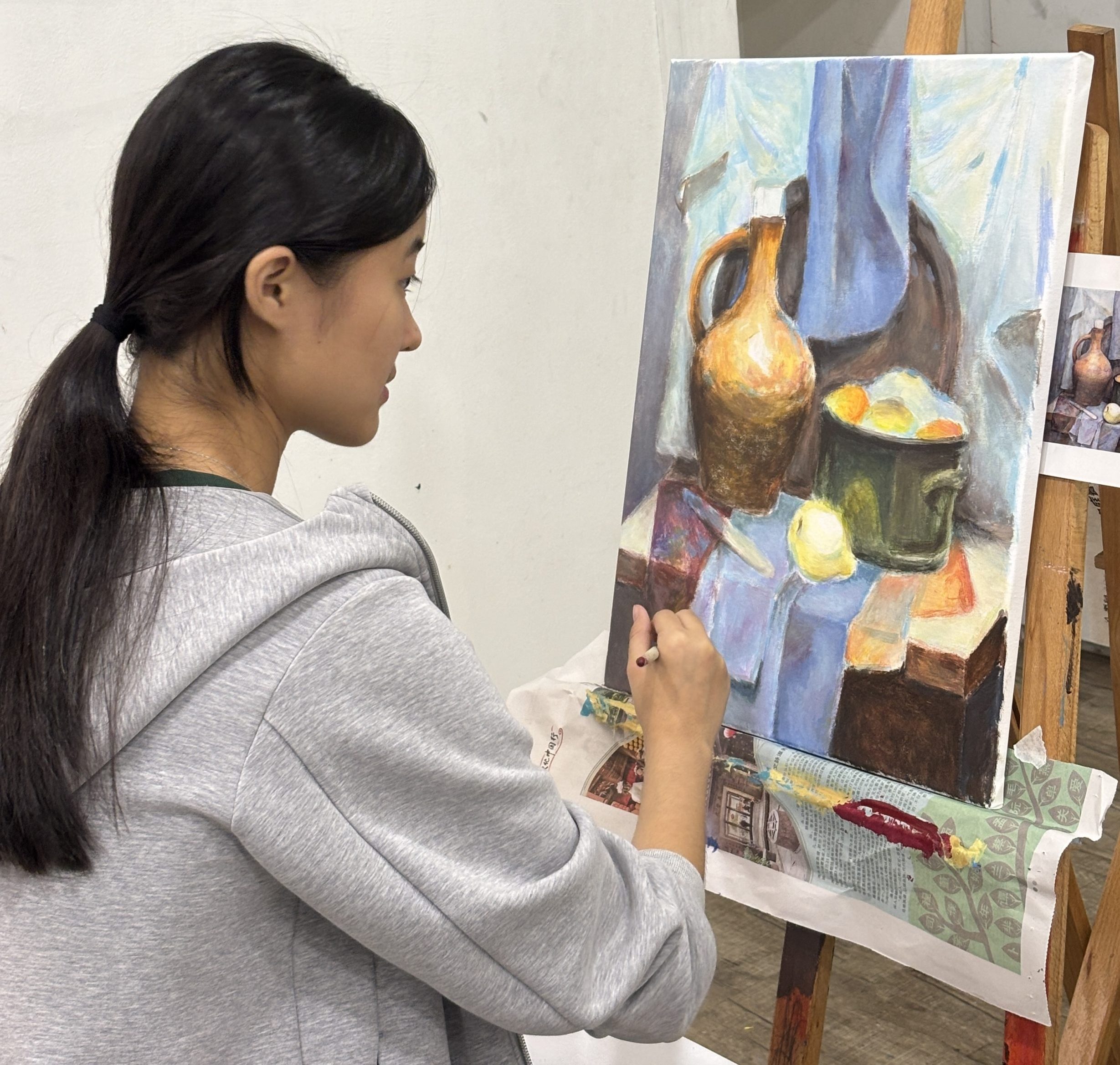
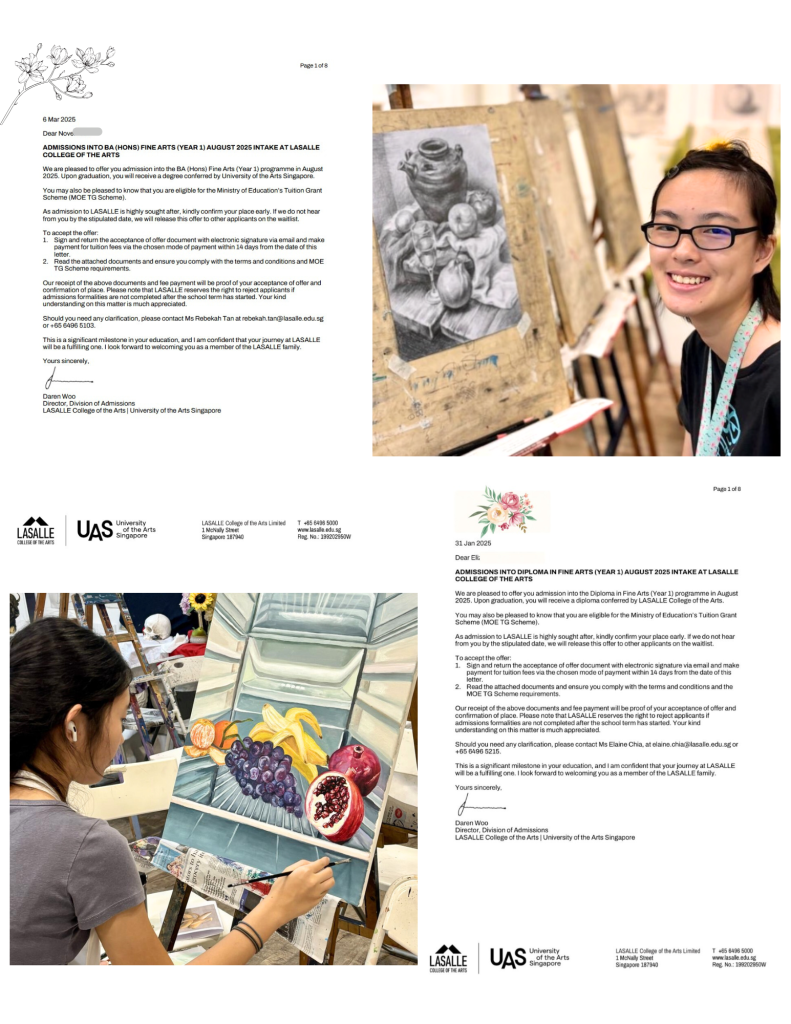
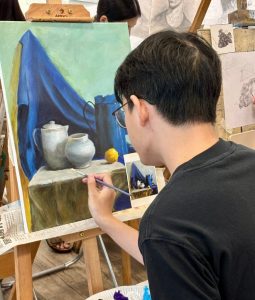
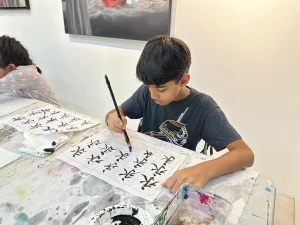
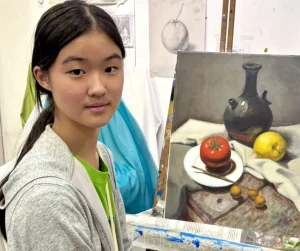
Portfolio Preparation – Our Visual Arts Centre DSA (Kids) Portfolio student preparing their still-life painting
4. Thematic / Cohesive Direction
A student’s visual art portfolio should not be a random mix of scattered works. Instead, their visual arts portfolio should be cohesive and show a theme, artistic direction, or personal journey that they want to showcase to the schools.
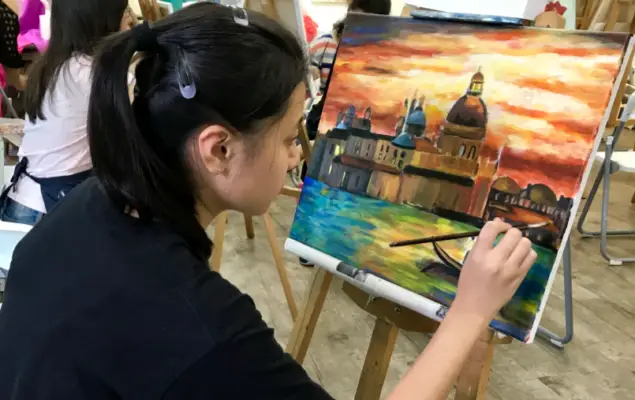
Portfolio Preparation – Our Visual Arts Centre DSA (Kids) Portfolio student working on her acrylic landscape painting
Your visual arts portfolio should be clearly organized and professionally presented to ensure your work is easy to understand and assess.
1. Artwork Labelling
Each of the students’ artwork in their visual arts portfolio should include the title, size and date of their art piece, the medium that they used, and a short description of what they created.
2. Visual Arts Portfolio Format
Depending on the school they want to apply to, students may be asked to present their visual arts portfolio in a physical format, either in a folder or mounted up, a digital PDF version, or an email submission for some schools.
3. Quality & Organisation
The student’s visual arts portfolio must show a clear layout, clean presentation, logical sequencing of their artworks, and display a strong first impression to the schools of their choice.
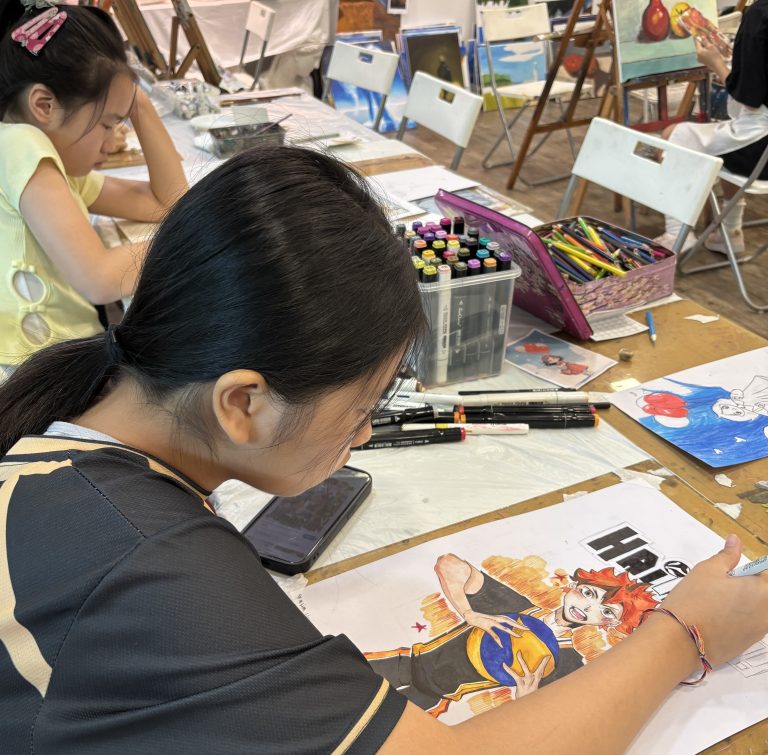
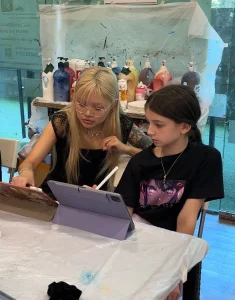
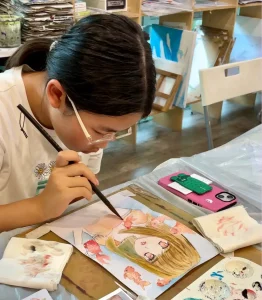
Portfolio Preparation – Our student working on her creative manga drawing
In addition to the student’s visual arts portfolio, many schools require additional materials such as the student’s art achievements, certificates, school testimonial or referral letter, or records of participation in art activities.
During the DSA-SOTA & DSA-MOE Visual Arts Application, most students will go through
Portfolio Preparation – Our student completing her still-life acrylic painting
Students may be asked the following:
Explain your artwork
What inspired you to create the artwork
Your creative process when creating the artwork
Your favourite artwork and why
Why do you want to join the school of your choice
Possible tasks:
Live drawing (still life / theme-based)
Creative task within time limit
Problem-solving artwork
Address:
10 Penang Road, #01-02 Dhoby Ghaut Green,
Singapore (238469)
Exit from Dhoby Ghaut MRT Station Exit B and turn left, we are there in 30m!
Address:
20B Mosque Street, Singapore (059500)
*2 minutes walk from Chinatown MRT Station Exit A
Take a left turn upon exiting the Chinatown MRT Station Exit A (Pagoda Street). Turn right to go to Mosque Street. Finally, walk towards 20B, we’re on the 3rd floor of the shophouse.
Click and get to our WhatsApp
Embark on a captivating journey into the vibrant world of digital art! Our Foundation in Digital Art workshop invites budding creatives aged nine and above to unleash their imagination and hone their artistic skills in a dynamic, supportive environment. From mastering basic digital tools to crafting mesmerizing digital masterpieces, children will explore a spectrum of techniques guided by seasoned mentors. Through hands-on activities and interactive sessions, participants will discover the endless possibilities of digital expression while fostering creativity and critical thinking. Join us for an exhilarating adventure where young artists transform ideas into stunning visual realities, igniting a passion for digital art
In the Batik Introduction Handkerchief Painting workshop, participants will learn the traditional art of batik, a wax-resist dyeing technique originating from Indonesia. The workshop begins with a brief history and overview of batik, highlighting its cultural significance and various techniques. Participants will then observe a demonstration of applying wax with tjanting tools and dyeing the fabric. Following the demonstration, each participant will design and create their own batik handkerchief, applying wax to create patterns and then dyeing their fabric. The workshop concludes with a group discussion, allowing participants to share their creations and reflect on their learning experience.