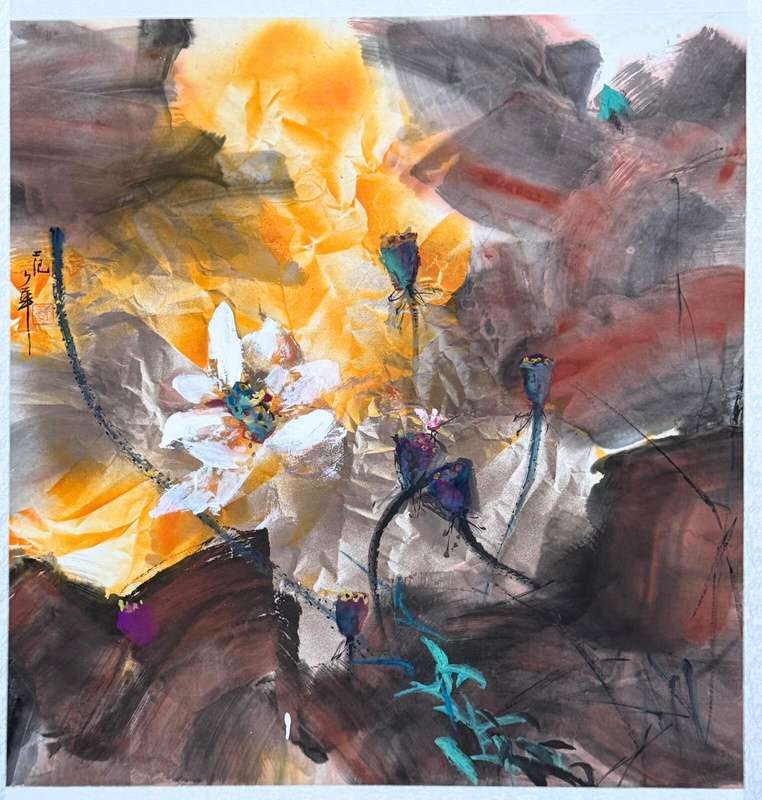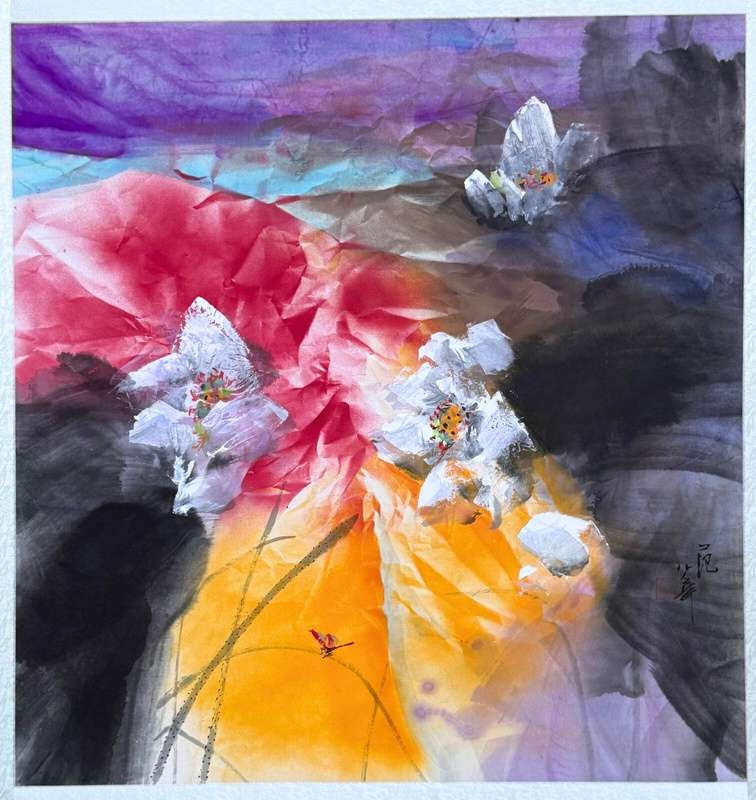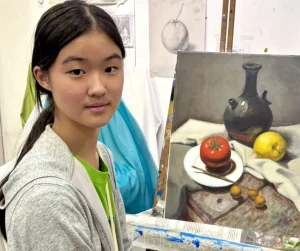
Visual Arts Centre provides professional art courses suitable for art learners of all ages and experiences. Art courses include Drawing and Sketching, Acrylic Painting, Watercolour Painting, Chinese Ink Painting, Creative Kids Art Immersion Course, Private Art Classes and Portfolio Preparation Art Course, Nude Life Drawing, Portrait Drawing course and others.
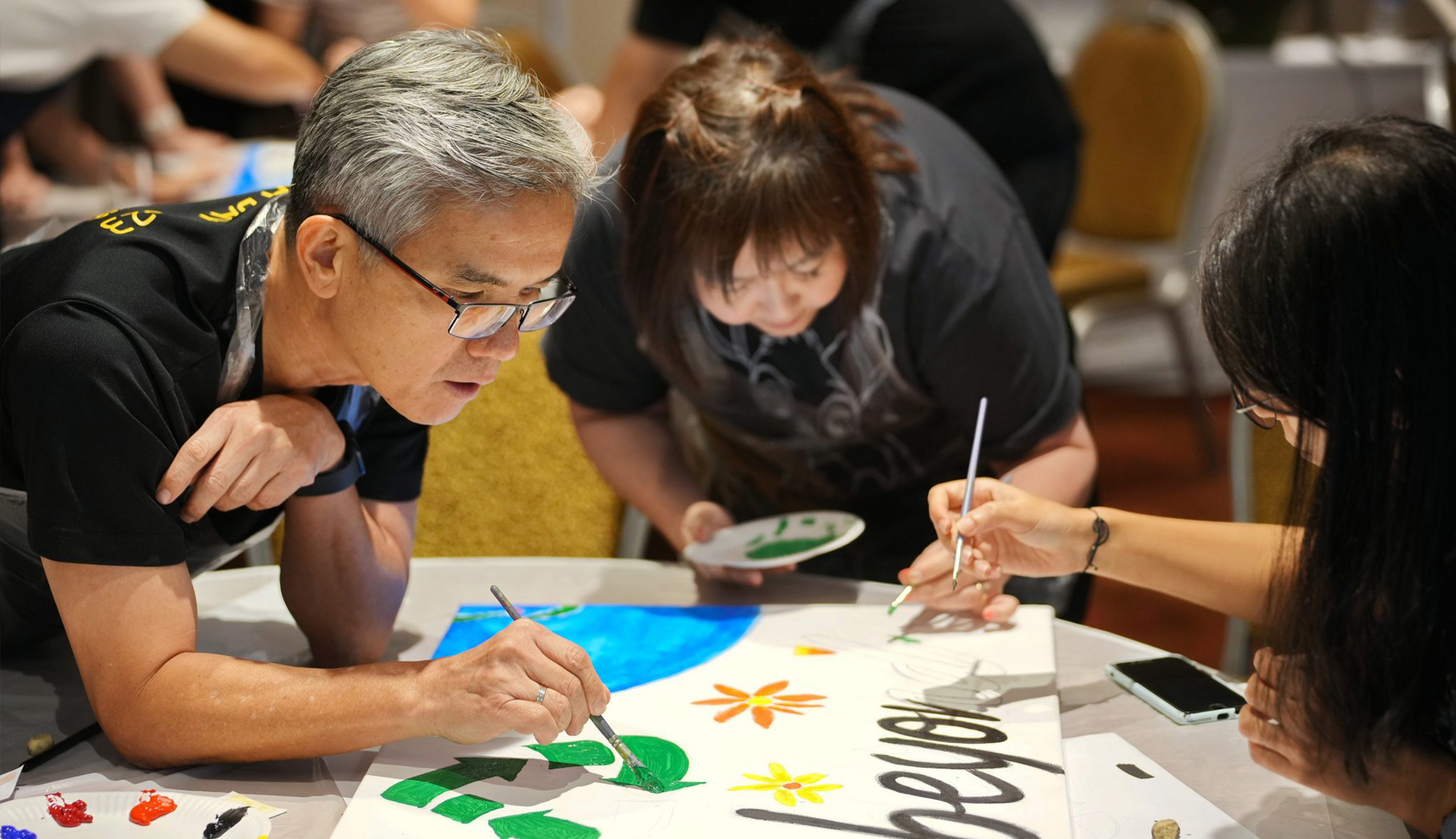
Acrylic Painting on Canvas Team Bonding Art Jamming Singapore Visual Arts Centre
Batik Handkerchief Painting Team Bonding Art Jamming Singapore Visual Arts Centre
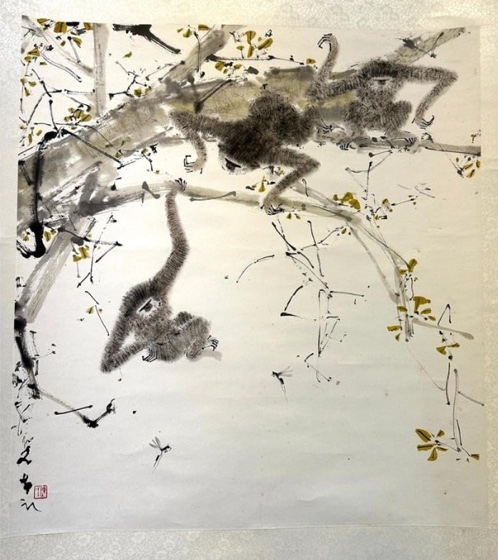
Chinese Ink Painting and Calligraphy Team Bonding Art Jamming Singapore Visual Arts Centre
Graffiti Spray Painting on Canvas Team Bonding Art Jamming Singapore Visual Arts Centre
Outdoor Urban Landscape Sketching Team Bonding Art Jamming Singapore Visual Arts Centre.
Acrylic Painting on Canvas Team Bonding Art Jamming Singapore Visual Arts Centre
Batik Handkerchief Painting Team Bonding Art Jamming Singapore Visual Arts Centre
Chinese Ink Painting and Calligraphy Team Bonding Art Jamming Singapore Visual Arts Centre
Graffiti Spray Painting on Canvas Team Bonding Art Jamming Singapore Visual Arts Centre
Outdoor Urban Landscape Sketching Team Bonding Art Jamming Singapore Visual Arts Centre.
Acrylic Painting on Canvas Team Bonding Art Jamming Singapore Visual Arts Centre
Batik Handkerchief Painting Team Bonding Art Jamming Singapore Visual Arts Centre
Chinese Ink Painting and Calligraphy Team Bonding Art Jamming Singapore Visual Arts Centre
Graffiti Spray Painting on Canvas Team Bonding Art Jamming Singapore Visual Arts Centre
Outdoor Urban Landscape Sketching Team Bonding Art Jamming Singapore Visual Arts Centre.
Workshops & Events
Visual Arts Centre offers regular themed art workshops as well as our most popular Team Bonding Art Jamming, Family Day Bonding Art Workshops and various customised creative workshops and art events throughout the year.
The Exhibition Gallery is a modern glasshouse exhibition gallery space for hire of 190square metres at Dhoby Ghaut Green, centrally located in Singapore.
The MacPherson Gallery and Studio is a 140 square metres brightly lit and fully equipped space for hire for meetings, workshops and various functions and gatherings.
Singapore’s Favourite Watercolour Painting Artist Ong Kim Seng
Ong Kim Seng (王金成), born on 10 June 1945 in Singapore, is widely regarded as Singapore’s preeminent watercolourist
Though self-taught, his works have achieved international acclaim and earned him numerous honours — he is probably the best known Singaporean painter working in watercolour today.
1. Early Life and Development
Ong Kim Seng grew up in post-war Singapore in modest circumstances. He did not have formal art training; instead, his art education was one of self-discipline, observation, and continuous self-improvement. He joined informal painting groups such as what became known as the “Sunday Group” and learnt through practice, critique, and study of masters. From these grassroots beginnings, Ong gradually developed a distinctive voice as a realist watercolourist, with sensitivity to light, structure, and the atmospheric quality of scenes.
He officially became a full-time artist in 1985, leaving behind other work to devote himself entirely to his painting. This turning point allowed him to refine his style, travel more, and expand his subject matter.
2. Artistic Style, Themes, and Technique
Ong’s watercolours are best known for their elegant balance between realism and the expressive fluidity that the medium allows. He frequently depicts architectural forms (old shophouses, temples, colonial buildings), landscapes (especially in Singapore, Bali, Nepal), street scenes, and waterways. His paintings often evoke a sense of calmness, light, and the interplay of shadows and reflections.
His style has been described as “naturalist cum impressionistic” — meaning that while he captures realistic detail, he does not shy away from expressive color, loose washes, and atmospheric moods. He is adept at rendering both the solid structure of masonry and the ethereal effects of sky, light, foliage, and water. In his hands, even ordinary, everyday scenes become quietly poetic.
A hallmark of his technique is his control of water, pigment, and negative space. He often leaves portions of untouched white paper to function as highlights or to allow the painting to breathe. His layering of washes, modulation of tone, and subtle transitions are executed with confidence.
Because he is self-taught, his approach is less bound by dogmatic adherence to academic rules; instead, his art reflects instinct, experimentation, and a lifelong dialogue with his medium and subjects.
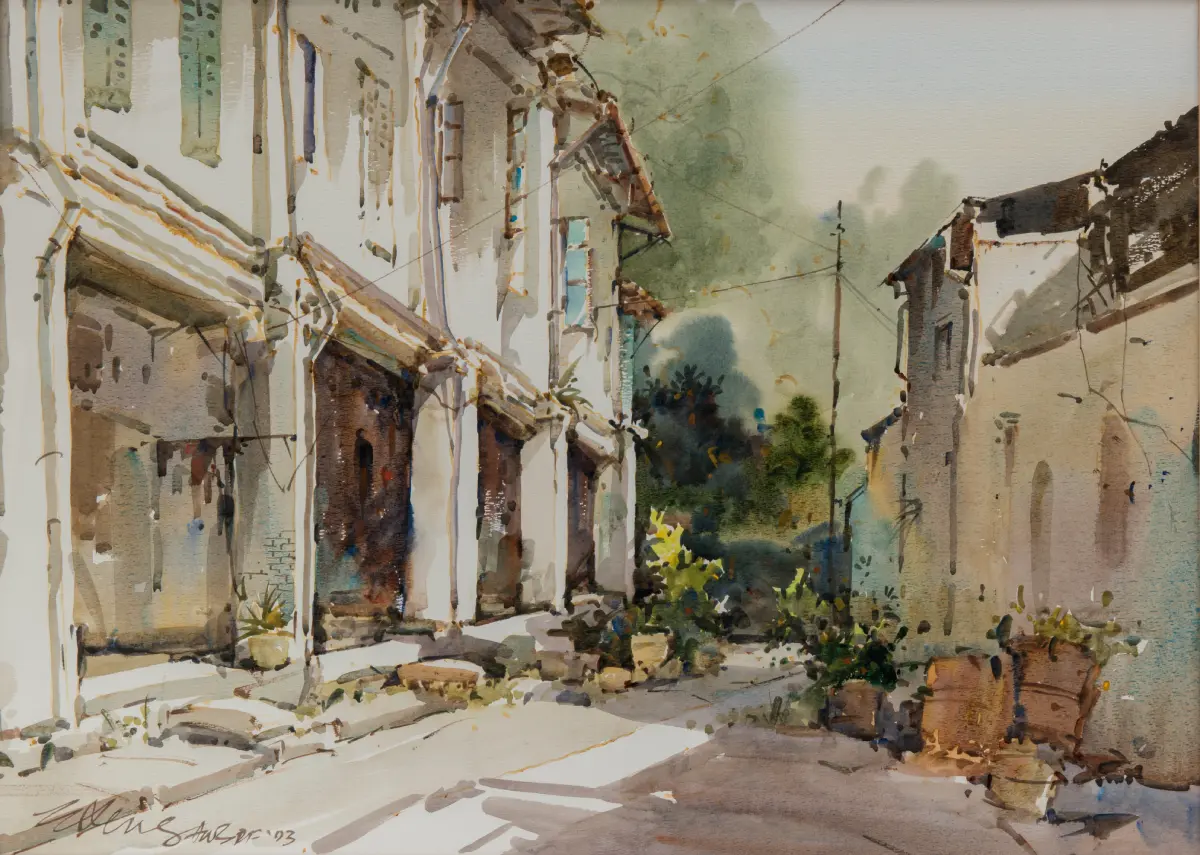
Lane Mackenzie Road
53 cm × 73 cm (Medium)
A street or lane in Singapore This likely showcases a local lane (Mackenzie Road) with its architecture, trees, overhead wires, and parked cars or pedestrians. The scene is probably observational and quotidian, yet elevated by skillful use of light, shadow, and perspective to bring a poetic quality to everyday Singapore.
3. Career Milestones and Recognitions
Ong has participated in many solo and group exhibitions both locally and internationally — in the United States, China, United Kingdom, Japan, Australia, Belgium, France, Middle East, Taiwan, Hong Kong, and across Southeast Asia.
He achieved a significant milestone when he became the first Asian (outside the U.S.) to be admitted as a member of the American Watercolor Society (AWS) in 1992. Over his career, he has won six awards from the AWS (including the Paul B. Remmy Memorial Award in 1983, Lucy B. Moore Award 1988, Clara Stroud Memorial Award 1989, Barse Miller Memorial Award 1992, Winsor & Newton Award 2000, and Ida Wells Memorial Award 2001). These awards attest to his technical mastery and international peer recognition.
In Singapore, he has also greatly contributed to the local art community. He served as President of the Singapore Watercolour Society from 1991 to 2001, after which he became Honorary President. In recognition of his contributions to the arts, he was awarded the Cultural Medallion (Singapore’s highest arts honour) in 1999 (some sources note the year as 1990) for visual arts.
Ong’s work has also found its way into museum collections and public institutions, such as the Singapore Art Museum, Neka Museum in Bali, the Maritime Museum (Sentosa), and even galleries overseas.
In terms of commercial success, Ong has broken personal auction records. In 2017, his painting Nepal sold for HK$725,000 (≈ S$130,540) at Sotheby’s Hong Kong. Other works have appeared in auctions across Asia and beyond.
4. Signature Works and Subjects
Some of Ong’s iconic series include his works on Nepal, Bali, and Singapore. In his Nepal series, he captures timeless temple courtyards, market squares, ancient stone carvings, and the interplay of light in mountainous contexts. His Bali works often explore temples, tropical foliage, and cultural architecture bathed in warm light. In his Singapore scenes, he revisits heritage shophouses, old quarters, waterfronts, and the Singapore River — preserving a sense of nostalgia even as the city modernizes.
For example, Singapore River is among his well-known works: a watercolour on paper showing boats, reflections, and the cityscape. Another is Afternoon by Boat Quay (2019), which combines architectural elements with dynamic light and shadow along the riverside. His Chinatown Singapore works highlight the charm of shophouses, narrow lanes, and human presence in an evolving urban fabric.
Through such paintings, he strikes a balance: these are not purely documentary, but rather imbued with mood, atmosphere, and the poetic interplay of light.
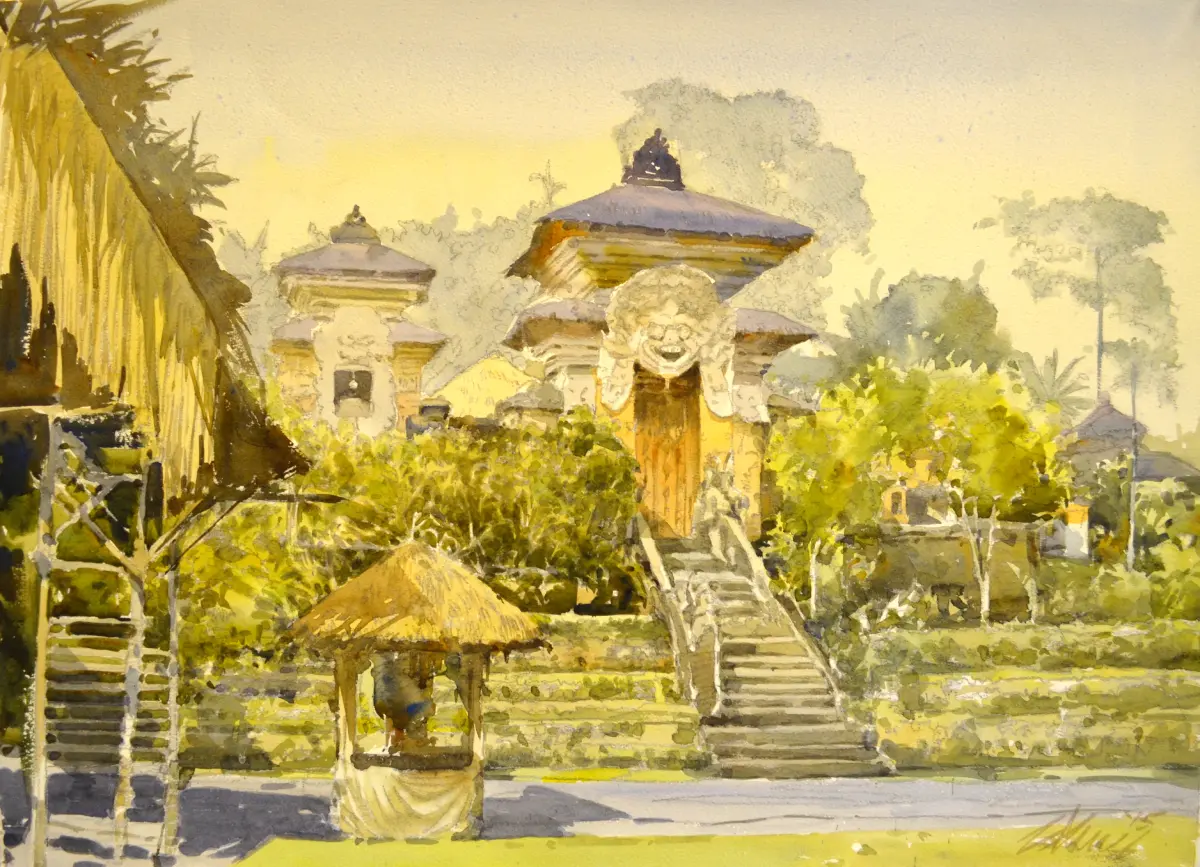
Grand Temple, Bali
53 cm × 73 cm (Medium)
Temple architecture in Bali Here, ornate temple gateways, tiered roofs, stone carvings, and tropical surroundings would take centre stage. The contrast of dark roof silhouettes against sky or ambient light, plus foliage framing, may be key features. The painting likely balances structural detail with soft washes of sky or greenery.
5. Legacy, Influence, and Challenges
Ong Kim Seng’s journey from self-taught beginnings to the pinnacle of recognition offers an inspiring story for many artists. He demonstrates that discipline, perseverance, and a deep respect for one’s medium can enable mastery without formal schooling.
As President (and later Honorary President) of the Singapore Watercolour Society, he played a role in shaping the local watercolour community, nurturing younger artists, organizing exhibitions, and promoting watercolour as a serious artistic discipline. He also served as an art advisor to Singapore’s National Arts Council, and has participated in major art events and fellowships.
Over time, his work and reputation helped elevate the status of watercolour in Singapore’s art scene, which sometimes has been overshadowed by oil, acrylic, or mixed media.
However, an artist working in watercolour also faces inherent challenges: watercolour is notoriously unforgiving (mistakes are hard to correct), and achieving both luminosity and structure takes high technical control. Ong’s success underscores his mastery over that tension. His ability to maintain freshness and spontaneity even in complex compositions is part of what makes his work resonate.
In the context of Singapore’s rapid modernization, his paintings of older areas also carry a historical and emotional value: they help preserve the memory of places that may have changed or disappeared. In that sense, his work is part painterly artistry, part cultural archive.
6. Why Ong Kim Seng is Singapore's Favourite Watercolour Painting Artist
Many art lovers, hobby painters, critics, and curators often call Ong Kim Seng “Singapore’s favourite watercolourist.” This status is earned through several factors:
Mastery and Accessibility
Ong’s works manage to be both technically accomplished and visually approachable. His scenes are often familiar — streets, rivers, temples, kampongs — yet elevated through his treatment of light, mood, and composition. This combination allows many Singaporeans to connect emotionally to his paintings.
National Identity & Memory
By painting familiar locales — Singapore’s heritage quarters, river scenes, old architecture — he taps into collective memory and identity. In a rapidly transforming city, his art becomes a bridge between past and present.
Recognition & Awards
His numerous international accolades (especially his AWS awards and membership) lend credibility and prestige. Domestically, his long service in the watercolor society and receiving the Cultural Medallion cement his stature.
Exemplary Professionalism & Longevity
His decades-spanning career, his consistent exhibition record, and his commercial success demonstrate a rare sustainability in the arts. He is not a “flash in the pan,” but a mature master.
Mentorship & Community Impact
Through involvement in art organizations, community outreach, and visibility, he inspires both amateur and aspiring professional artists. His story emphasizes that formal training is not the only path to excellence in art.
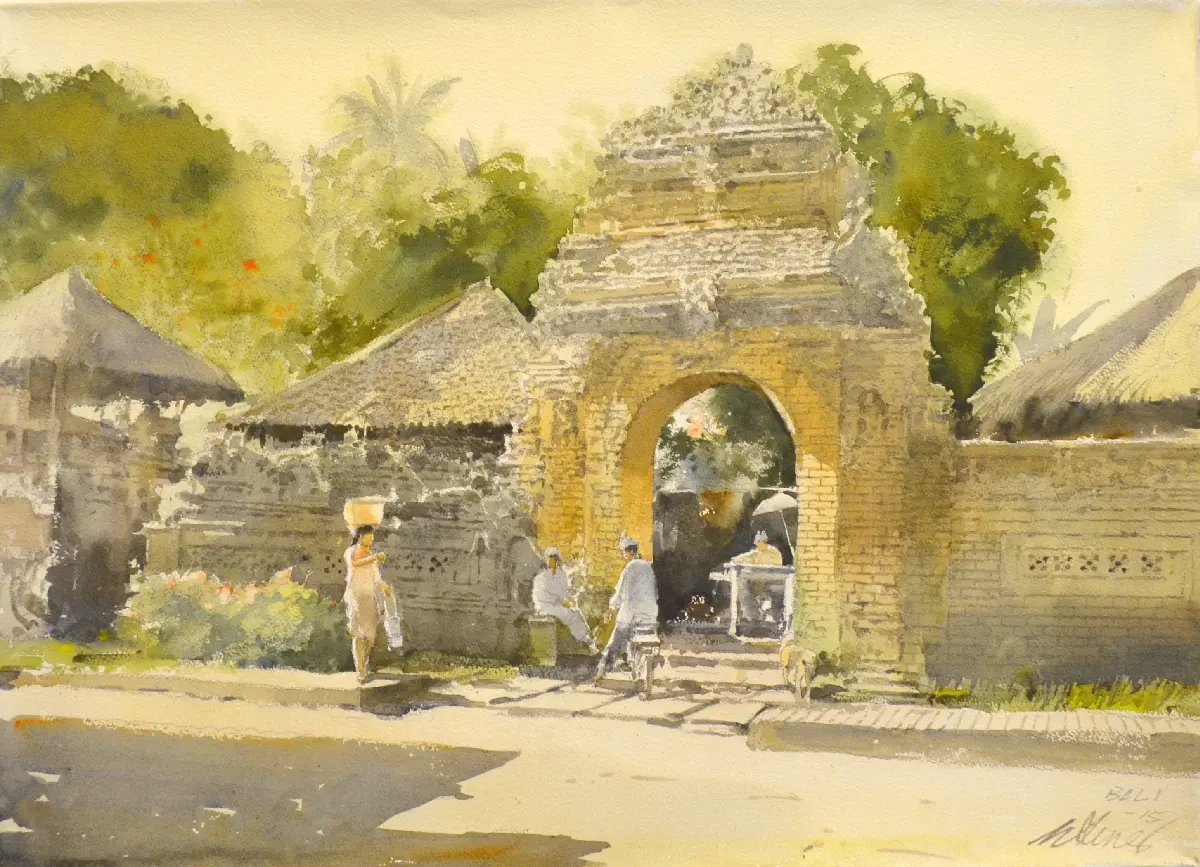
Ubud Palace
53 cm × 73 cm (Medium)
Balinese palace / temple architecture Ubud, in Bali, is rich in temple structures, ornate gateways, and tropical foliage. In Ubud Palace, Ong would likely emphasize temple roofs, carved stone, shadows among columns, and tropical trees around. The scene would blend solidity (stone, roof lines) with softer elements (plants, dappled sunlight) to evoke a sense of place and atmosphere.
Conclusion: Why Ong Kim Seng Is Worth Collecting
Ong Kim Seng remains one of Singapore’s most beloved and respected watercolour artists. His life and work testify that passion, perseverance, observation, and a sensitive hand can transform humble scenes into poetic reflections of place and memory.
His legacy is not just the beautiful paintings he leaves behind, but the example he sets: that in the delicate medium of watercolour, one can imbue solidity, emotion, light, and narrative — even without formal schooling. For Singapore, he stands as a cultural icon, bridging art and identity, and reminding all who look at his works that even in everyday corners, there is beauty waiting to be seen.
Embark on a captivating journey into the vibrant world of digital art! Our Foundation in Digital Art workshop invites budding creatives aged nine and above to unleash their imagination and hone their artistic skills in a dynamic, supportive environment. From mastering basic digital tools to crafting mesmerizing digital masterpieces, children will explore a spectrum of techniques guided by seasoned mentors. Through hands-on activities and interactive sessions, participants will discover the endless possibilities of digital expression while fostering creativity and critical thinking. Join us for an exhilarating adventure where young artists transform ideas into stunning visual realities, igniting a passion for digital art
Colour & Texture Exploration With Acrylic Painting & Collage
Prepare to unleash your inner artist in a kaleidoscope of color and creativity with ‘Colour Blast: Acrylic Painting & Collage Techniques’! Dive into a whirlwind adventure where vibrant hues and mesmerizing textures collide in a symphony of imagination. From mastering the art of seamless color blending to discovering the magic of mixed media collage, this journey is a playground for your artistic soul. With each brushstroke, explore new techniques that breathe life into your canvas, transforming it into a vibrant tapestry of expression. Join us and let your creativity run wild as you embark on this colorful escapade!”
World of Manga [Foundation & Styling]
A manga art workshop for children and teenagers sounds like a fantastic idea! Here’s how you might structure it:
Introduction to Manga: Begin by introducing what manga is, its history, and its influence on popular culture worldwide. Show examples of different manga styles and genres to give participants an overview.
Basic Drawing Techniques: Start with the fundamentals of drawing, such as line work, shapes, and proportions. Provide step-by-step instructions on how to draw basic manga characters, focusing on simple shapes that can be built upon.
Character Design: Move on to character design concepts, including creating unique characters, designing their personalities, and developing backstories. Encourage participants to get creative and think outside the box.
Expression and Emotion: Teach how to convey emotions and expressions through facial expressions, body language, and positioning of characters. This can be a fun and interactive exercise where participants practice drawing various emotions.
Storytelling and Paneling: Explore the basics of storytelling in manga, including paneling techniques, pacing, and layout. Show examples of different panel structures and discuss how they affect the flow of the story.
Inking and Coloring: Introduce participants to inking techniques using pens or markers. You can also cover digital inking for those interested. Then, demonstrate basic coloring techniques using markers, colored pencils, or digital software.
Feedback and Collaboration: Provide opportunities for participants to share their work and receive feedback from their peers and instructors. Encourage collaboration by having them work together on short manga projects or collaborative drawings.
Final Showcase: End the workshop with a showcase of participants’ work. This could be in the form of an exhibition, digital gallery, or printed booklet. Celebrate everyone’s creativity and progress throughout the workshop.
Remember to create a supportive and encouraging environment where participants feel free to express themselves and explore their creativity. And don’t forget to have fun! Manga is all about imagination and passion, so let that spirit shine through in your workshop.
Academy Drawing Traditions
The academy drawing and sketching tradition, rooted in centuries of artistic practice, emphasizes disciplined study of form, proportion, and technique. Originating from Renaissance workshops and formalized by institutions like the Royal Academy, it prioritizes meticulous observation and mastery of fundamental skills. Students progress from basic exercises to complex compositions, learning to depict still life and common objects with precision and expression. This tradition values both classical principles and innovation, encouraging artists to push boundaries while maintaining a deep respect for tradition. Through rigorous training and critique, artists within this tradition cultivate a strong foundation for creative exploration and artistic excellence.
Chinese Ink Painting and Calligraphy
This course on Chinese ink painting and calligraphy introduces young learners to the rich traditions of Chinese art. Through hands-on activities, students explore the basics of brush techniques, ink control, and the delicate art of Chinese script. They learn to appreciate the cultural significance of calligraphy and painting, developing skills in creating elegant strokes and expressive brushwork. The course fosters creativity, patience, and fine motor skills, while also providing insights into Chinese history and aesthetics. By the end, children gain confidence in their artistic abilities and a deeper understanding of Chinese cultural heritage.
Funk with Graffiti
Funk With Graffiti Workshop for children is an engaging and creative program aimed at introducing young artists to the vibrant world of graffiti and funk-inspired street style art. Participants learn the basics of graffiti history, techniques, and safety. Guided by professional graffiti artists, children explore the art of designing their unique tags, emphasizing creativity, expression, and individuality. The workshop includes hands-on activities, from sketching concepts to creating final designs with spray paint on provided surfaces. By the end of the session, children gain confidence in their artistic abilities and an appreciation for graffiti and funk as legitimate forms of street art. Each child completes two original artworks, which they proudly take home, showcasing their newfound skills and personal style.
Batik Tales
In the Batik Introduction Handkerchief Painting workshop, participants will learn the traditional art of batik, a wax-resist dyeing technique originating from Indonesia. The workshop begins with a brief history and overview of batik, highlighting its cultural significance and various techniques. Participants will then observe a demonstration of applying wax with tjanting tools and dyeing the fabric. Following the demonstration, each participant will design and create their own batik handkerchief, applying wax to create patterns and then dyeing their fabric. The workshop concludes with a group discussion, allowing participants to share their creations and reflect on their learning experience.
Agree Terms & Conditions
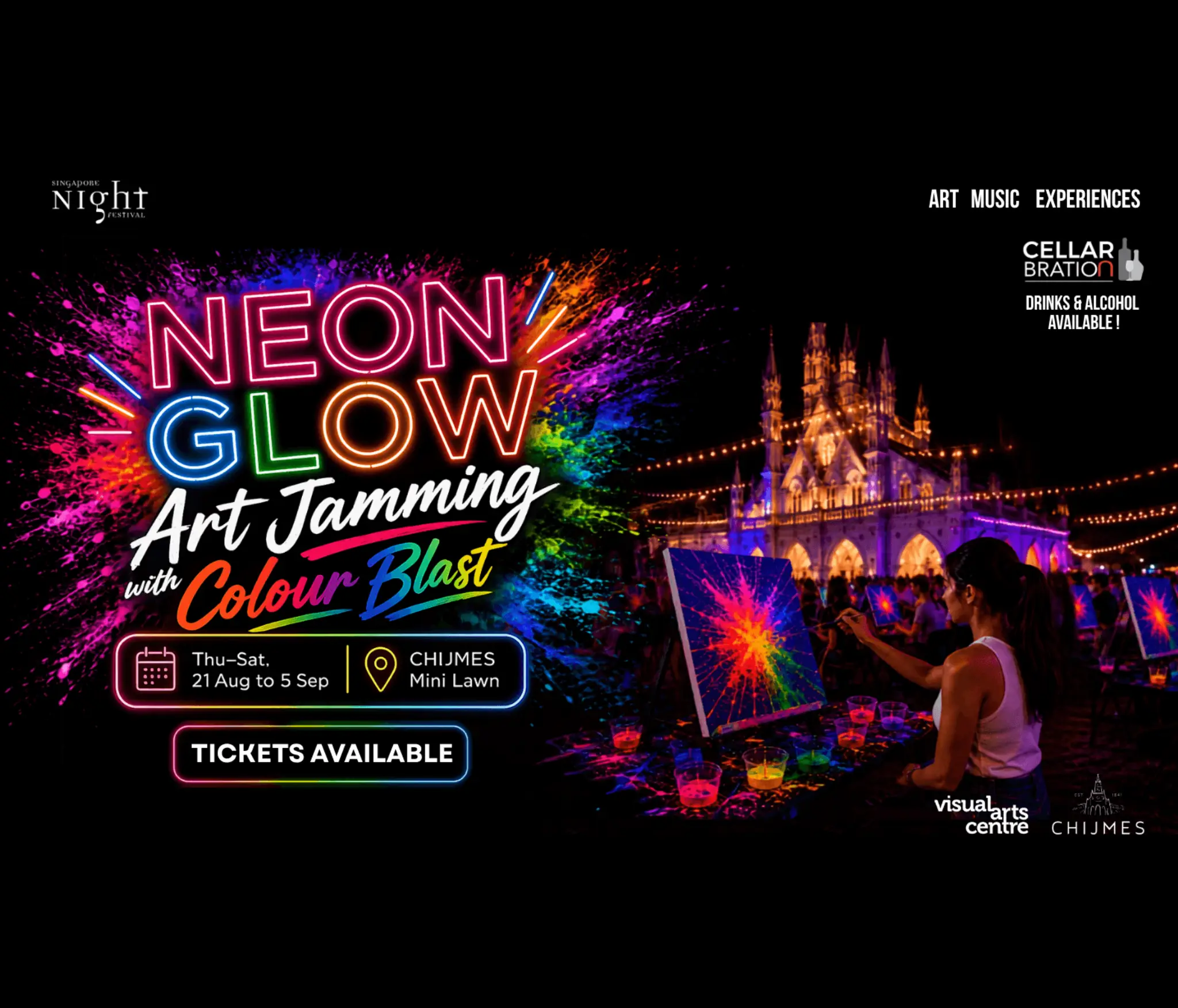
Terms & Conditions – Neon Glow Art Jamming & Colour Blast Party (Saturday Sessions Only)
Participation
Participation in the Neon Glow Art Jamming & Colour Blast Party is voluntary. By participating, all participants acknowledge that they understand and accept the nature of the activities and agree to participate at their own risk.
Health & Safety
The event takes place in an outdoor festival environment featuring bright lighting effects, flashing lights, amplified music, and high sound levels, which may not be suitable for individuals who are sensitive to light, sound, or have related medical conditions.
Participants are responsible for ensuring that they are medically fit to participate in the activities.
Colour Blast Party
The Colour Blast Party uses coloured cornflour powder.
By participating in the Colour Blast Party, participants confirm that they:
Do not have any known allergy or sensitivity to cornflour, corn, coloured powder, or similar materials.
Do not suffer from asthma, respiratory conditions, or any medical condition that may be aggravated by airborne powder.
Understand the nature of the activity and voluntarily choose to participate.
Face & Body Painting
Optional face and/or body painting may be available during the event.
Participants choosing to receive face or body painting confirm that they have no known allergies or skin conditions that may be affected by cosmetic or body paint products. Participants with sensitive skin are advised to refrain from participating.
Assumption of Risk
Participants acknowledge that participation in the event, including but not limited to art jamming, the Colour Blast Party, face and/or body painting, and related activities, carries inherent risks, including accidental slips, falls, minor injuries, allergic reactions, respiratory irritation, or other unforeseen incidents.
Indemnity and Release
By participating in the event, participants agree, to the fullest extent permitted by law, to release, discharge, and indemnify Visual Arts Centre, CHIJMES, their respective officers, employees, volunteers, contractors, sponsors, partners, and representatives from any and all claims, demands, liabilities, losses, damages, costs, expenses, injuries, or actions arising out of or in connection with participation in the event, except where such claims arise directly from the negligence or wilful misconduct of the organisers.
Personal Responsibility
Participants are responsible for their own personal belongings and should exercise reasonable care while participating. Appropriate clothing and footwear suitable for an outdoor event are recommended.
Organiser's Rights
Visual Arts Centre and CHIJMES reserve the right to refuse participation or remove any participant whose behaviour is deemed unsafe, disruptive, or poses a risk to others. The organisers also reserve the right to modify, postpone, suspend, or cancel the event due to weather, safety concerns, or unforeseen circumstances.
Agree Terms & Conditions
Terms & Conditions For All Course/Workshop(s) at Visual Arts Centre (VAC):
No refunds are provided for any course/workshop/lesson purchased. The course/workshop/lesson requires full payment for enrolment.
The classes/sessions for the stated course is/are valid only within the stated validity period, which begins from the commencement of the first class and no further extension is provided.
Extension for course validity may be provided for medical/travel reasons with the provided MC/travel itinerary for up to one month for twelve sessions and below, and up to two months only for above twelve sessions.
Visual Arts Centre reserves the right to cancel/reschedule/postpone any course/session with or without prior notice. If the course cannot proceed due to unforeseen circumstances, a full refund of the fees will be provided.
The registrant/guardian of the registrant agrees to indemnify and shall not hold Visual Arts Centre and its staff or third-party staff/service providers liable for any losses/injury sustained from any activity within the premises of Visual Arts Centre, including personal injury/loss or damages to property.
With the registration and purchase of the course/workshop/lesson, I acknowledge and agree to the terms and conditions stated. I allow VAC to contact me/my parents/guardian for any updates.