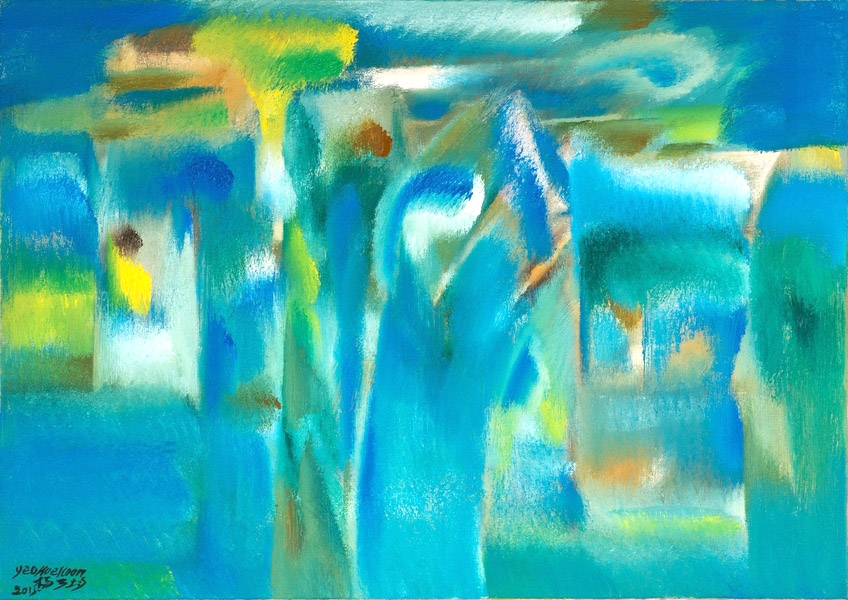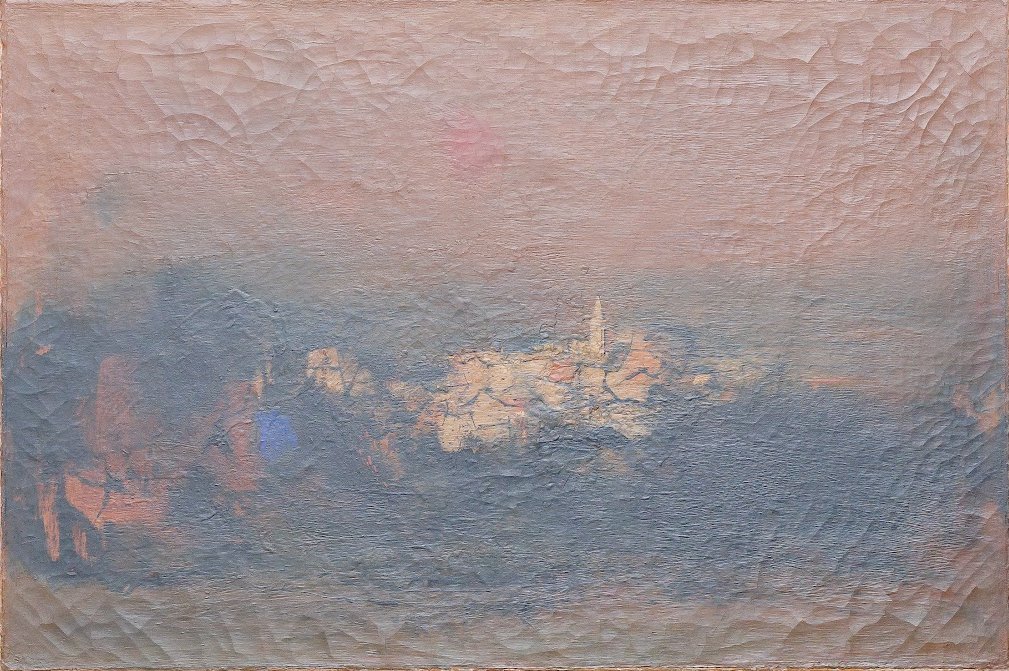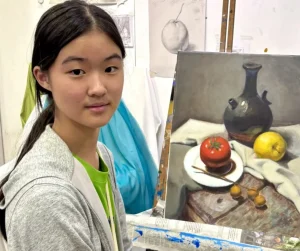


Yeo Hoe Koon
Oil on Canvas
64 x 89.5 cm
Price Range: $16,000 - $20,000
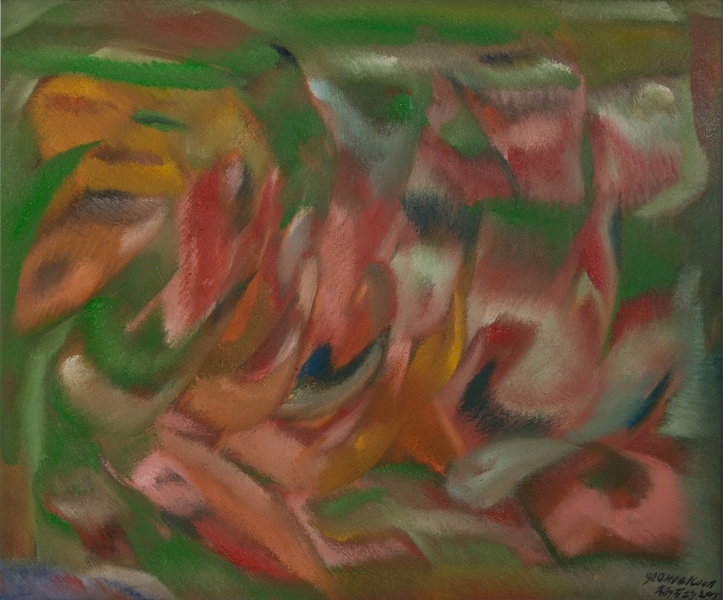
Yeo Hoe Koon
Oil on Canvas
101 x 123 cm
Price Range: $26,000 - $32,000
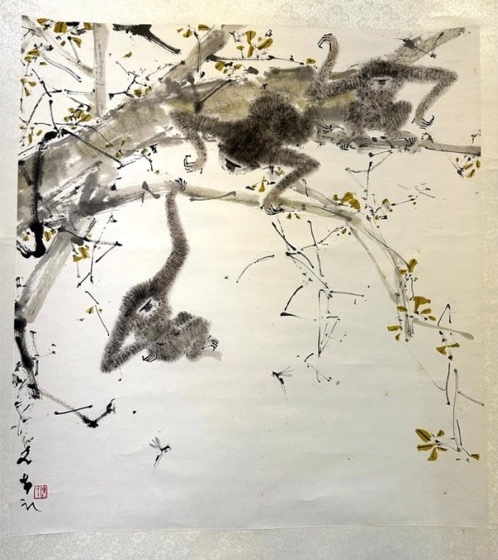
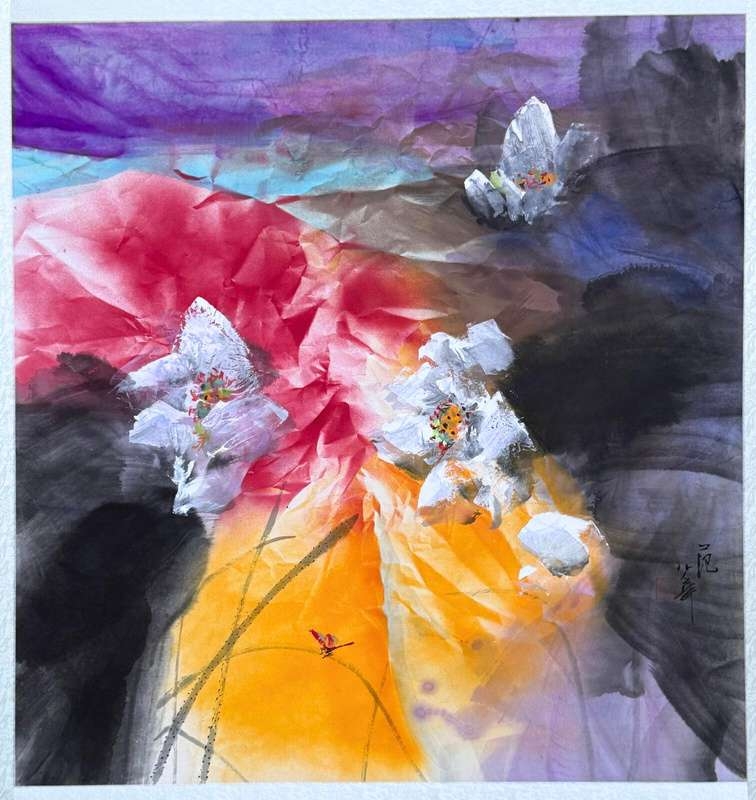
Chen Wen Hsi
Chinese Ink and Color on Paper
50 x 54cm
Price Range: SGD $42,000 - $50,000
Cheong Soo Pieng
Red Tone
61 x 91.5cm
Price Range: SGD $108,000 - $138,000
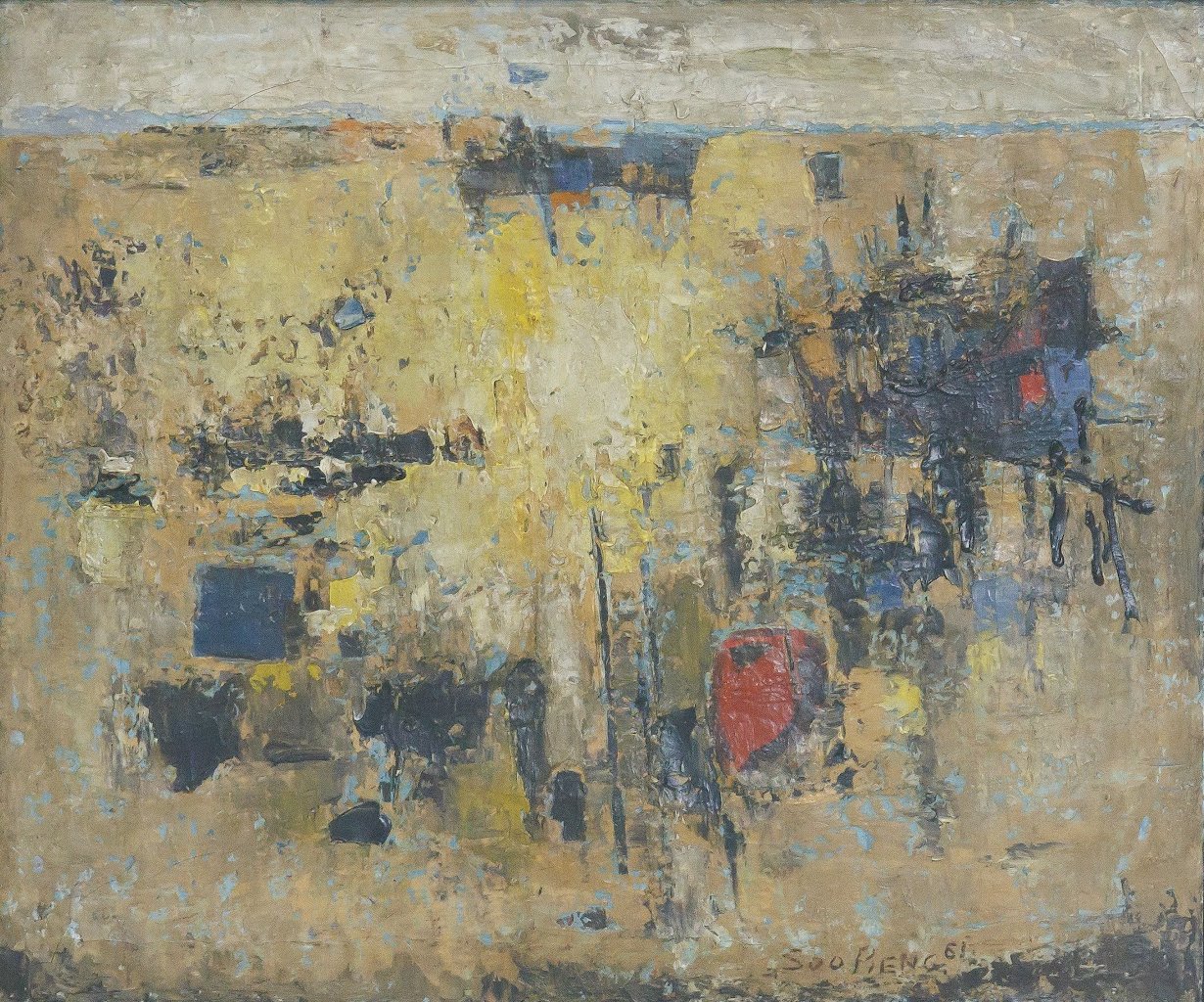
Cheong Soo Pieng
Abstract Landscape
50 x 61cm
Price Range: SGD $95,000 -$128,000
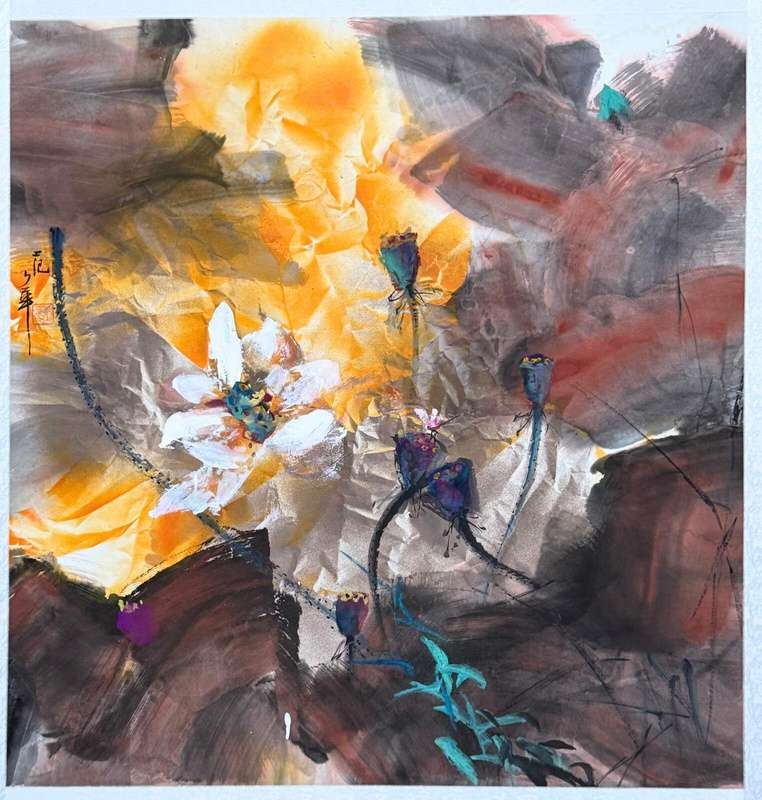
Fan Shao Hua
Chinese Ink and Colour on Paper
100 x 100cm
Price Range: SGD $9,800 - $14,800
Fan Shao Hua
Chinese Ink and Colour on Paper
100 x 100cm
Price Range: SGD $8,800 - $13,800
1.1 About Lasalle
2.1 About NAFA
2.1 About ADM
LASALLE College of the Arts provides a diverse suite of diploma pathways encompassing fine art, design, fashion, film, and performing arts. For prospective students targeting visual arts or design-oriented faculties, the portfolio serves as a pivotal component of the evaluative process.
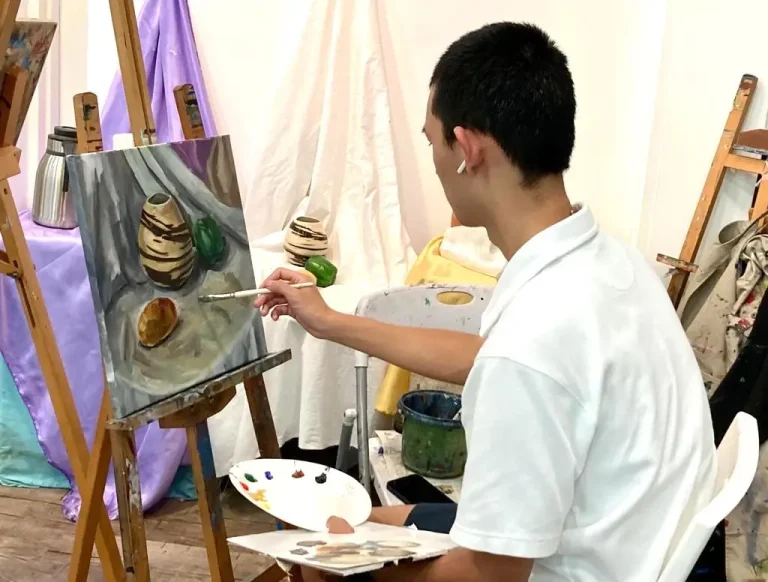
Our student working on his acrylic painting (Still life – combination) artwork
Portfolio Preparation -An Acrylic painting done by our student
Standard entry for diploma programmes requires meeting specific academic benchmarks, notably an O-Level English grade of C6 or better and a 25-point aggregate across four additional subjects.
Graduates with relevant Higher Nitec or Nitec qualifications from ITE are also eligible for consideration, subject to the requirements of the specific faculty.
As criteria can fluctuate between intakes and specialist disciplines, it is imperative that candidates verify the latest prerequisites for their intended programme of study.
Portfolio Preparation – A portraiture done by our student
A competitive LASALLE application requires more than technical mastery. The committee looks for evidence of robust creative potential and readiness for professional arts training.
Key qualities of a strong candidate include:
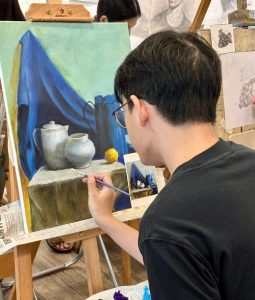
Our student working on an acrylic painting (still life – combination) artwork
Applicants are generally tasked with assembling a collection of approximately 10–15 original creative pieces that span at least two distinct media categories. The objective is to illustrate both technical proficiency and a broad creative range.
Candidates should avoid presenting a monolithic portfolio where works appear repetitive or limited to a single medium. A balanced submission might feature a combination of drawing, painting, digital media, photography, or sculpture, tailored to the specific diploma track.
Diversity in the portfolio must be purposeful rather than performative. Media should be selected to authentically support the exploration of ideas, demonstrating a considered relationship between the chosen method and the creative concept.
Ultimately, the work must mirror the applicant’s authentic creative vision and personal interests. Reviewers seek signs of originality and the potential for significant growth within a rigorous studio environment.
Our student doing an acrylic painting portraiture artwork
It is vital for both students and parents to recognize that no universal portfolio template exists for LASALLE admission. Each submission must be carefully aligned with the specific diploma track.
In short, the institution seeks candidates with creative potential, a focused interest in their field, and the capacity for independent inquiry. Rather than a mere gallery of polished pieces, the portfolio should inform the panel about the student’s creative identity and their fit for the LASALLE community.
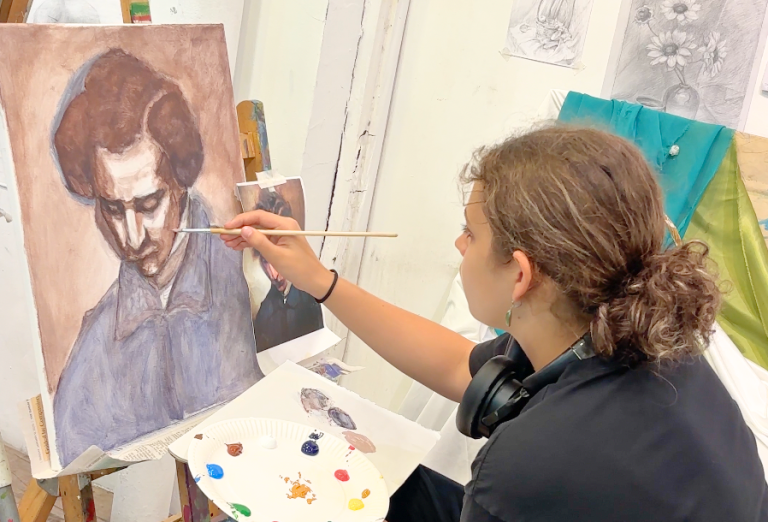
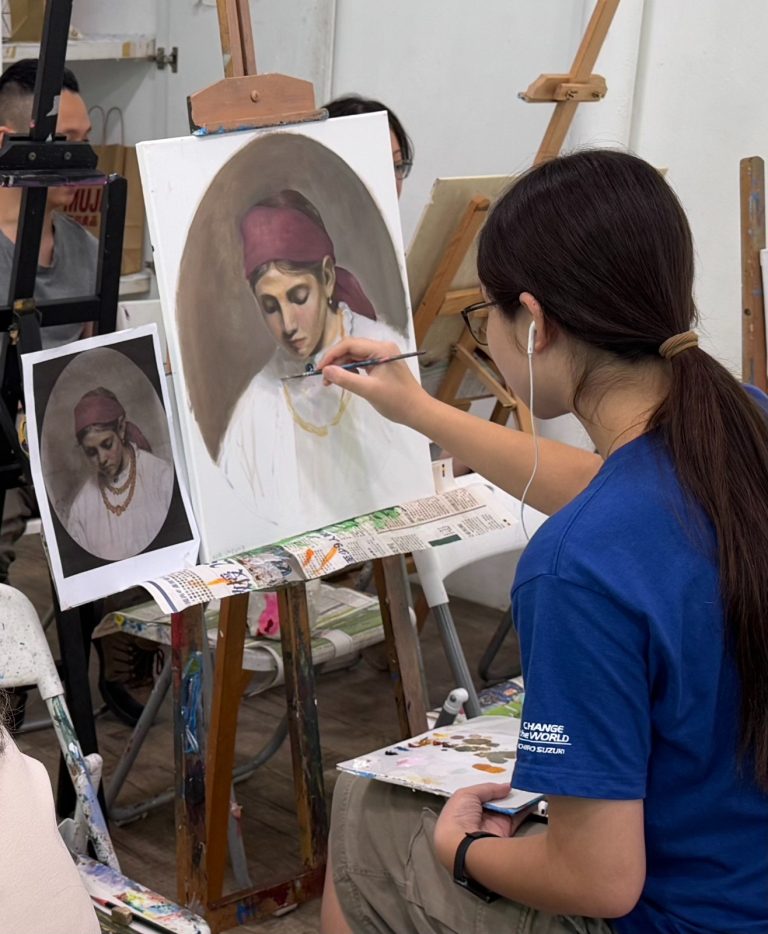
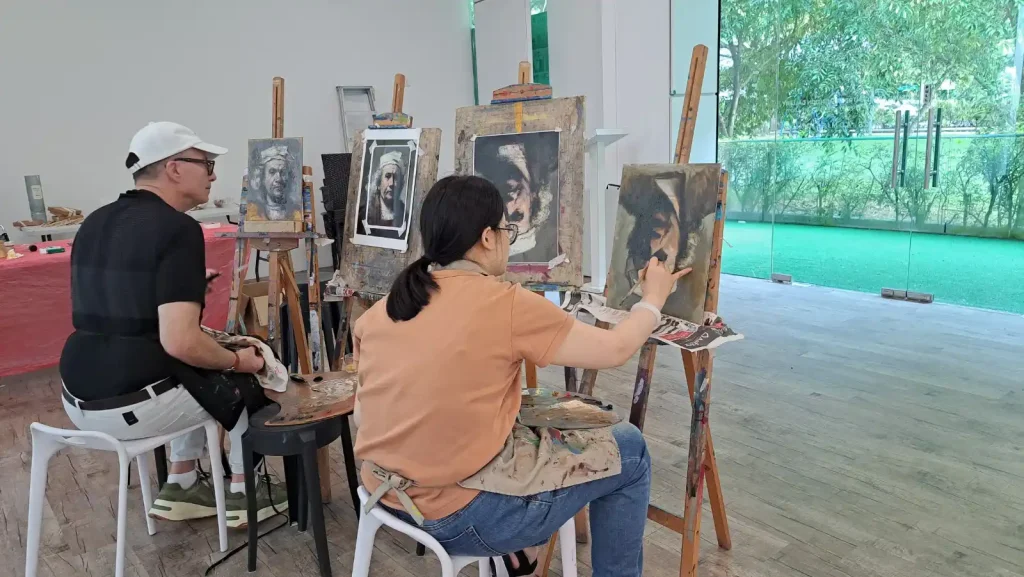
Our student working on an art oiling portraiture artwork
Visual Arts Centre can support students preparing to apply to LASALLE College of the Arts by helping them build artistic skills, creative confidence and a portfolio that reflects their interests and potential. Through structured training, students develop foundations in drawing, painting, observation, composition and different art media. They are encouraged to explore personal themes, experiment with materials and develop original ideas. With guided feedback and portfolio preparation, students learn to select and refine their artworks, document their creative process and explain their artistic choices, gaining confidence in presenting and discussing their work.
LASALLE College of the Arts provides a diverse suite of diploma pathways encompassing fine art, design, fashion, film, and performing arts. For prospective students targeting visual arts or design-oriented faculties, the portfolio serves as a pivotal component of the evaluative process.
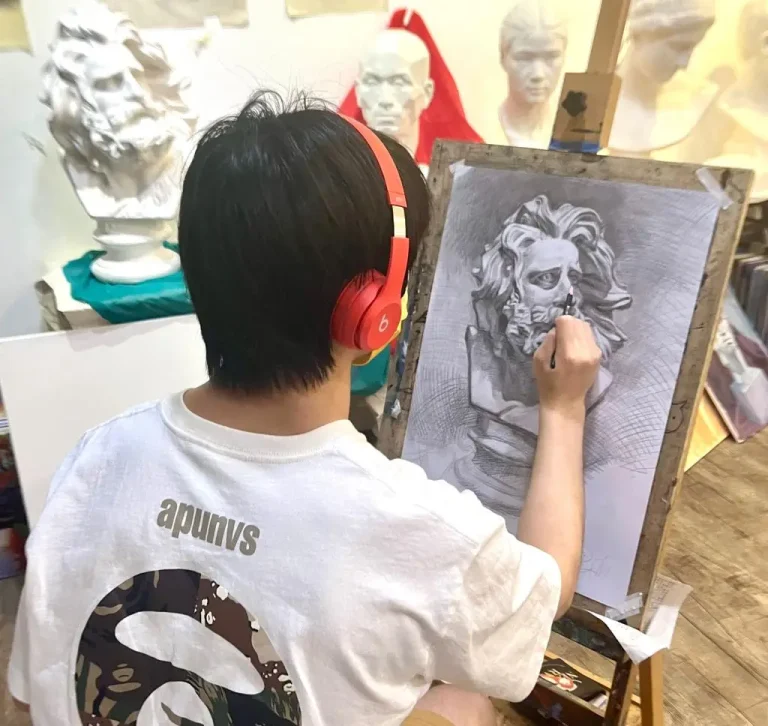
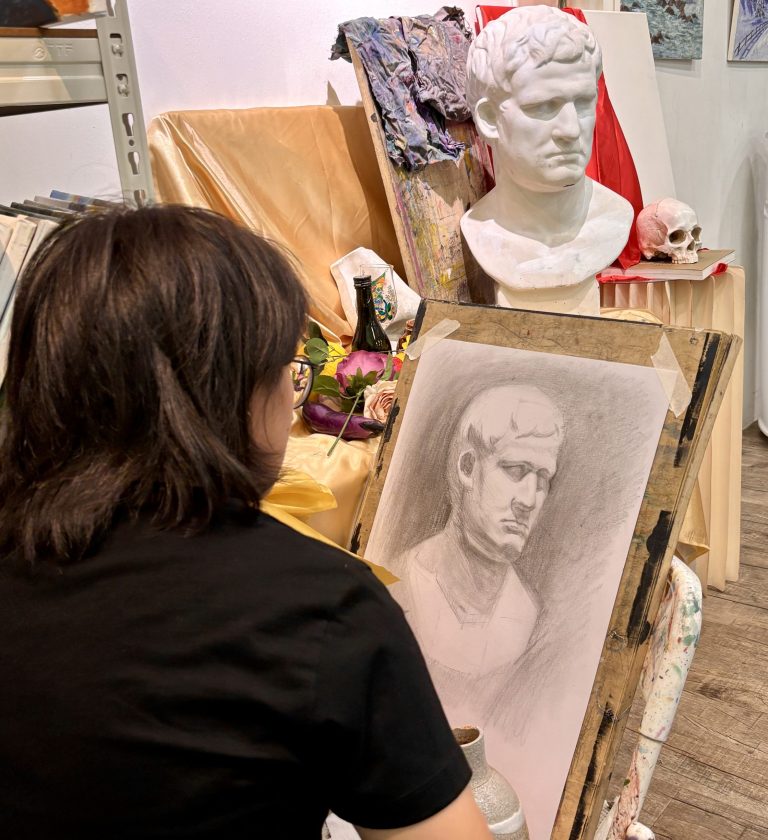
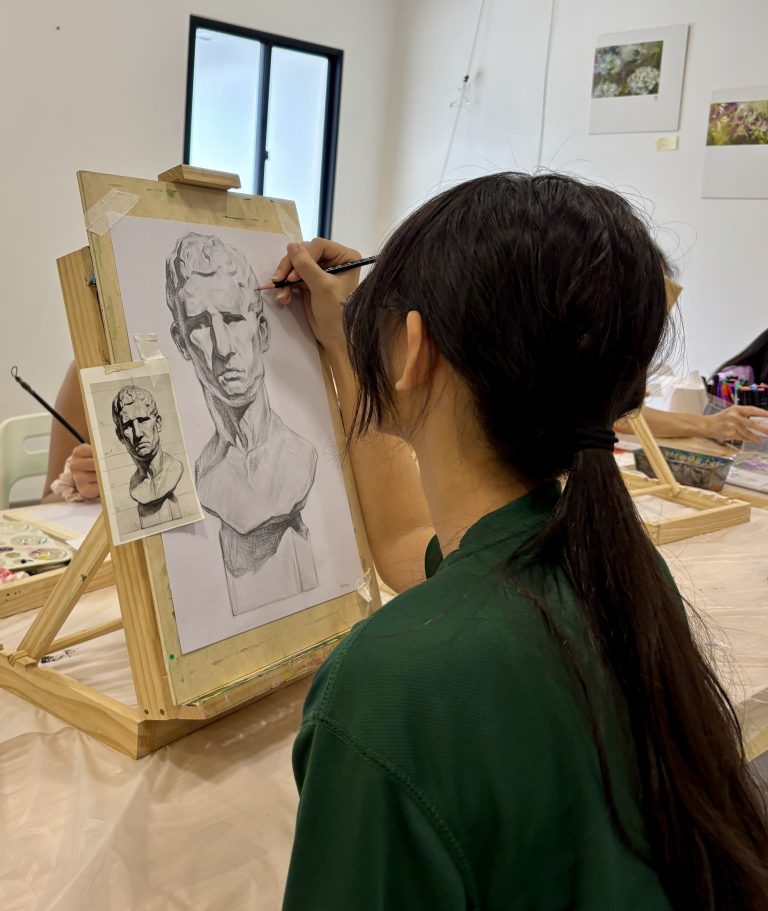
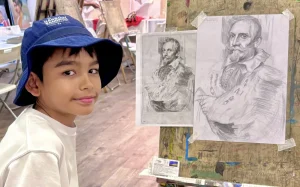
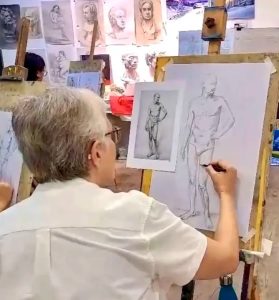
Our student doing a drawing and sketching observational artwork with one of our plaster casts
Prospective students are generally tasked with assembling a collection of 10–15 original creative pieces that illustrate their artistic aptitude, conceptual depth, and versatility across various media.
The submission should transcend a mere gallery of finished works. Instead, candidates must curate selections that highlight their strongest capabilities and authentic interests, while demonstrating a considered willingness to experiment with diverse methodologies.
A balanced submission may feature a combination of drawing, painting, digital media, photography, or sculpture, precisely aligned with the intended diploma track.
The thematic focus varies by faculty. Fine Art applicants should prioritise foundational technical skills and observational accuracy, whereas Design candidates must emphasize visual communication and robust problem-solving agility.
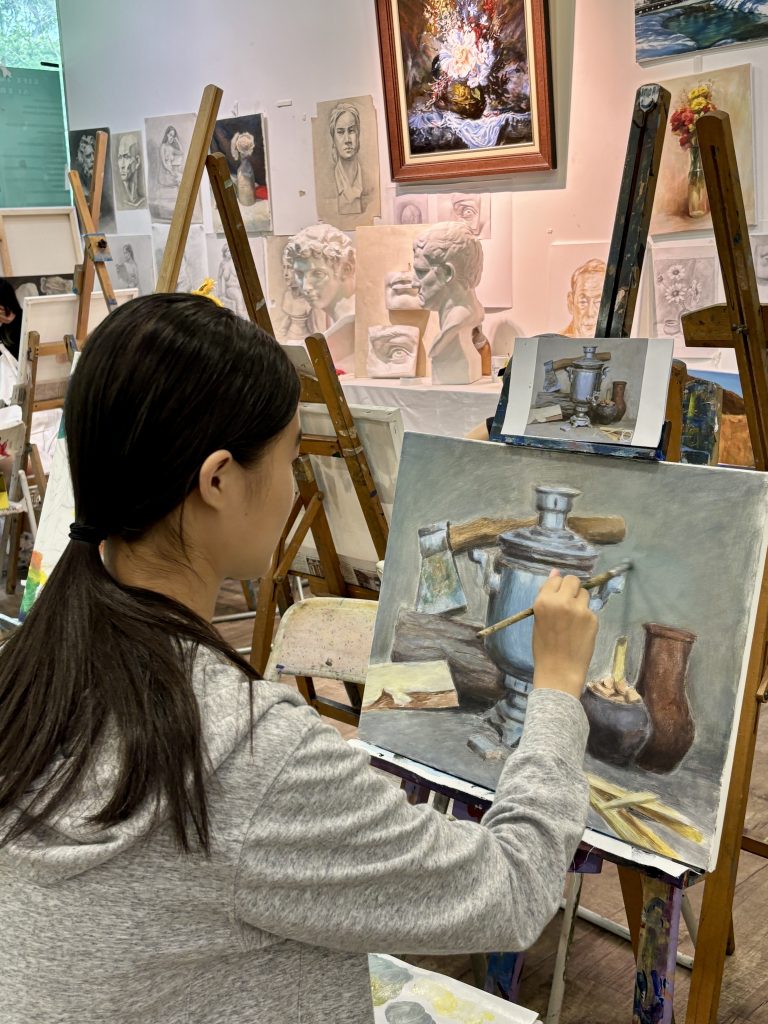
Portfolio Preparation -An oil painting done by our student
The portfolio reveals the candidate’s technical versatility and intellectual approach to art-making prior to formal studio training.
Curation is pivotal; approximately 10–15 strong pieces should be selected to demonstrate creative breadth and authentic artistic interests tailored to the specific faculty.
Qualitative depth is preferred over volume. A refined selection of thoughtful work provides a clearer indication of a student’s potential for growth in a rigorous academic setting.
Portfolio Preparation – A portraiture done by our student
Candidates may be required to undergo an on-site practical admission test.
This evaluative session gauges observational skills, design thinking, and the ability to respond to unfamiliar creative constraints in real time, moving beyond pre-prepared works.
Applicants benefit from practicing rapid ideation and experimentation. Success requires the agility to develop concepts and make creative decisions without the luxury of extensive prior preparation.
The interview facilitates a personal dialogue regarding the candidate’s portfolio, artistic motivations, and suitability for NAFA’s studio environment.
Discussion often focuses on the inspiration, challenges, and iterative decisions behind specific pieces, as well as the applicant’s future aspirations in the arts.
This session is not about providing scripted answers. Candidates should speak authentically about their process, demonstrating that they have considered their creative identity and chosen area of study.
Articulating the rationale behind creative choices and lessons learned during development can significantly strengthen the overall application profile.
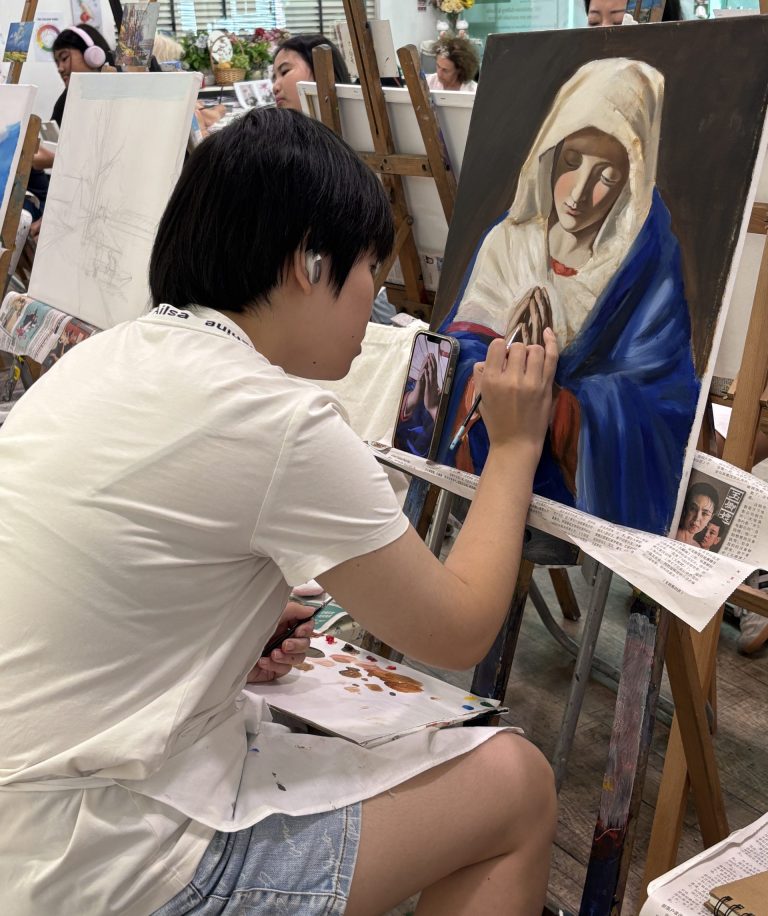
Our student doing an oil painting portraiture artwork
Standard entry generally necessitates an O-Level English grade of C6 or better and a 25-point aggregate across four subjects. Specific prerequisites may fluctuate between faculties and intakes.
Dedicated pathways exist for graduates with relevant ITE qualifications; such applicants should verify the latest requirements for their specific diploma track.
As criteria are subject to change, it is imperative that candidates confirm the current prerequisites for their intended programme of study.
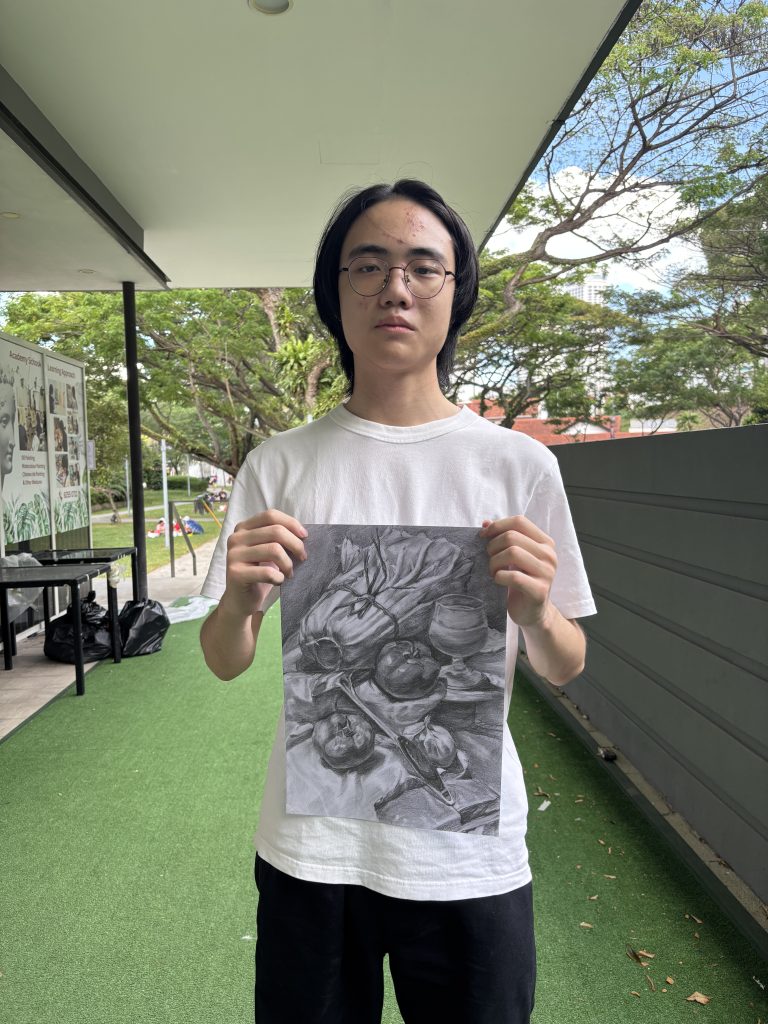
Portfolio Preparation – Our student with his completed drawing and sketching (still life – combination) artwork
A competitive application requires a synthesis of technical aptitude, creative ingenuity, and the potential for significant intellectual growth.
Reviewers look for evidence of:
Our student doing an oil painting portraiture artwork
The NAFA selection process focuses on identifying potential rather than perfection. The institution seeks candidates with a solid foundation, a focused interest in their field, and the motivation to develop further in a rigorous studio environment.
The portfolio illustrates current technical capabilities, while the admission test reveals conceptual agility and response to new challenges. The interview provides the panel insight into the student’s creative identity and their fit for the NAFA community.
Effective preparation involves more than refining finished pieces; students should practice technical skills, material experimentation, and articulating their artistic journey naturally.
Most importantly, the submission must be carefully aligned with the specific diploma track. A Fine Art portfolio should emphasize observational accuracy, while Design, 3D Design, or Fashion hopefuls focus on visual storytelling, form, and structural practice relevant to their intended area of study.
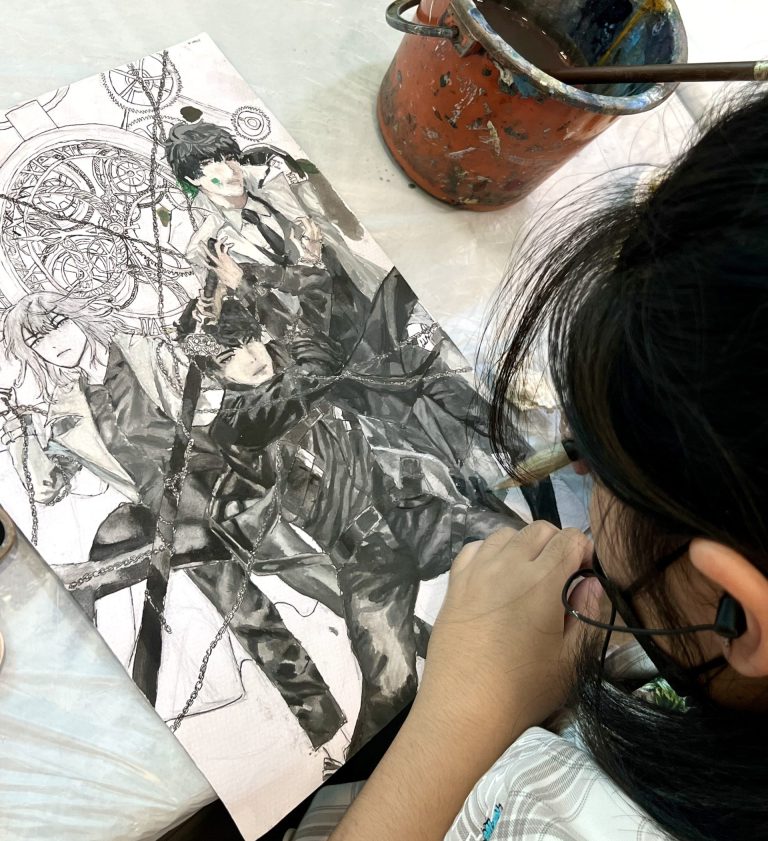
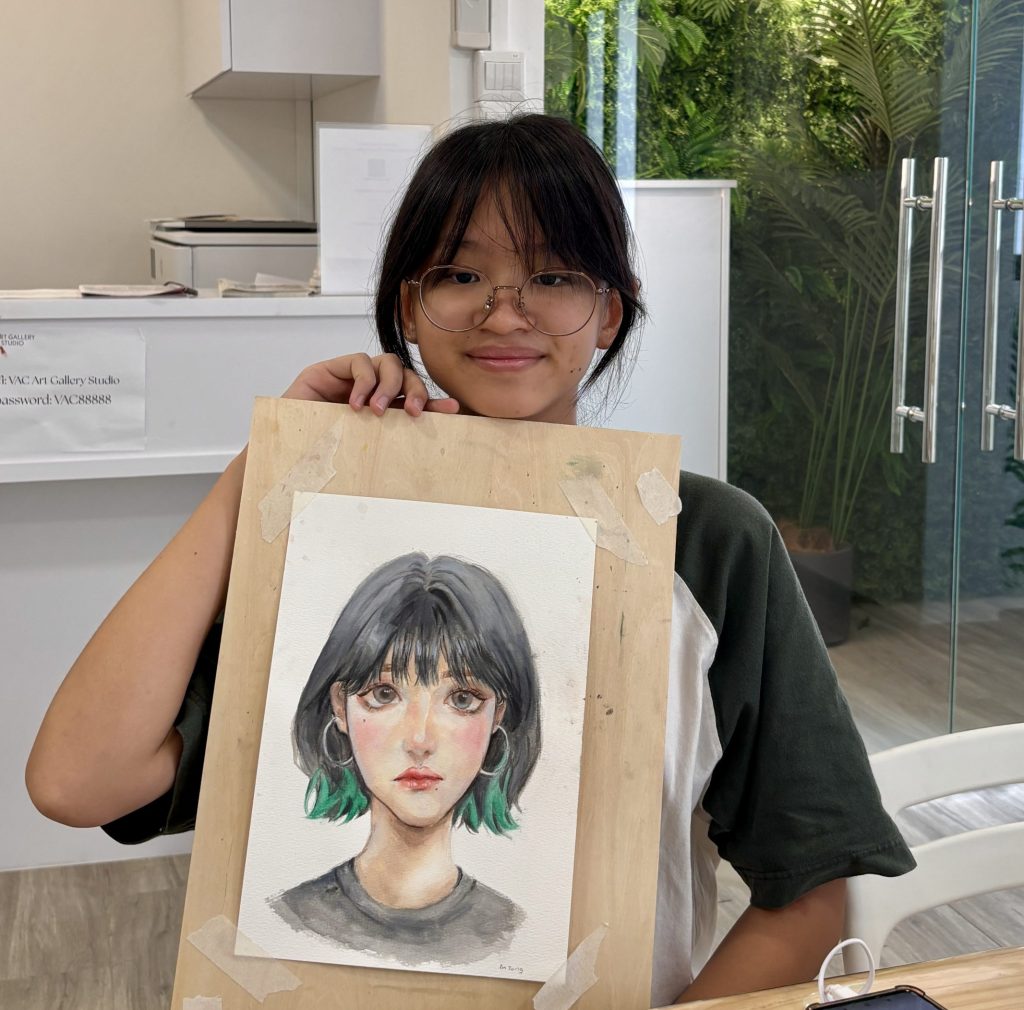
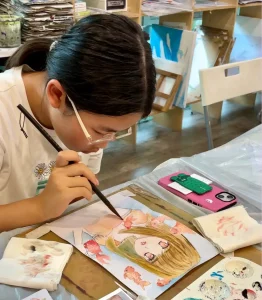
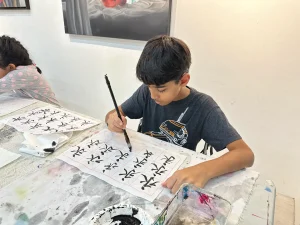
Out student working on her line and watercolour painting
Visual Arts Centre can support students preparing to apply to LASALLE College of the Arts by helping them build artistic skills, creative confidence and a portfolio that reflects their interests and potential. Through structured training, students develop foundations in drawing, painting, observation, composition and different art media. They are encouraged to explore personal themes, experiment with materials and develop original ideas. With guided feedback and portfolio preparation, students learn to select and refine their artworks, document their creative process and explain their artistic choices, gaining confidence in presenting and discussing their work.
Nanyang Technological University’s School of Art, Design and Media (NTU ADM) offers a creative environment where students explore art, design and media through hands-on learning and experimentation. Combining artistic practice with technology, ADM helps students develop their creative ideas and practical skills, preparing them for opportunities in the arts and creative industries.
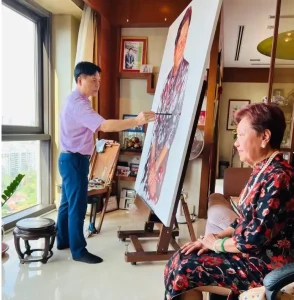
Our professional teacher having a I-to-I oil painting lesson with our student
The School of Art, Design and Media (ADM) at Nanyang Technological University provides a rigorous Bachelor of Fine Arts (BFA) pathway encompassing diverse specialisations in art, design, and time-based media. For prospective undergraduates, the admission process serves as a comprehensive evaluation of both creative aptitude and intellectual maturity.
Due to its high degree of selectivity, successful entry requires a synthesis of robust academic standing, creative potential, technical maturity, and independent inquiry. Reviewers look beyond the portfolio alone, utilising various creative assignments to gauge how a candidate investigates, communicates, and navigates complex visual problems.
Portfolio Preparation -An Acrylic painting (still life- combination) done by our student
Applicants must assemble a curated collection of work presented as a single PDF document not exceeding 20 pages. This strict pagination requires deliberate curation and professional clarity in how various projects are showcased to the admissions panel.
The submission should feature the candidate’s most accomplished and relevant creative outputs. Depending on the intended focus, this may include digital media, short video works, sculpture, or traditional painting and drawing that reflect a considered artistic practice.
While technical proficiency is a baseline, the faculty prioritises evidence of the candidate’s ability to think critically, explore concepts, and articulate a communicative intent. A portfolio is significantly enhanced when technical maturity is balanced with intellectual depth and a clear creative point of view.
Portfolio Preparation – A portraiture done by our student
Given the 20-page limit, candidates should avoid submitting an exhaustive archive of their historical output. Curation is essential to ensure the document reveals a coherent creative identity.
Each entry must be purposefully organised to communicate a focused sense of the student’s creative vision. Every page should contribute meaningfully to the overarching narrative of the portfolio.
The sequence of works is equally vital. A well-structured layout allows reviewers to easily discern the applicant’s technical strengths, thematic interests, and conceptual development over time.
A mandatory component of the application is a formal artist statement detailing the candidate’s creative philosophy, artistic influences, and long-term goals within the ADM studio environment.
This text provides necessary context, helping the committee identify the motivations behind the work. Applicants should clearly articulate their creative focus, specific artistic or theoretical influences, the concepts they are currently investigating, and how they intend to mature through university-level study.
Successful statements move beyond generic platitudes regarding a love for art, instead offering specific, personal insights that reflect genuine artistic maturity.
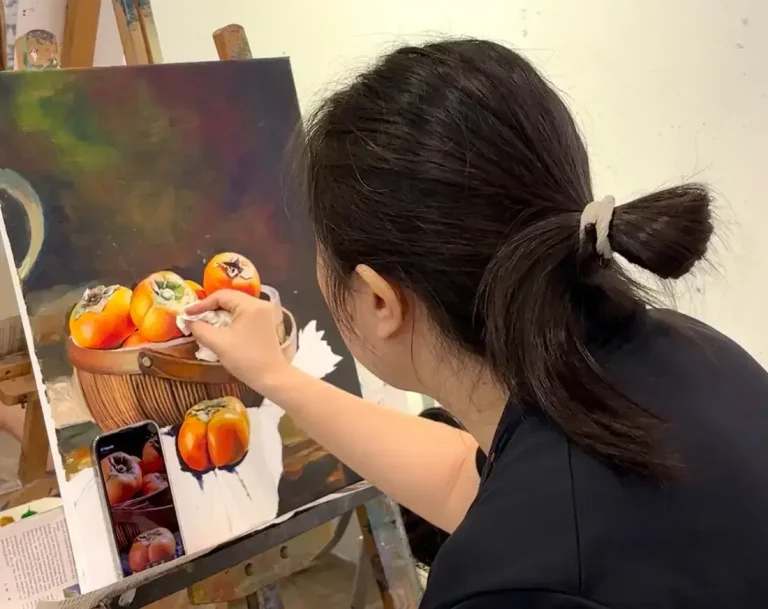
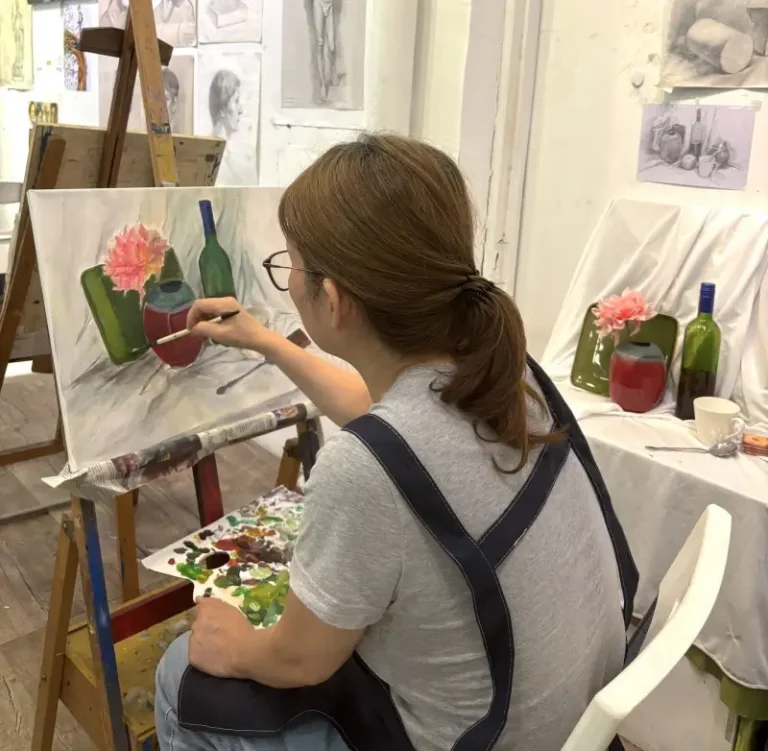
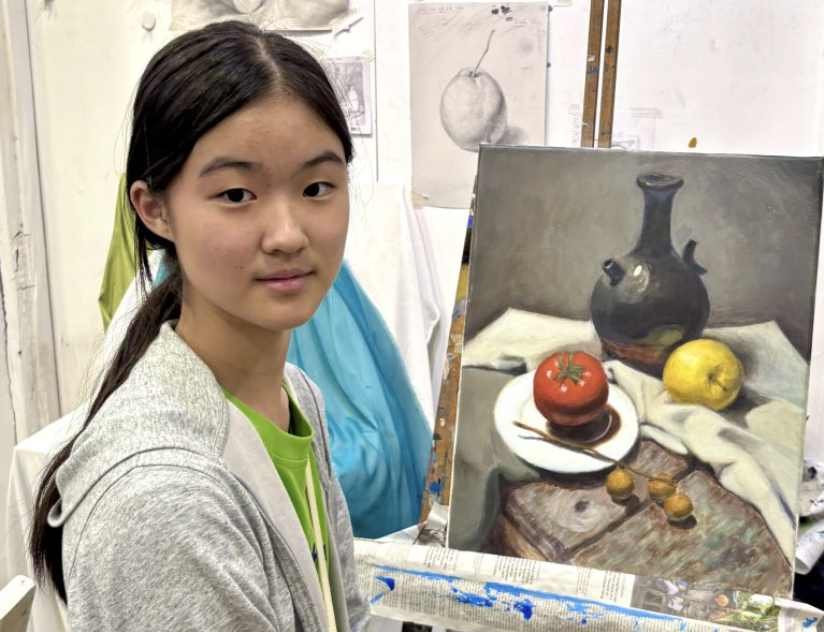
Our student with her oil painting (still life – combination) artwork
In addition to the curated portfolio, the ADM selection process incorporates several creative tasks. These are critical evaluative tools used to gauge the applicant’s potential beyond pre-existing works.
Applicants must submit a video introduction where they discuss their artistic journey and undergraduate aspirations at NTU. This allows for a more personal dialogue with the admissions team.
While technical polish is useful, the faculty prioritises a student’s ability to talk naturally and authentically about their creative experiences, interests, and reasons for choosing this rigorous BFA track.
The video serves to provide the committee with a genuine understanding of the candidate’s personality, ambition, and readiness for professional arts training.
Our professional art teach guiding one of our students through drawing and sketching
A specific assessment of observational drawing ability is included to evaluate the candidate’s capacity to study and render real-life subjects with technical accuracy.
Key assessment criteria include mastery of proportion, perspective, tonal values, form, and spatial relationships.
Strong observational skills remain a vital foundation for visual thinking across all disciplines, including those focused on digital media, design, or cinematic storytelling.
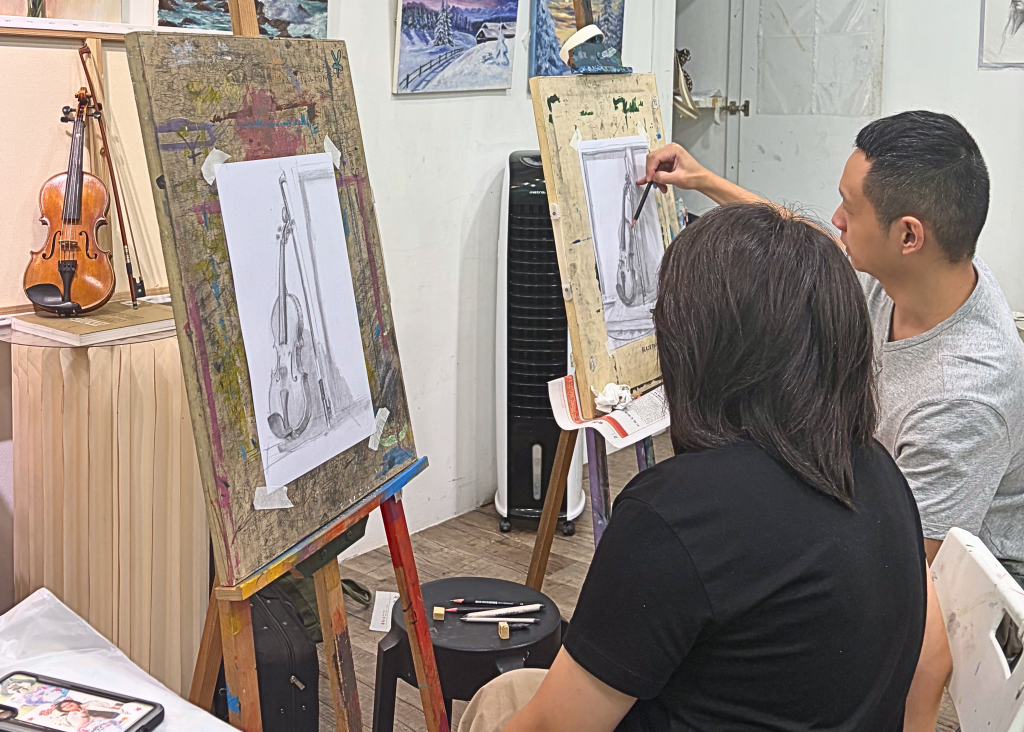
One of our professional teachers having a I-to-I private art lesson on drawing and sketching
Candidates are tasked with prescribed creative exercises intended to evaluate conceptual agility and visual problem-solving skills under instruction.
These assignments reveal how an applicant responds to unfamiliar creative constraints in real-time, moving beyond the safety of works developed with extensive prior preparation.
Preparation involves practicing rapid ideation and response to open-ended problems. Assessors focus on the rationale behind creative choices and the ability to interpret a formal brief into a considered outcome.
Our professional art teacher guiding one of our students through an oil painting of a horse
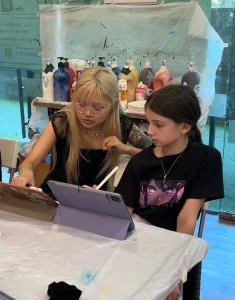
Portfolio Preparation – Our student working on her drawing and sketching artwork
Consistent academic performance is an essential component of the holistic application review at NTU ADM.
For A-Level applicants, strong overall results are required. While H2 Art is not a prerequisite, a high grade in this subject is viewed favourably as it demonstrates experience with art research and studio practice. For Polytechnic applicants, a high GPA in a relevant diploma field—such as fine art or media—is typically expected.
Applicants must recognise that a robust creative portfolio does not substitute for academic strength; both are weighed to ensure the candidate’s suitability for a university-level environment.
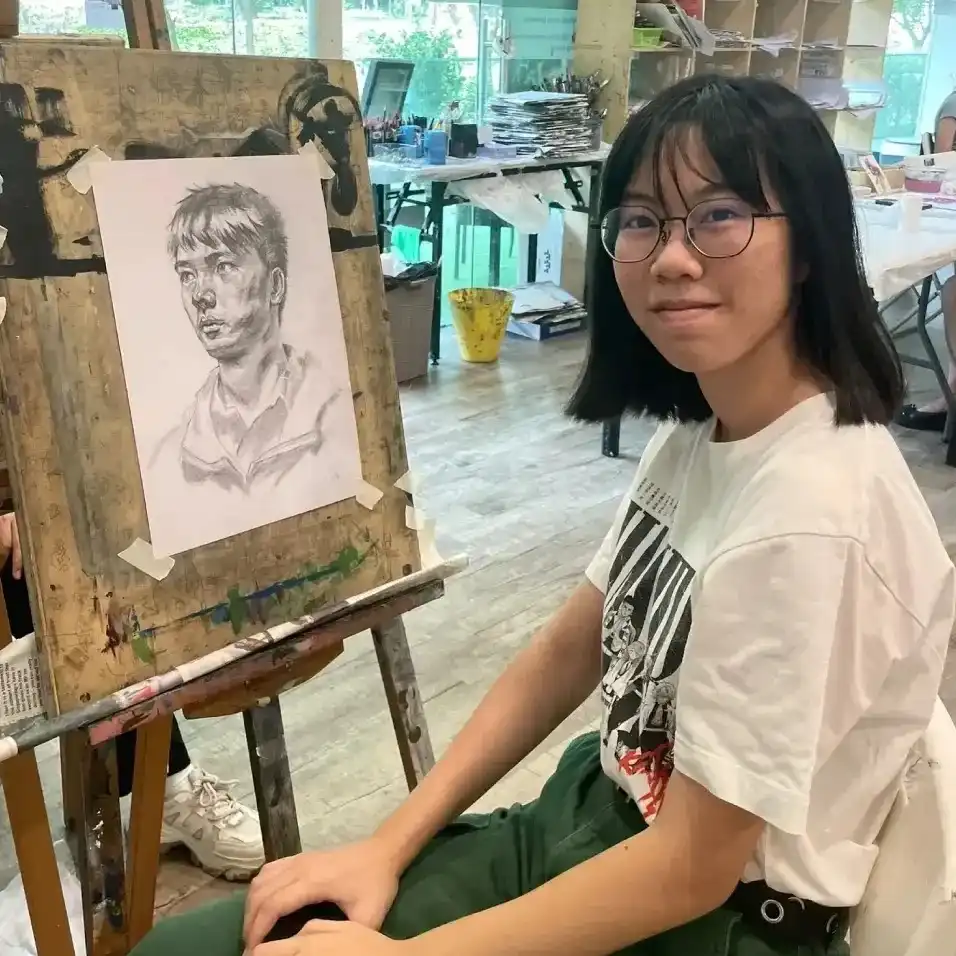
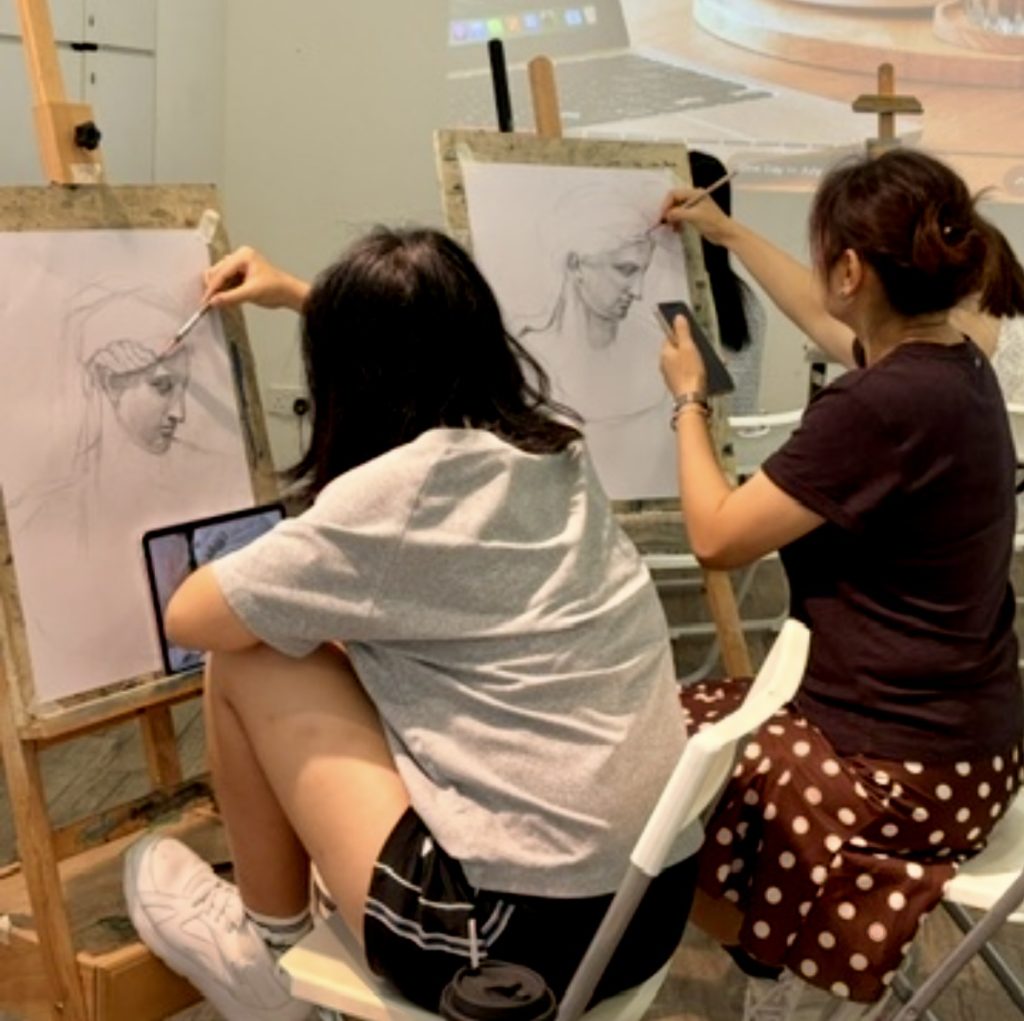
Our student working on a drawing and sketching portraiture artwork
A successful ADM application requires a synthesis of technical aptitude and intellectual depth. Reviewers look for evidence of:
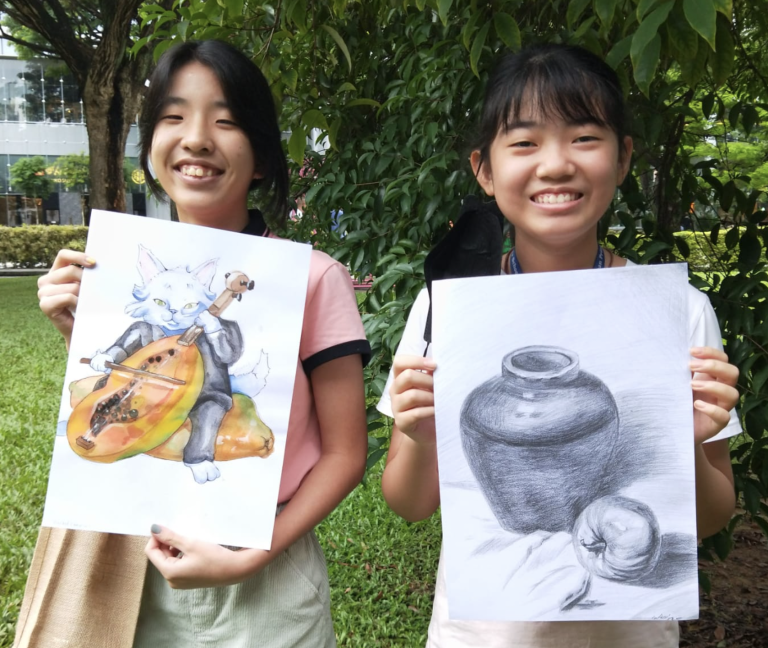
Our students with their completed artworks
The ADM selection process evaluates how a student thinks as much as what they can produce.
While the portfolio showcases technical ability, the artist statement reveals the intellectual framework behind the work. The introduction video provides insight into the candidate’s creative identity, while the creative assignments and observational drawing assessment test response to new challenges and foundational visual skills.
Successful applicants demonstrate more than just technical polish; they show originality, curiosity, and a clear personal perspective. A competitive submission is one where the work is grounded in intellectual curiosity and a considered willingness to experiment.
For early preparation, candidates should focus on observational rendering, conceptual problem-solving, curation, and the ability to articulate their creative journey.
Ultimately, ADM seeks students who possess both the creative foundation for success and the capacity for significant growth within a rigorous academic community.
Visual Arts Centre can support students preparing to apply to Nanyang Technological University’s School of Art, Design and Media (NTU ADM) by helping them build artistic skills, creative confidence and a portfolio that reflects their interests and potential. Through structured training, students develop foundations in drawing, painting, observation, composition and different art media. They are encouraged to explore personal themes, experiment with materials and consider how their ideas can communicate visually across art, design and media. With guided feedback and portfolio preparation, students learn to develop original concepts, select and refine their artworks, document their creative process and explain their artistic choices, gaining confidence in presenting their work.
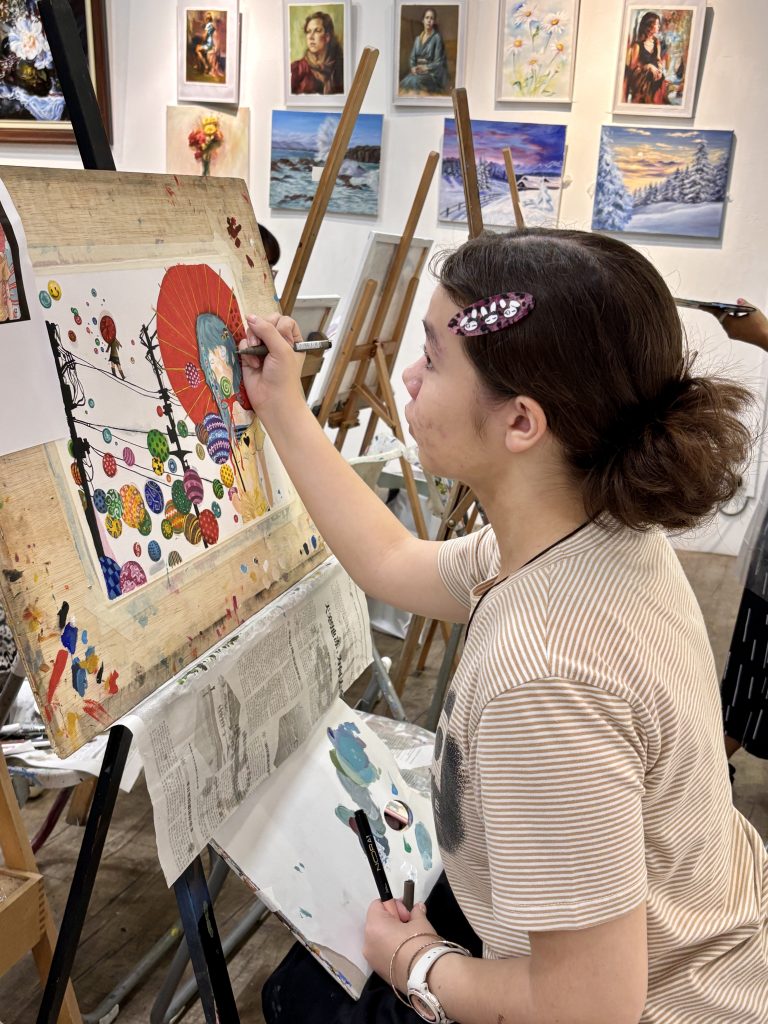
Portfolio Preparation – Our student working on an oil painting
(Art educators | Venue & art exhibition event marketeer & planner | Art jamming, art workshops & activities planner & curator)
Since its establishment in 2016, the Visual Arts Centre has been an art education institution & art establishment supported by the Singapore Government. Our professional team & artists line-ups provide & customise services with art related courses, activities, exhibitions, tours & events.
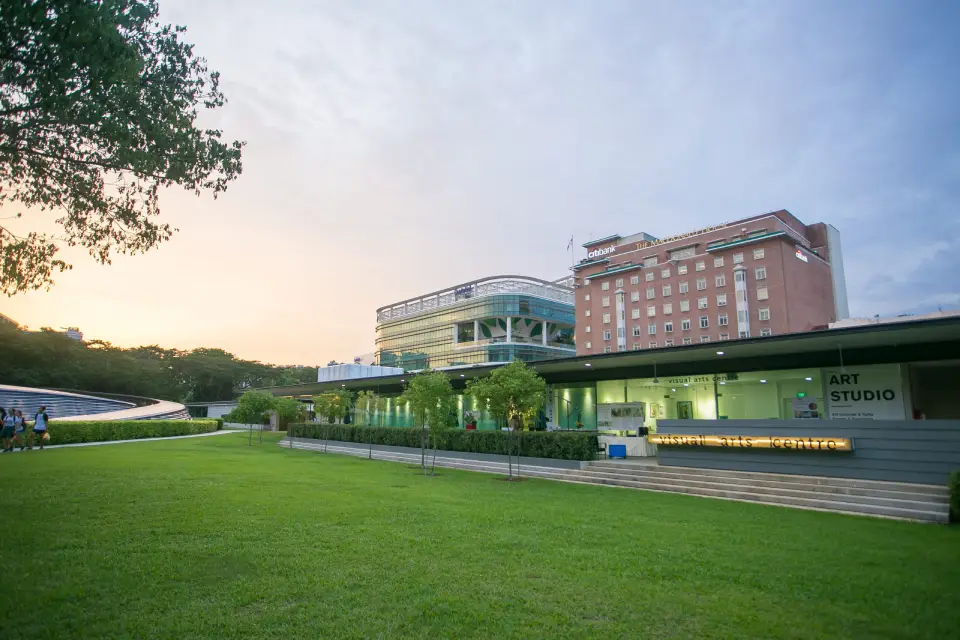
Our Dhoby Ghaut Art Studio & Exhibition Gallery, conveniently located above Dhoby Ghaut MRT and nestled within the verdant Dhoby Ghaut Green Park, is a wonderful place for individuals: kids/teens/adults to join beginner friendly professional art course & improve art skills & techniques.
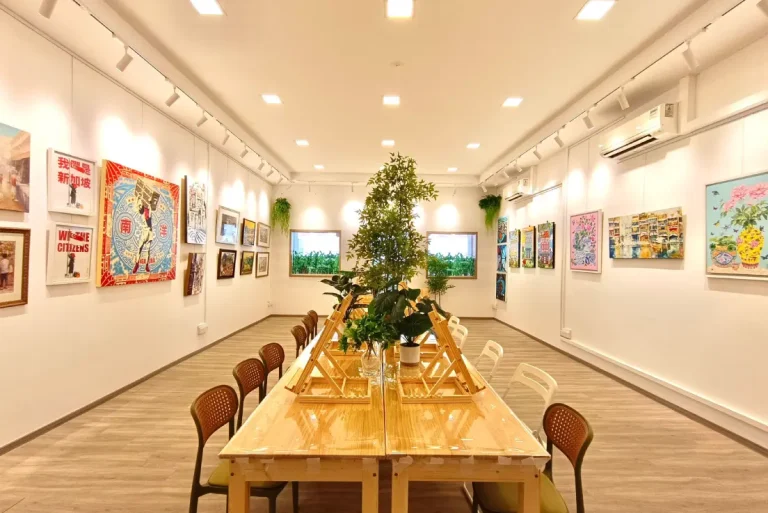
Within our Chinatown Art Gallery & Studio, we curate art exhibitions featuring local artists & their artworks. Providing platforms for public to appreciate art. Introducing local Nanyang-style art workshops & interesting art programmes with family friendly & tourist-friendly concepts.
Address:
10 Penang Road, #01-02 Dhoby Ghaut Green,
Singapore (238469)
Exit from Dhoby Ghaut MRT Station Exit B and turn left, we are there in 30m!
Address:
20B Mosque Street, Singapore (059500)
*2 minutes walk from Chinatown MRT Station Exit A
Take a left turn upon exiting the Chinatown MRT Station Exit A (Pagoda Street). Turn right to go to Mosque Street. Finally, walk towards 20B, we’re on the 3rd floor of the shophouse.
Click and get to our WhatsApp
Embark on a captivating journey into the vibrant world of digital art! Our Foundation in Digital Art workshop invites budding creatives aged nine and above to unleash their imagination and hone their artistic skills in a dynamic, supportive environment. From mastering basic digital tools to crafting mesmerizing digital masterpieces, children will explore a spectrum of techniques guided by seasoned mentors. Through hands-on activities and interactive sessions, participants will discover the endless possibilities of digital expression while fostering creativity and critical thinking. Join us for an exhilarating adventure where young artists transform ideas into stunning visual realities, igniting a passion for digital art
In the Batik Introduction Handkerchief Painting workshop, participants will learn the traditional art of batik, a wax-resist dyeing technique originating from Indonesia. The workshop begins with a brief history and overview of batik, highlighting its cultural significance and various techniques. Participants will then observe a demonstration of applying wax with tjanting tools and dyeing the fabric. Following the demonstration, each participant will design and create their own batik handkerchief, applying wax to create patterns and then dyeing their fabric. The workshop concludes with a group discussion, allowing participants to share their creations and reflect on their learning experience.
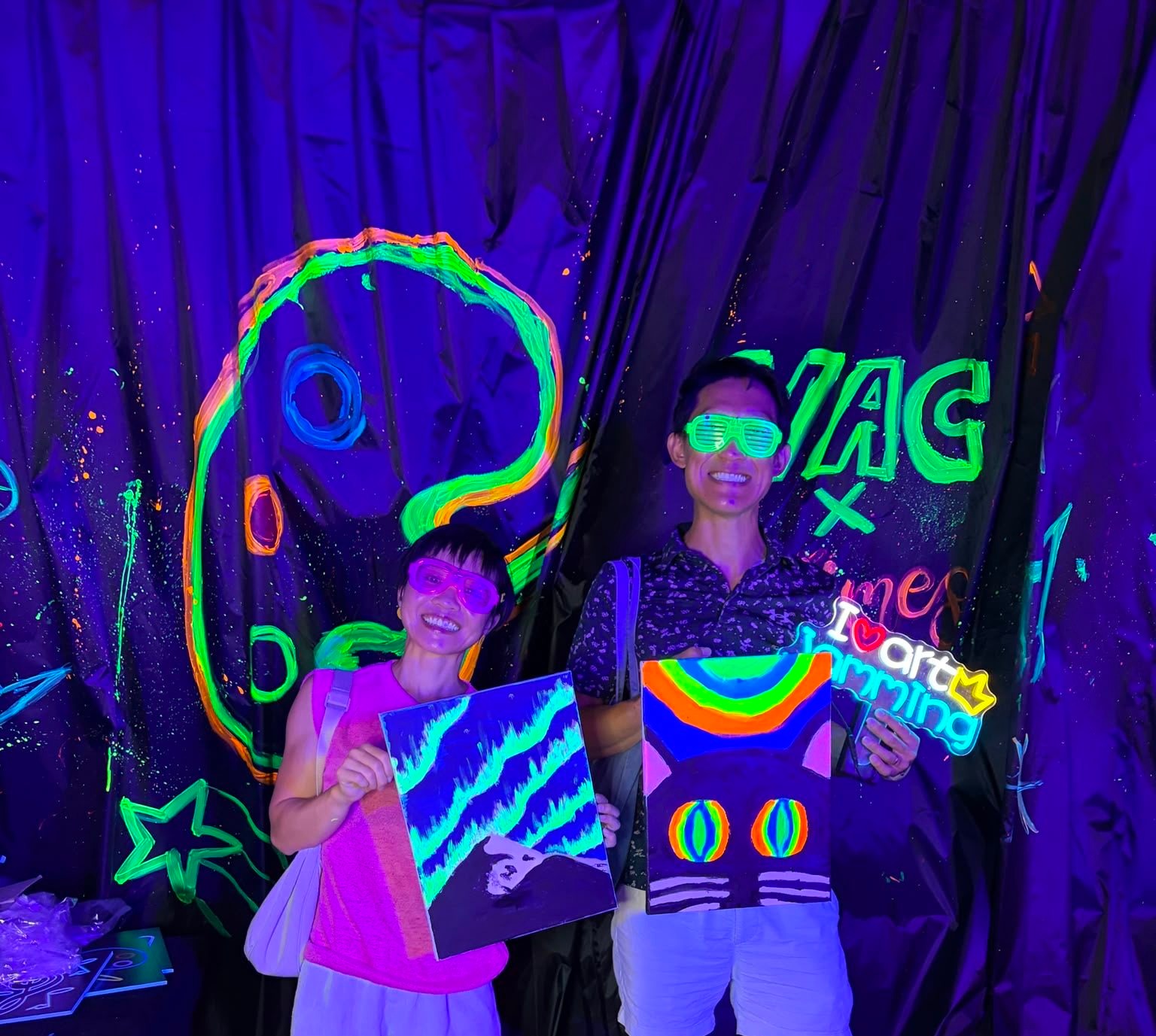
Terms & Conditions – Neon Glow Art Jamming & Colour Blast Party (Saturday Sessions Only)
Terms & Conditions For All Course/Workshop(s) at Visual Arts Centre (VAC):