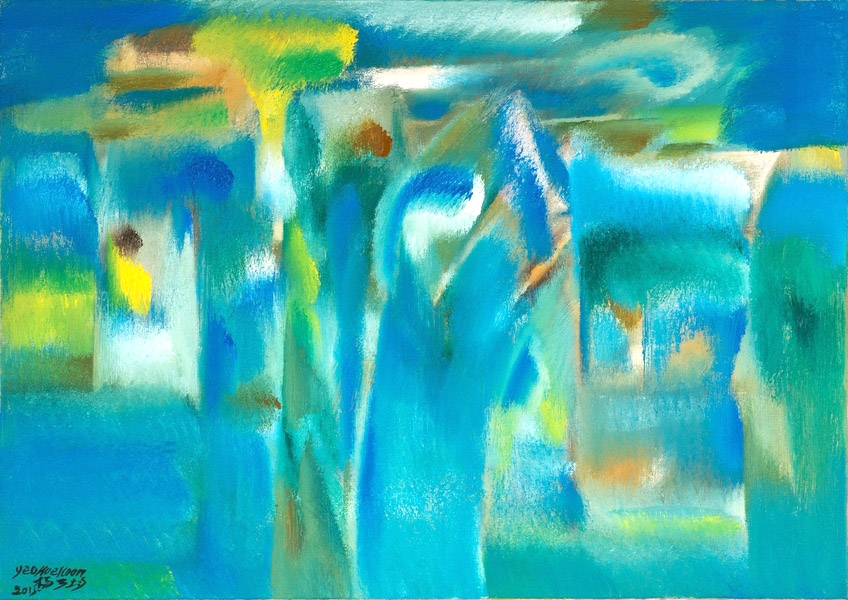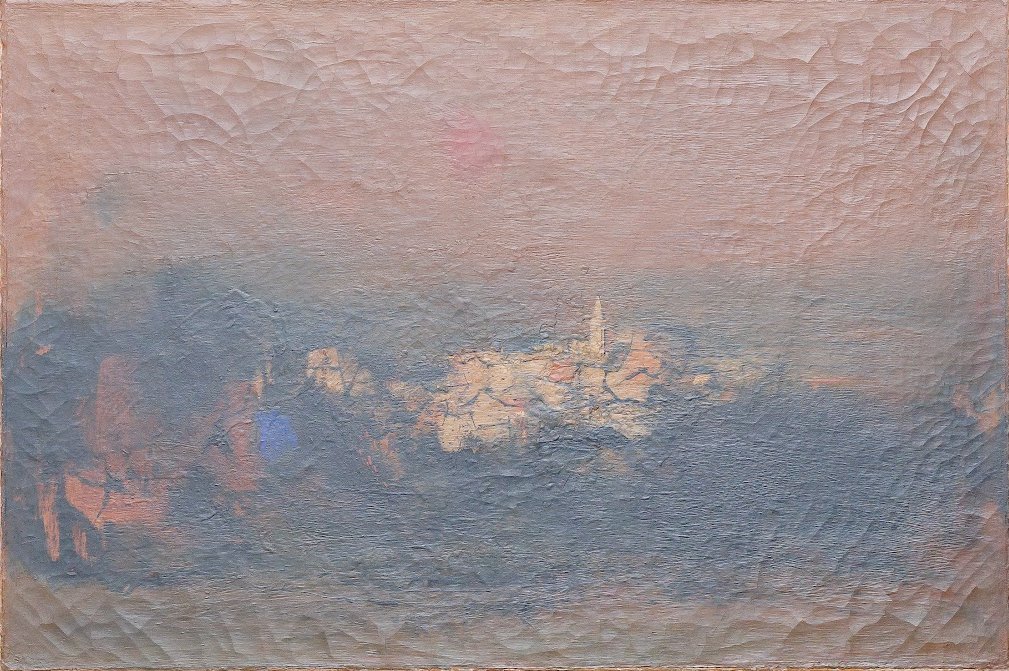


Yeo Hoe Koon
Oil on Canvas
64 x 89.5 cm
Price Range: $16,000 - $20,000
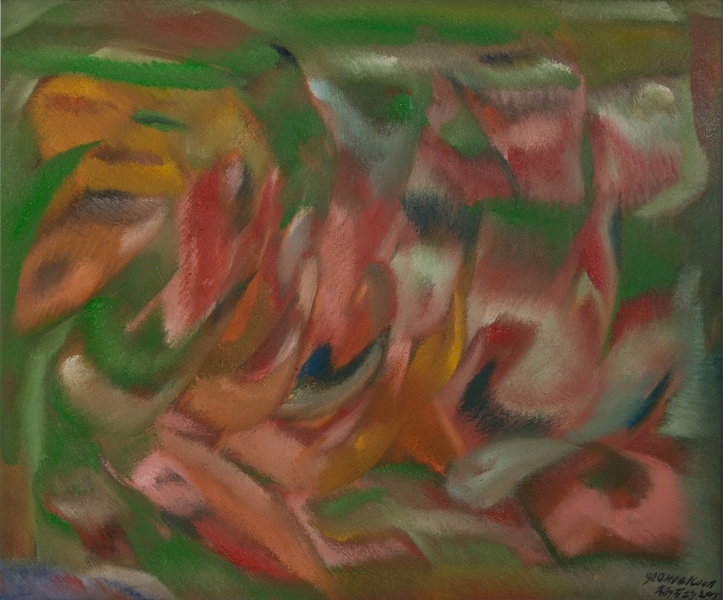
Yeo Hoe Koon
Oil on Canvas
101 x 123 cm
Price Range: $26,000 - $32,000
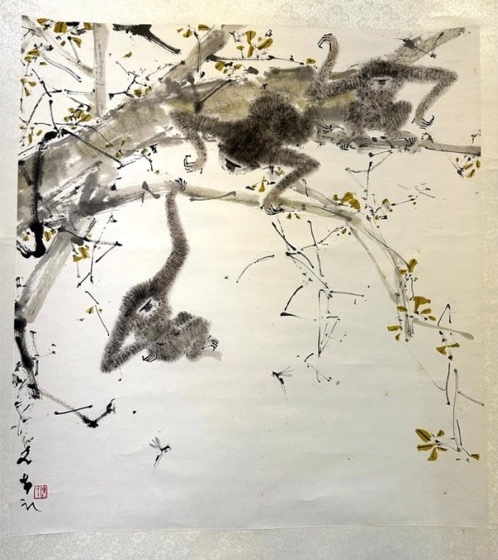
Chen Wen Hsi
Chinese Ink and Color on Paper
50 x 54cm
Price Range: SGD $42,000 - $50,000
Cheong Soo Pieng
Red Tone
61 x 91.5cm
Price Range: SGD $108,000 - $138,000
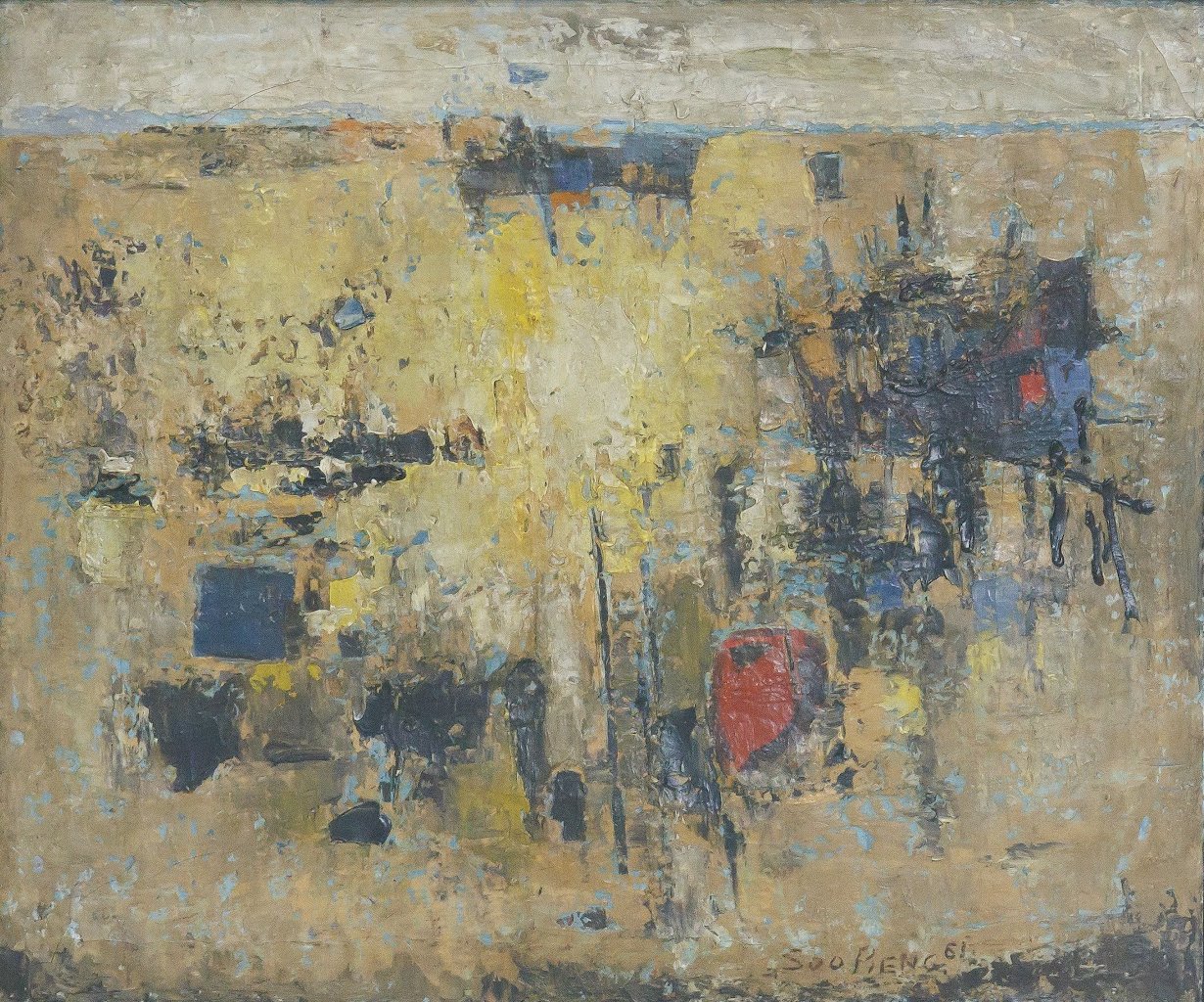
Cheong Soo Pieng
Abstract Landscape
50 x 61cm
Price Range: SGD $95,000 -$128,000
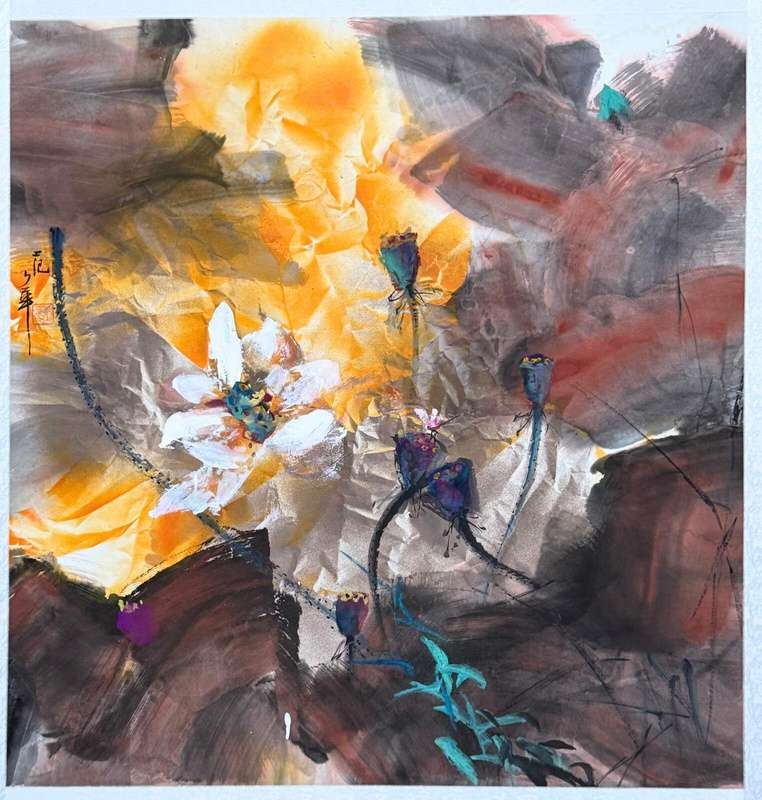
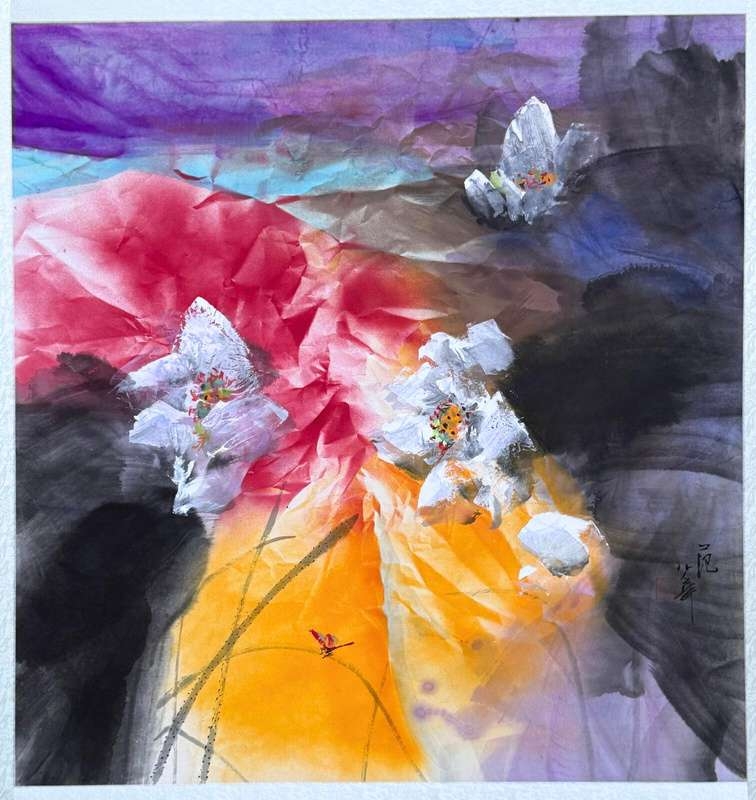
Fan Shao Hua
Chinese Ink and Colour on Paper
100 x 100cm
Price Range: SGD $9,800 - $14,800
Fan Shao Hua
Chinese Ink and Colour on Paper
100 x 100cm
Price Range: SGD $8,800 - $13,800
1.1 About O-level art
2.1 About A-level art
Success in O-Level Art necessitates a sophisticated synthesis of technical execution and intellectual rigor. Beyond mere aesthetic appeal, a premier submission must demonstrate mastery of materials, creative ingenuity, and a sustained iterative process. Examiners prioritize the analytical journey, seeking evidence of how a conceptual seed germinates into a resolved artistic outcome.
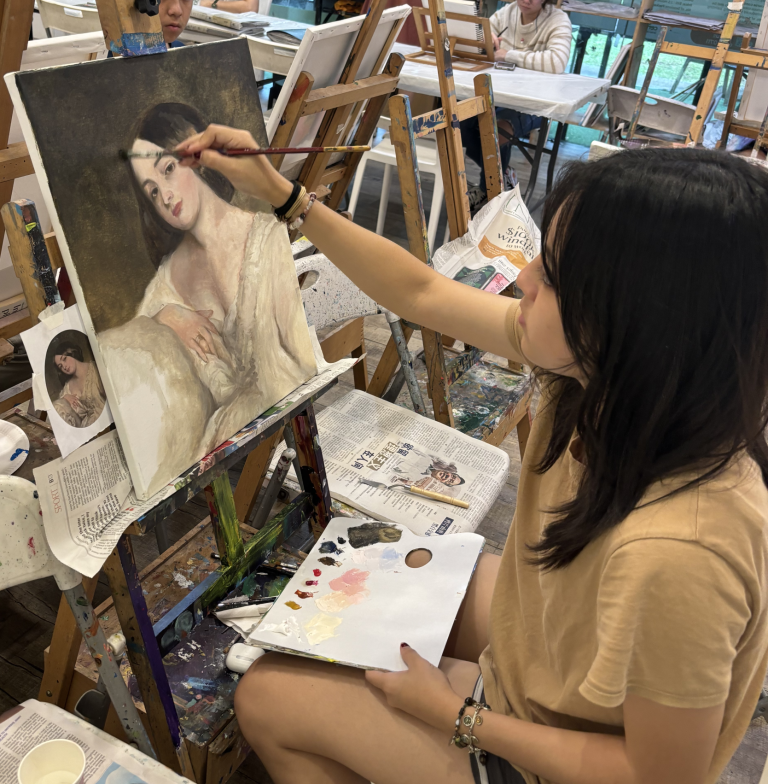
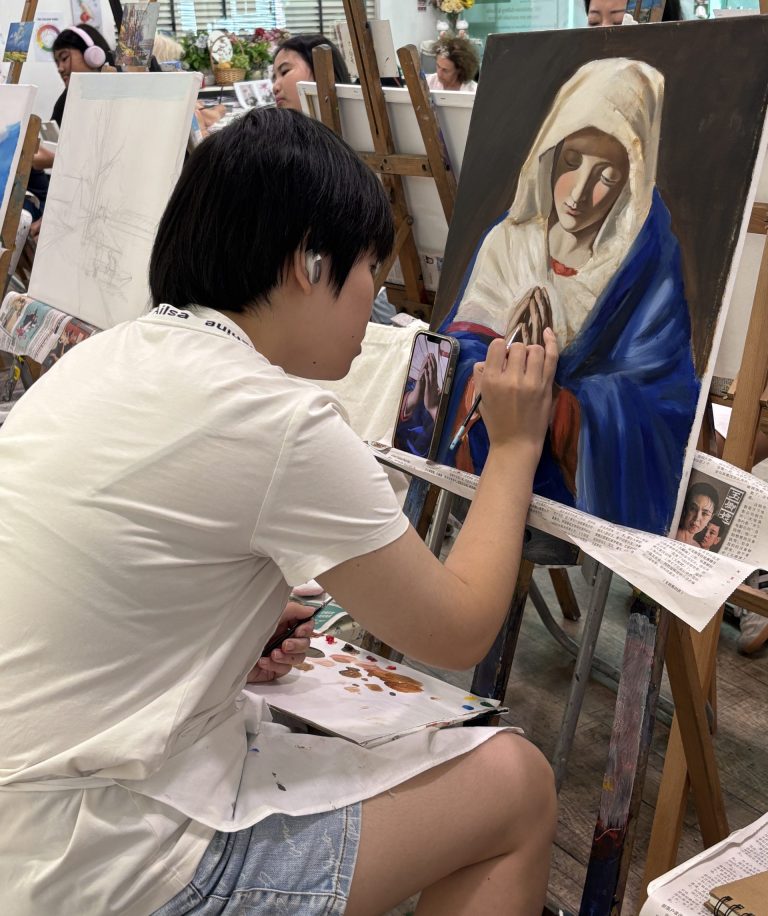
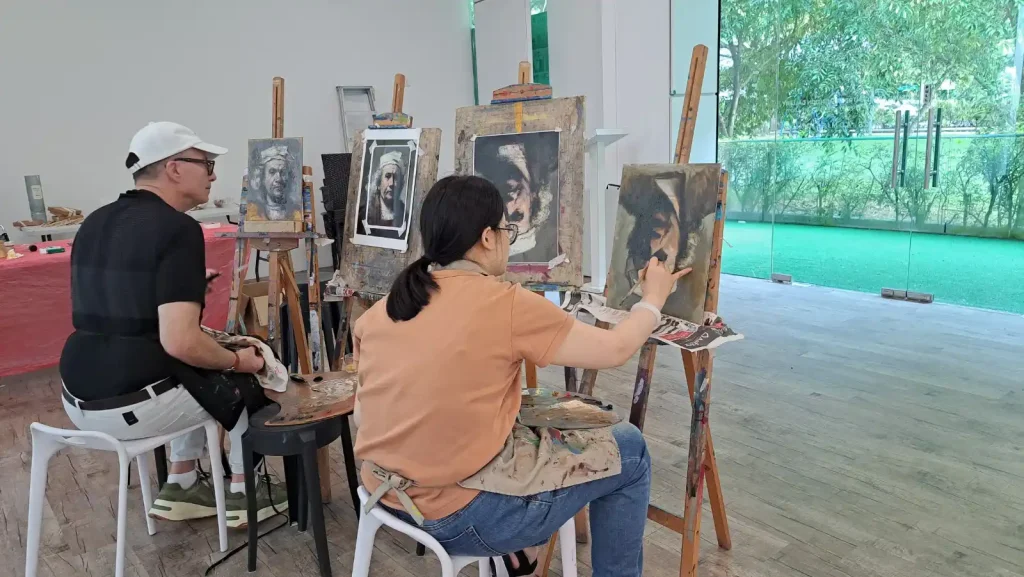
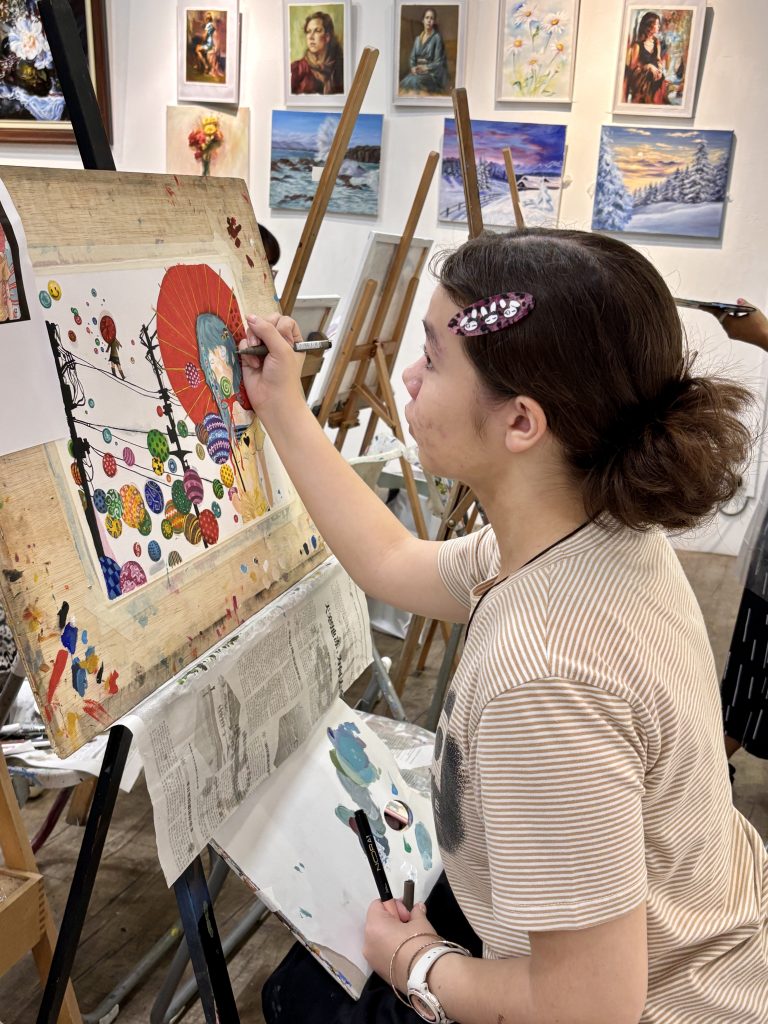
Our student completing her oil painting portraiture
Success in O-Level Art necessitates a sophisticated synthesis of technical execution and intellectual rigor. Beyond mere aesthetic appeal, a premier submission must demonstrate mastery of materials, creative ingenuity, and a sustained iterative process. Examiners prioritize the analytical journey, seeking evidence of how a conceptual seed germinates into a resolved artistic outcome.
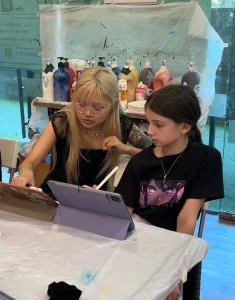
Portfolio Preparation -An Acrylic painting done by our student
Versatility of practice: Candidates should exhibit a confident command across multiple disciplines, including drawing, painting, and mixed media. Where appropriate, exploring specialized fields such as printmaking or digital platforms further highlights an adaptable skill set.
Engaging with diverse materials allows for more nuanced visual expression. Those who restrict their inquiry to a singular medium often fail to showcase the breadth of their creative potential, as versatility is key to higher-tier scoring.
The objective is not a superficial accumulation of techniques, but rather a deliberate and competent application of media that best articulates the intended visual message.
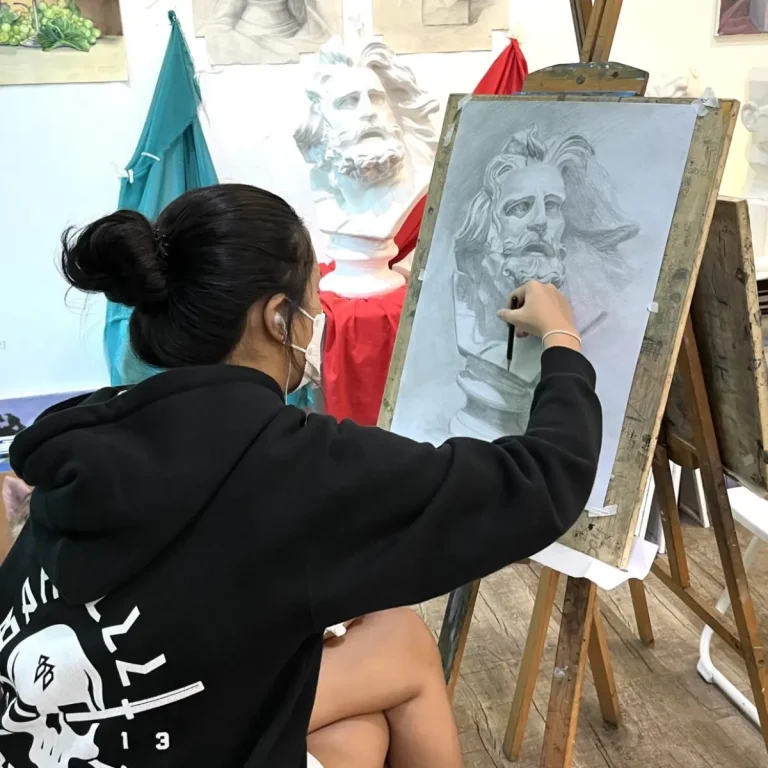
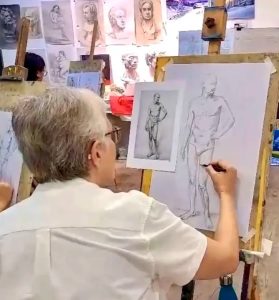
Our student doing an observational drawing and sketching artwork with one of our portraiture plaster cases
Evidence of methodological inquiry: The defining feature of a superior submission is the rigorous documentation of the artistic journey rather than just the final display.
A comprehensive sketchbook or process journal is essential for recording the evolution of thought. This should encompass thumbnail sketches, compositional studies, tonal experiments, and observational photography alongside artist research and material trials.
For instance, a robust process illustrates the systematic refinement of an idea—showing the transition from initial observational studies to varied compositional layouts and stylistic influences before achieving a finalized work.
Ultimately, examiners require clear evidence of thinking and experimentation. The sketchbook must function as a reflective narrative of the conceptual journey, avoiding its use as a mere repository for polished, finished drawings.
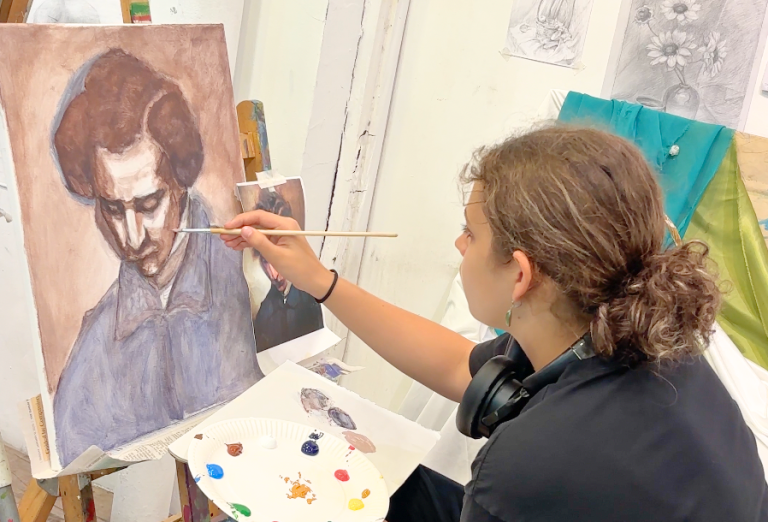
Our student doing an acrylic painting of a portraiture
Individual visual language: A distinctive submission must resonate with the student’s unique perspective, reflecting their specific interests, environmental observations, and personal experiences.
Students must transcend generic imagery or the direct replication of photographs and existing artworks. While art-historical references are vital for contextual study, they must be synthesized into an original and highly personal articulation.
Authentic engagement with a theme elevates the work. When two individuals explore identical subjects, the candidate who applies a personal lens and an idiosyncratic visual approach will consistently achieve greater conceptual impact.
Command of visual fundamentals: While conceptual growth is paramount, technical proficiency remains a core expectation. Students must demonstrate precise control over their chosen media and a robust grasp of foundational skills.
This includes accurate observational drawing, tonal range, spatial composition, and colour theory. Whether mastering the intricacies of pigment mixing or the delicate rendering of light and shadow in graphite, the execution must meet the high standard of the examination.
Technical ability should never be an end in itself; it must serve to effectively communicate the candidate’s artistic intent and facilitate a more refined realization of their concepts.
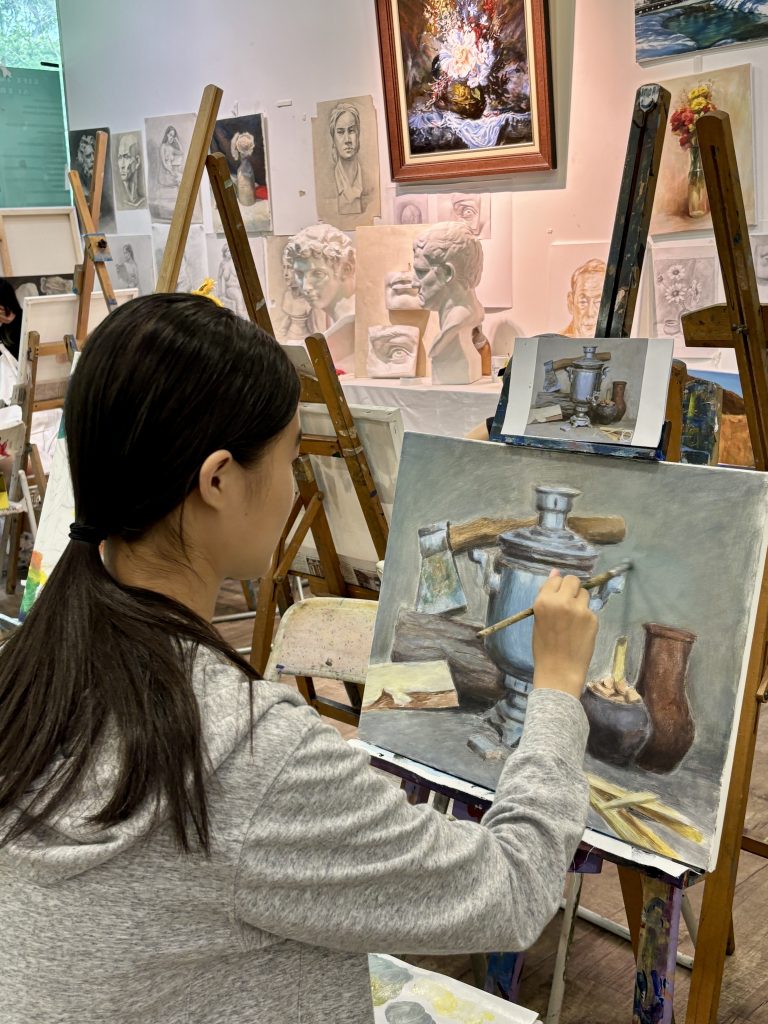
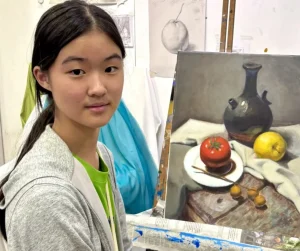
Our student doing acrylic painting (Still life, combination) artwork
Substantive thematic inquiry: Stronger submissions move beyond the purely decorative, engaging in a meaningful exploration of a chosen theme through research and reflection.
A rigorous project often originates from a specific observation or personal question, developing through iterative experimentation. Successful candidates make insightful connections between their own lived experience and broader art-historical contexts.
Rather than a superficial treatment of broad concepts like “nature,” candidates should interrogate the subject to establish a specific, individual point of view that informs the entire body of work.
This intellectual depth is best showcased through the logical progression of ideas, documenting how the initial concept was questioned, expanded, and eventually resolved into a mature artistic statement.
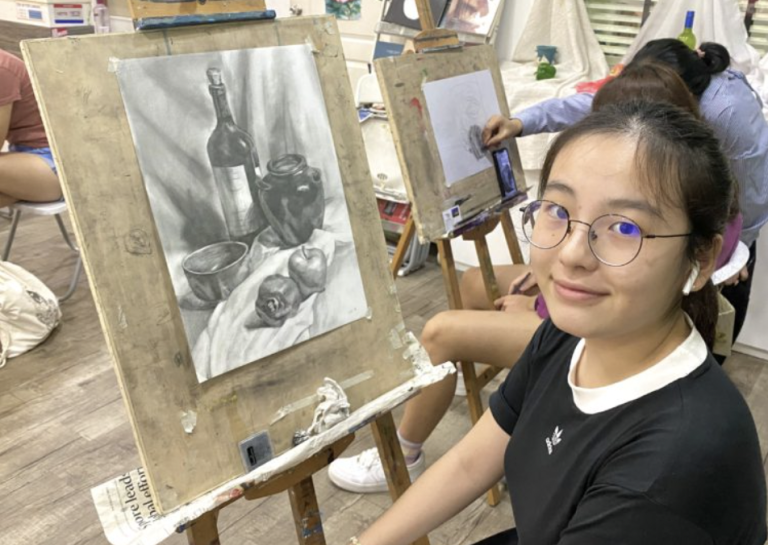
Our student with a completed drawing and sketching (still life, combination) artwork
To excel at the O-Level, a candidate must effectively demonstrate the following:
In conclusion, the O-Level standard rewards the integration of technique + originality + experimentation + conceptual inquiry + development. A purely aesthetic work lacking personal voice is as limited as a strong concept without the technical mastery required for its successful realization.
The transition to A-Level Art demands a significant shift from foundational skills toward a dual identity as artist and critical thinker. Candidates must transcend technical execution to engage in rigorous art analysis, contextual inquiry, and the cultivation of an independent visual language supported by a methodical creative journey.
The curriculum is structured around two core pillars: Paper 1: Art Discourse, emphasizing critical deconstruction and theoretical study, and Paper 2: Portfolio, focusing on the sustained development of an original artistic practice.
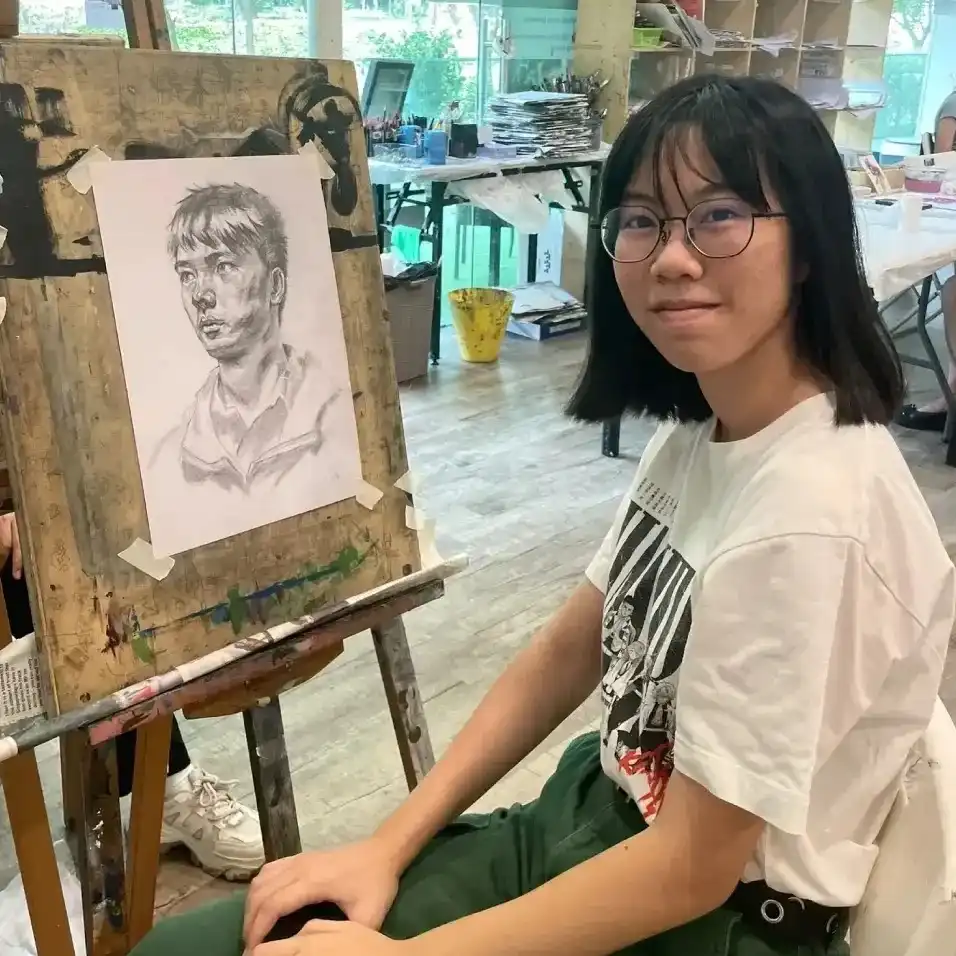
Portfolio Preparation – A portraiture done by our student
Explain how composition, colour, line, texture, space, and form work together. Go beyond describing what you see—for example, explain how dark colours create a mood or draw attention to a focal point.
Consider how the artwork reflects its historical, cultural, social, and political context. Explore Western, Asian, and Southeast Asian art traditions to understand why different styles developed and how artists responded to their world.
Share your understanding of the artwork’s meaning, mood, and impact. Consider what the artist may be communicating, and support your ideas with specific visual details and relevant context.
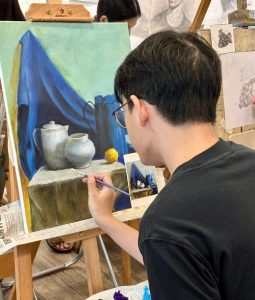
Our student using acrylic paint to create a still life artwork
This component centers on the student’s personal practice, emphasizing the ability to ideate, experiment, make strategic decisions, and refine work based on critical reflection. The portfolio functions as a narrative of intellectual and artistic growth rather than a mere gallery of finished products.
Select up to 20 screens that clearly show your ideas, research, experiments, and progress. Each screen should add something meaningful and avoid repetition.
Include at least three art forms, combining at least one traditional Fine Art medium with Design or Time-based media. Choose media that best express your ideas.
Write a 1,500-word critical essay explaining your ideas, artistic influences, and development. Discuss why you made certain choices, rather than simply describing your work.
Show your process from initial ideas to the final outcome, including material tests, composition studies, and reflections. Unsuccessful experiments can show what you learned and how you improved.
Complete the coursework within 30 hours over 10 weeks in your second year. Plan your time carefully to allow for testing, reviewing, and refining your work.
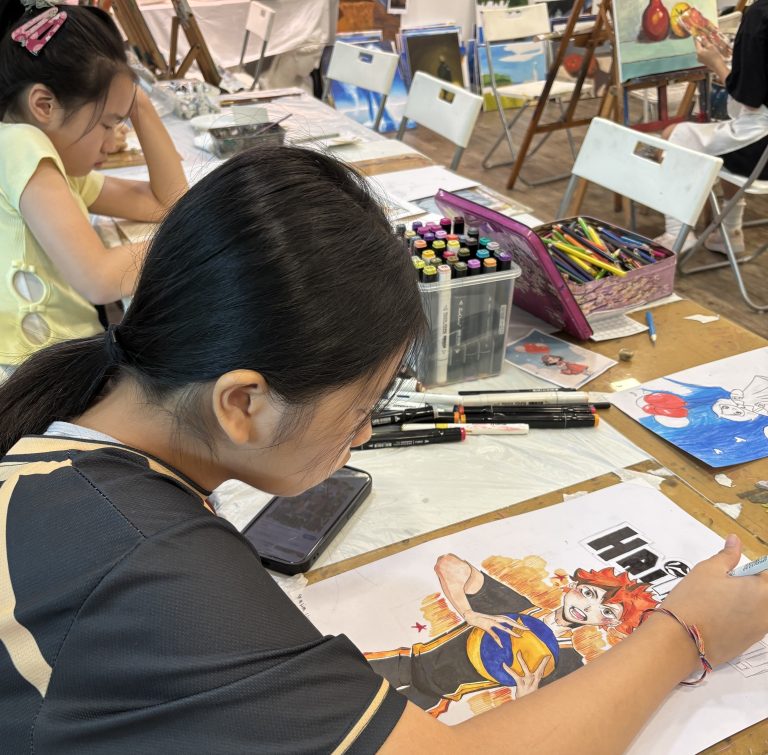
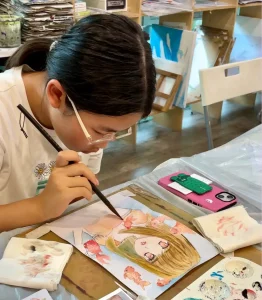
Portfolio Preparation – Our student working on her creative manga drawing
An exceptional A-Level candidate must demonstrate a sophisticated synthesis of critical understanding and independent practice.
In Paper 1, the objective is to:
In Paper 2, students must:
Ultimately, A-Level Art rewards those who think like an artist, integrating technical control with deep conceptual inquiry. The progression from O-Level necessitates a move toward greater ownership over what is explored, the rationale for inquiry, and the efficacy of communication.
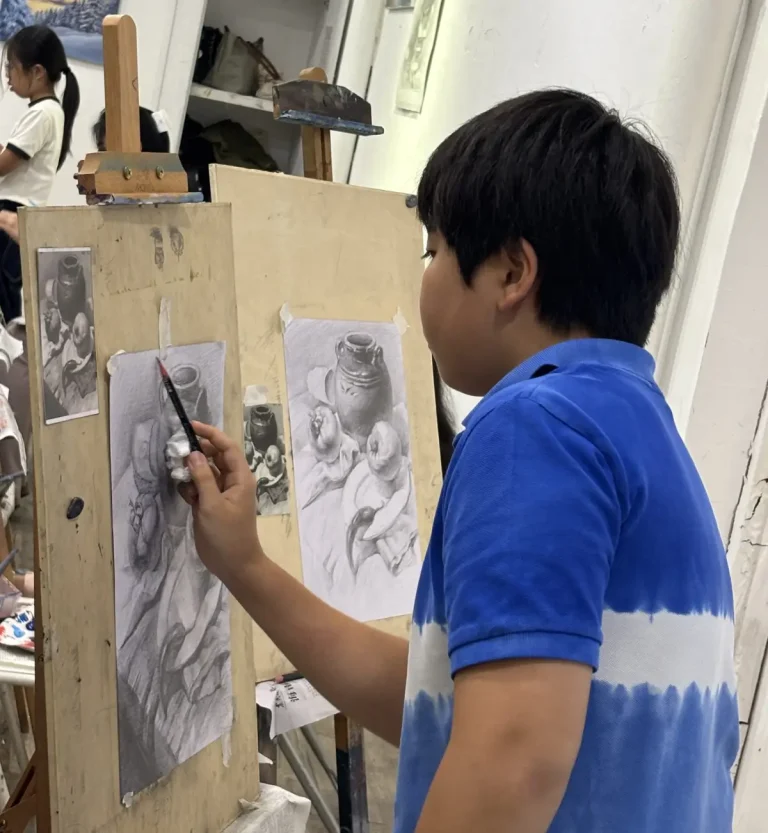
Our student drawing a still life artwork
Visual Arts Centre can support students preparing for A-Level Art by helping them build artistic skills, creative confidence and an independent art practice. Through structured training, students develop foundations in drawing, painting, observation, composition and different art media. They are encouraged to explore personal themes, research artistic influences and develop original ideas through experimentation. With guided feedback and coursework support, students learn to document their progress, refine their artworks and explain their creative choices. The programme also strengthens visual analysis and critical thinking, helping students discuss artworks and understand their wider context.
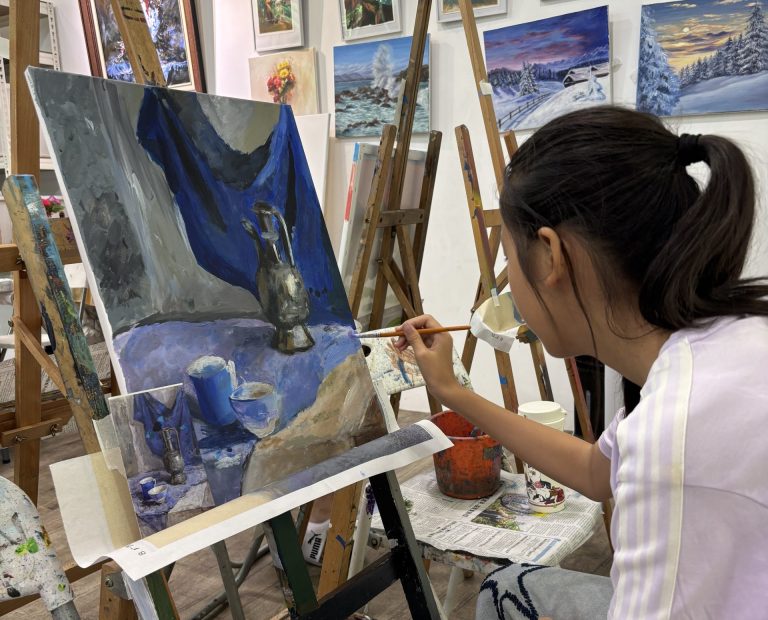
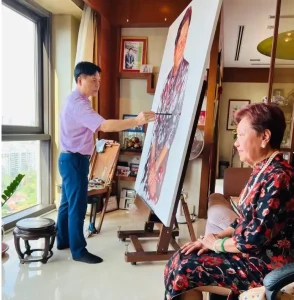
Portfolio Preparation – Our student working on an oil painting
(Art educators | Venue & art exhibition event marketeer & planner | Art jamming, art workshops & activities planner & curator)
Since its establishment in 2016, the Visual Arts Centre has been an art education institution & art establishment supported by the Singapore Government. Our professional team & artists line-ups provide & customise services with art related courses, activities, exhibitions, tours & events.
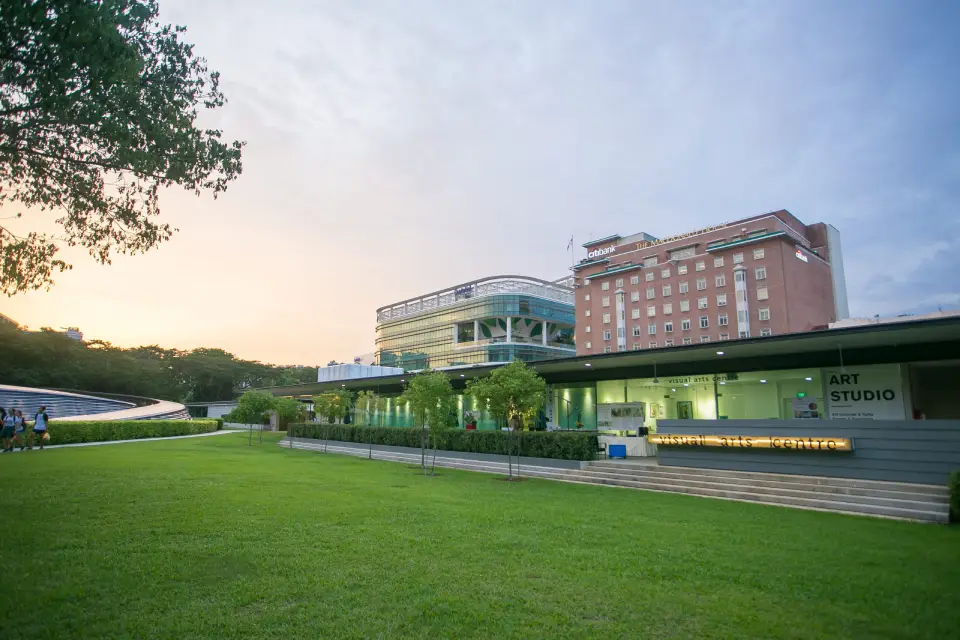
Our Dhoby Ghaut Art Studio & Exhibition Gallery, conveniently located above Dhoby Ghaut MRT and nestled within the verdant Dhoby Ghaut Green Park, is a wonderful place for individuals: kids/teens/adults to join beginner friendly professional art course & improve art skills & techniques.
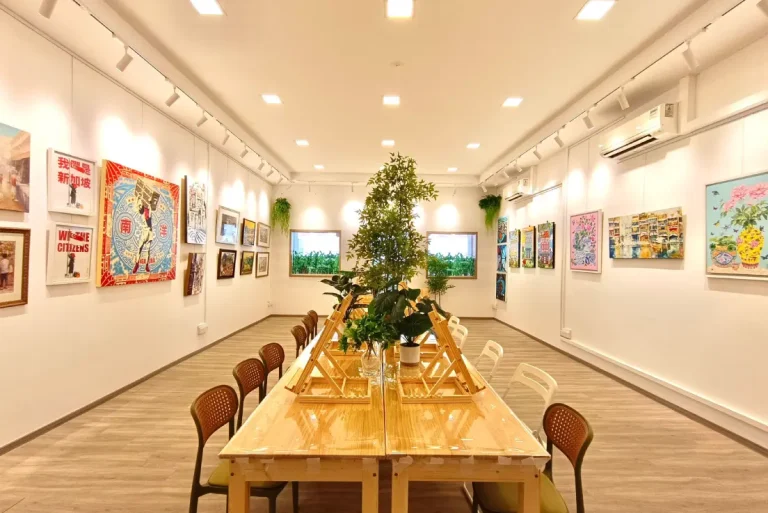
Within our Chinatown Art Gallery & Studio, we curate art exhibitions featuring local artists & their artworks. Providing platforms for public to appreciate art. Introducing local Nanyang-style art workshops & interesting art programmes with family friendly & tourist-friendly concepts.
Address:
10 Penang Road, #01-02 Dhoby Ghaut Green,
Singapore (238469)
Exit from Dhoby Ghaut MRT Station Exit B and turn left, we are there in 30m!
Address:
20B Mosque Street, Singapore (059500)
*2 minutes walk from Chinatown MRT Station Exit A
Take a left turn upon exiting the Chinatown MRT Station Exit A (Pagoda Street). Turn right to go to Mosque Street. Finally, walk towards 20B, we’re on the 3rd floor of the shophouse.
Click and get to our WhatsApp
Embark on a captivating journey into the vibrant world of digital art! Our Foundation in Digital Art workshop invites budding creatives aged nine and above to unleash their imagination and hone their artistic skills in a dynamic, supportive environment. From mastering basic digital tools to crafting mesmerizing digital masterpieces, children will explore a spectrum of techniques guided by seasoned mentors. Through hands-on activities and interactive sessions, participants will discover the endless possibilities of digital expression while fostering creativity and critical thinking. Join us for an exhilarating adventure where young artists transform ideas into stunning visual realities, igniting a passion for digital art
In the Batik Introduction Handkerchief Painting workshop, participants will learn the traditional art of batik, a wax-resist dyeing technique originating from Indonesia. The workshop begins with a brief history and overview of batik, highlighting its cultural significance and various techniques. Participants will then observe a demonstration of applying wax with tjanting tools and dyeing the fabric. Following the demonstration, each participant will design and create their own batik handkerchief, applying wax to create patterns and then dyeing their fabric. The workshop concludes with a group discussion, allowing participants to share their creations and reflect on their learning experience.
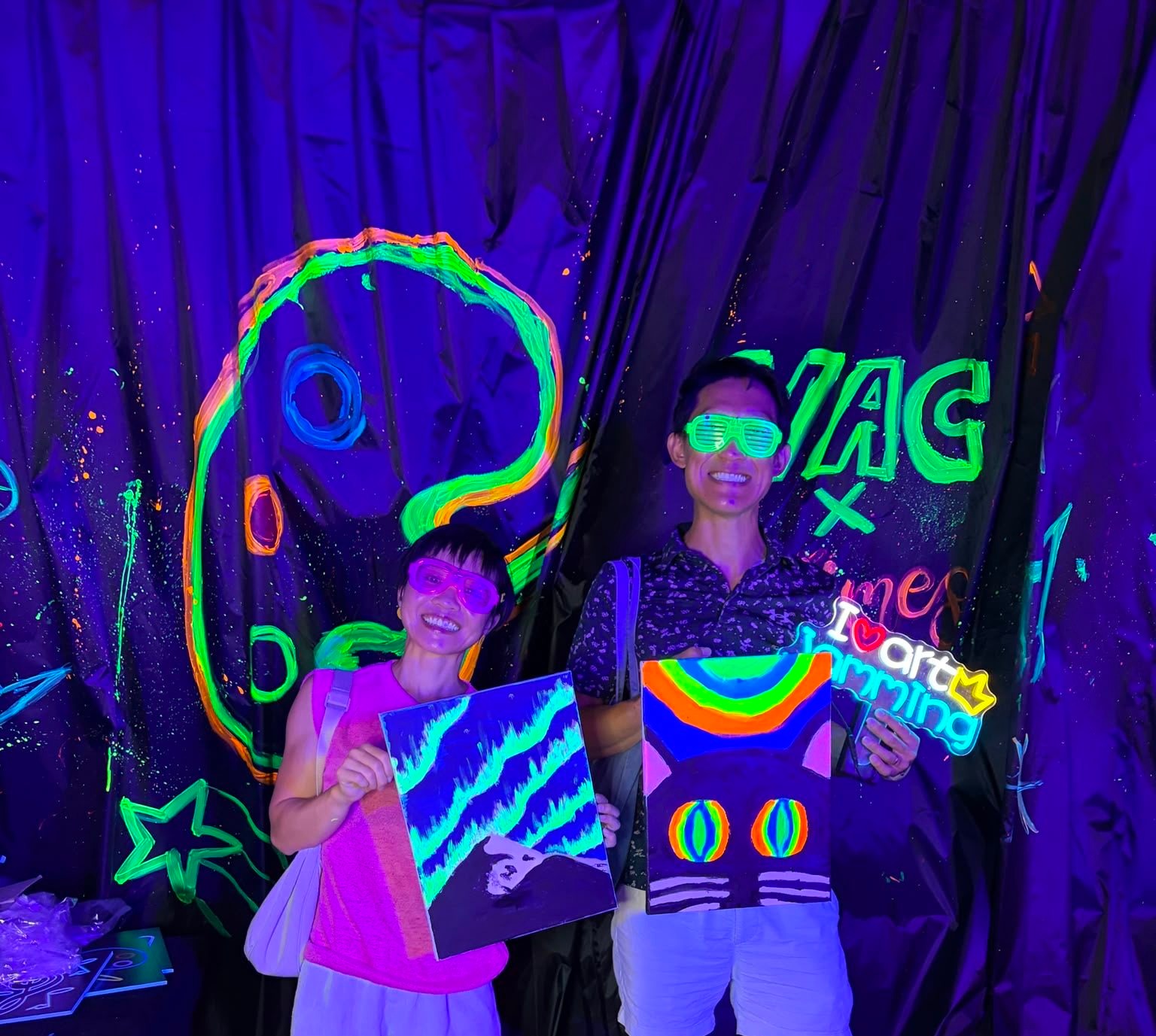
Terms & Conditions – Neon Glow Art Jamming & Colour Blast Party (Saturday Sessions Only)
Terms & Conditions For All Course/Workshop(s) at Visual Arts Centre (VAC):