Art Portfolio Preparation – DSA (Kids)

IMG_6449-2-1024x825
Professional Interior Design Course in Singapore
AEP & EAP Art Portfolio
A Complete Guide On How To Prepare Art Portfolio

Complete guide on about & preparation for AEP (Art Elective Programme & EAP (Enhanced Art Programme)

1. AEP (Art Elective Programme)

1.1 About AEP (Art Elective Programme)

  1. Preparation/selection requirements – portfolio, interview etc
  2. Schools choices
  3. Starting age, duration, art syllabus
  4. Application process
  5. How can Visual Arts Centre help to prepare for AEP?

1. AEP (Art Elective Programme)

1.1 About AEP (Art Elective Programme)

The Art Elective Programme (AEP) is a four-year programme that starts from Secondary 1. Like EAP, it extends the O-Level Art syllabus and provides students with more advanced and in-depth art learning experiences. This programme is split into two different routes, in-house programme and the centre based programme.

  1. Preparation/selection requirements – portfolio, interview etc

As part of the selection process, students will generally need to present an art portfolio demonstrating their current level of skill. They may also be required to attend a short interview and complete one or more short art tasks. The exact requirements may vary according to the selection exercise.

It is important to note that students applying for the centre-based AEP cannot already be studying in one of the seven AEP schools or nine EAP schools, as the centre-based programme is intended to provide an alternative pathway for eligible students from other schools.

Best Kids/Children/Preteen Professional Acrylic Painting Art Course in Singapore by Visual Arts Centre Professional 3 Medium 3 Immersion Art Course

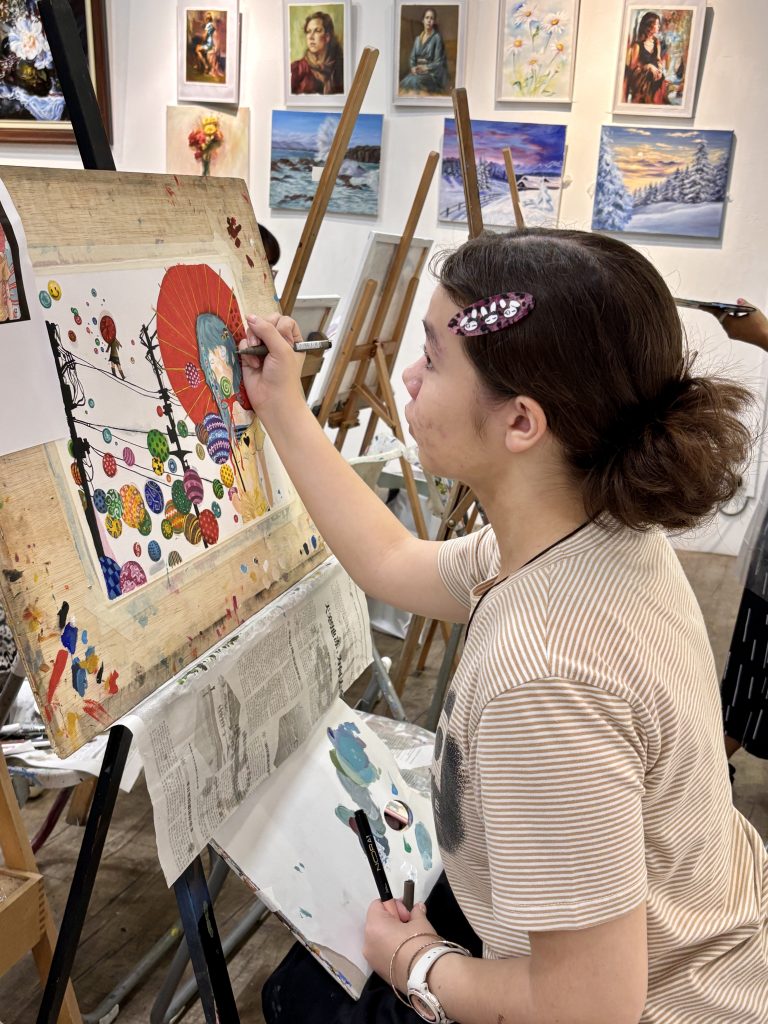
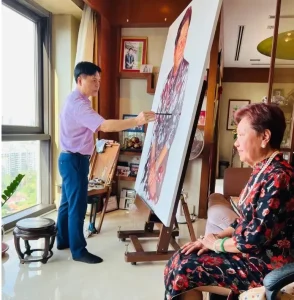
Portfolio Preparation -An Acrylic painting done by our student

2. Schools choices: in-house & centre-based

2.1 AEP (Elective Art Programme) in-house

AEP includes Higher Art, which provides an enriched curriculum with additional curriculum time. This takes the place of the Lower Secondary Art curriculum. Students in the programme are also exempted from Lower Secondary Design & Technology and Lower Secondary Food & Consumer Education.

The in-house AEP is offered only to students of the participating AEP schools. These schools are Bukit Panjang Government High School, CHIJ Secondary (Toa Payoh), Hwa Chong Institution, Nanyang Girls’ High School, National Junior College, Victoria School, and Zhonghua Secondary School.

Students from all courses, except Normal (Academic) [NA] and Normal (Technical) [NT], may be considered for AEP, subject to the individual school’s criteria and selection exercise. Students who wish to join AEP through one of these schools will first need to gain admission to the school and then attend the school’s AEP selection exercise at the beginning of Secondary 1.

The selection process generally includes a review of the student’s art portfolio, a short interview, and/or short art task(s). As the selection criteria are school-based, students should check the specific requirements of the school they are applying to.

For students enrolled in AEP at independent schools, there is also a school fee subsidy of up to $2,400 per year, subject to the applicable eligibility conditions.

2.2 AEP (Elective Art Programme) centre-based

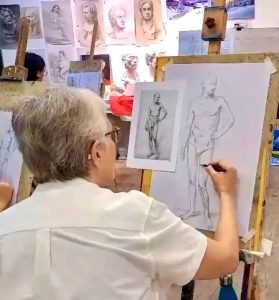
Children & Kids (7-9YO|10-12YO)/Youths & Teenagers (13-17YO) Drawing & Sketching - Professional Art Course

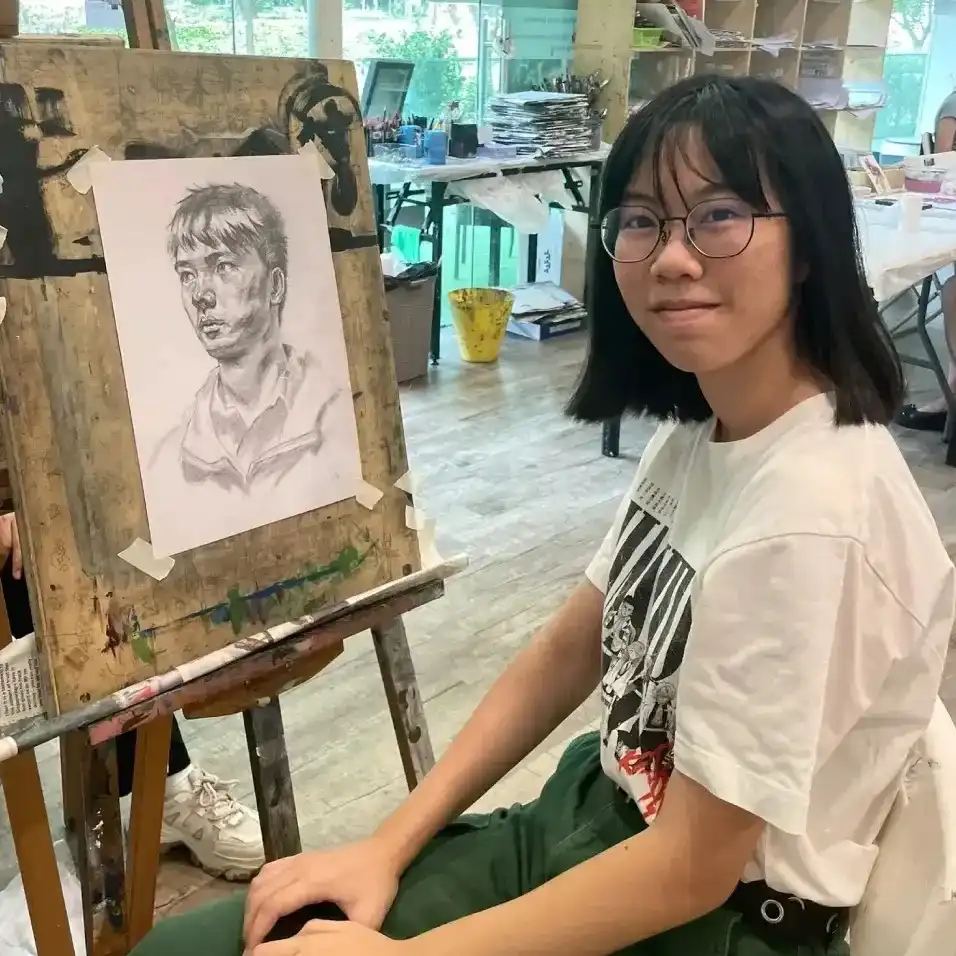
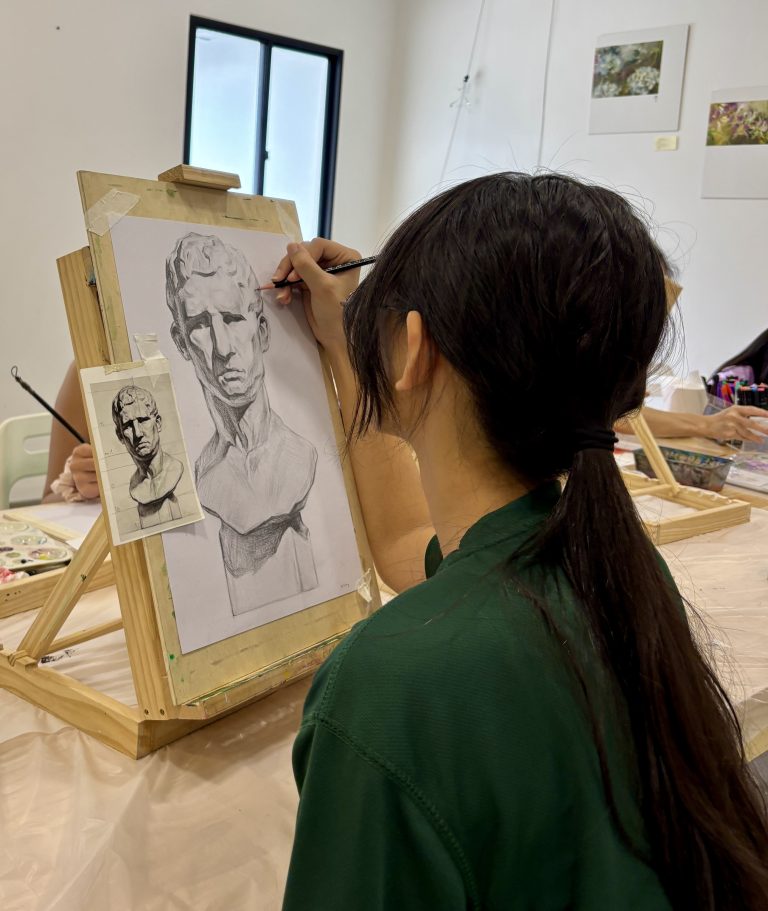
Portfolio Preparation – A portraiture done by our student

Students in the centre-based programme are also exempted from Lower Secondary Design & Technology and Lower Secondary Food & Consumer Education. The centre-based AEP is conducted at National Junior College (NJC) and is intended for students who are not studying in one of the seven AEP schools or the nine EAP schools.

Students from all courses except NA and NT may apply. The selection exercise is conducted by MOE and NJC, and students must apply online to attend the centralised AEP selection exercise at the beginning of Secondary 1. The application window is generally open to Secondary 1 students during the first half of January each year.

3. Starting age, duration, art syllabus

4. Application process

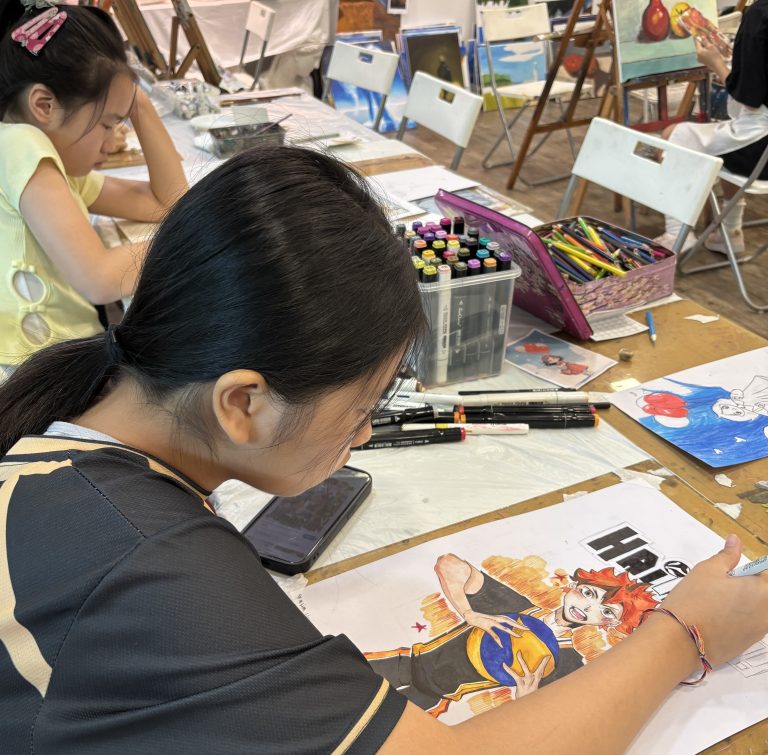
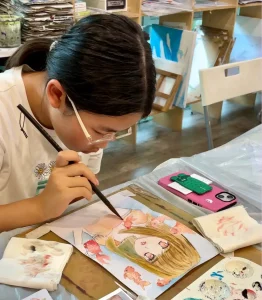
Portfolio Preparation – Our student working on her creative manga drawing

5. How can Visual Arts Centre help to prepare for AEP?

DSA Visual Arts Portfolio Preparation Art Course Art Class for DSA-SOTA & DSA-MOE Secondary and JC Visual Arts Centre

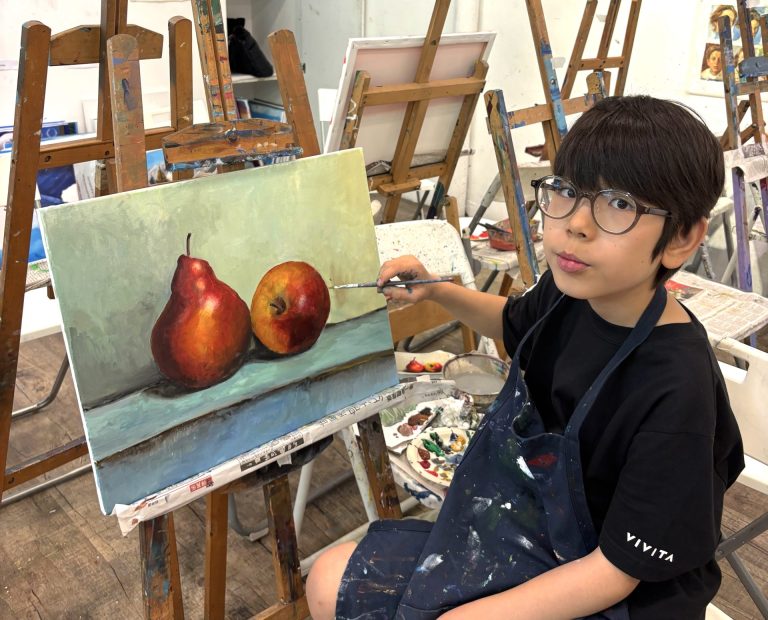
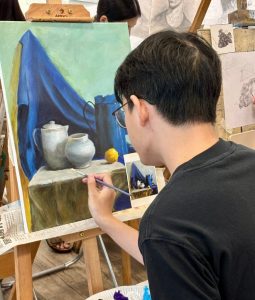
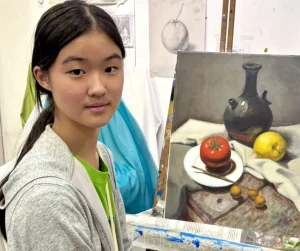
Portfolio Preparation – Our student completing her still-life fruit acrylic painting

EAP is offered only to students from participating EAP schools. The nine schools offering EAP are CHIJ Katong Convent, Jurong West Secondary School, Meridian Secondary School, Nan Chiau High School, Naval Base Secondary School, New Town Secondary School, Ngee Ann Secondary School, Orchid Park Secondary School, and St. Andrew’s Secondary School.

Students who are interested in joining EAP will need to go through a school-based selection exercise at the end of Secondary 2. Each school has its own criteria and requirements for selection. Generally, students may be asked to submit an art portfolio that demonstrates their current skills and abilities, attend a short interview, and complete one or more short art tasks. The specific requirements and selection process may differ from school to school.

Private Art Classes in Singapore by visualartscentre, private art lessons singapore, best private art course singapore, one to one art classes in singapore, portfolio preparation one to one art class

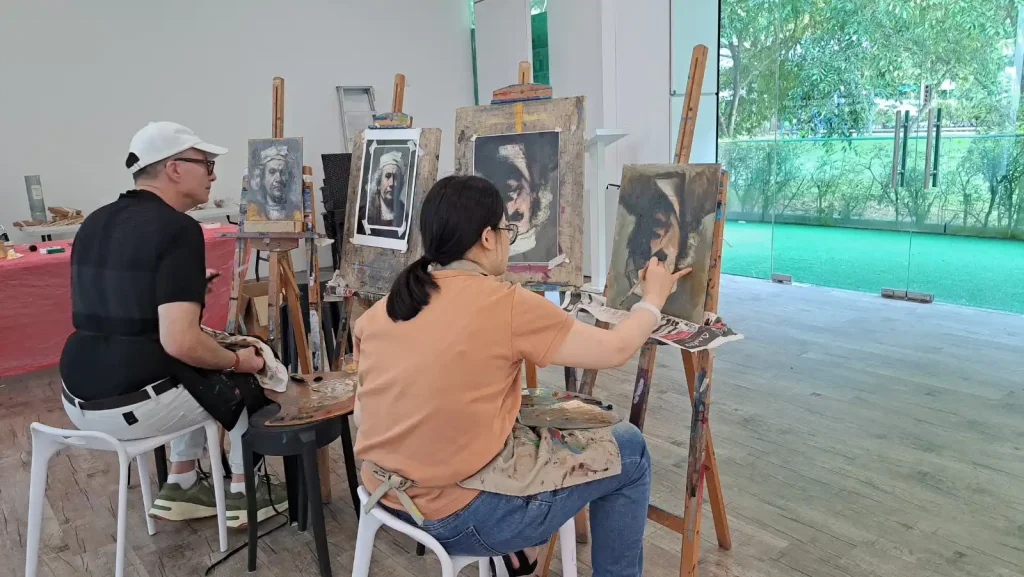
Portfolio Preparation – Our student working on an oil painting

2. EAP (Enhanced Art Programme)

1.1 About EAP (Enhanced Art Programme)

  1. Preparation/selection requirements – portfolio, interview, 
  2. Schools choices
  3. Starting age, duration, art syllabus
  4. Application process
  5. How can Visual Arts Centre help to prepare for EAP?

1.1 About EAP (Enhanced Art Programme)

The Enhanced Art Programme (EAP) is a two-year programme that starts from Secondary 3. It extends the O-Level Art syllabus by providing students with more advanced art learning experiences and opportunities to develop skills beyond what is normally covered in the standard Art programme.

  1. Preparation/selection requirements – portfolio, interview etc

Students who are interested in joining EAP will need to go through a school-based selection exercise at the end of Secondary 2. Each school has its own criteria and requirements for selection. Generally, students may be asked to submit an art portfolio that demonstrates their current skills and abilities, attend a short interview, and complete one or more short art tasks. The specific requirements and selection process may differ from school to school.

2. Schools choices

DSA Visual Arts Portfolio Preparation Art Course Art Class for DSA-SOTA & DSA-MOE Secondary and JC Visual Arts Centre

Portfolio Preparation – Our student completing her still-life fruit acrylic painting

EAP is offered only to students from participating EAP schools. The nine schools offering EAP are CHIJ Katong Convent, Jurong West Secondary School, Meridian Secondary School, Nan Chiau High School, Naval Base Secondary School, New Town Secondary School, Ngee Ann Secondary School, Orchid Park Secondary School, and St. Andrew’s Secondary School.

Summary of EAP & AEP

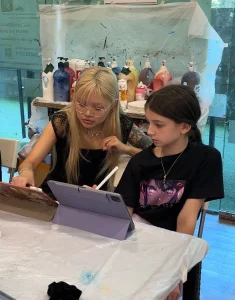
teen drawing and sketching preparing art portfolio Visual Arts Centre

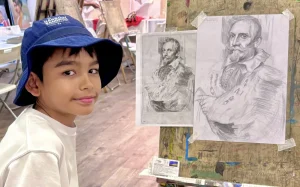
Portfolio Preparation – Our student working on her drawing and sketching  skills

In simple terms, EAP is a two-year programme starting from Secondary 3, designed for students who want to take their Art learning further after completing the lower secondary years. AEP is a four-year programme starting from Secondary 1, offering a more comprehensive and enriched Art education throughout the student’s secondary school journey.

Both programmes require students to demonstrate their interest and ability in Art through a portfolio review, interview and/or art task, although the exact selection criteria and requirements depend on the individual school or programme.

5. How can Visual Arts Centre help to prepare for EAP?

Visual Arts Centre provides a free consultation on DSA Visual Arts (DSA-SOTA and DSA-MOE) Art Portfolio Preparation for parents of kids who wants to understand how to prepare a DSA portfolio for their child’s school enrolment. We provide a service where we can help you to understand what requires of a portfolio preparation – from artworks, to submission dates as well as interview practices.

Do schedule a consultation on DSA Visual Arts (DSA-SOTA and DSA-MOE) Art Portfolio Preparation with us asap as it takes time to create an art portfolio.

 For more information, feel free to contact us at 6255 0711 / 6733 2155, or email us at [email protected].

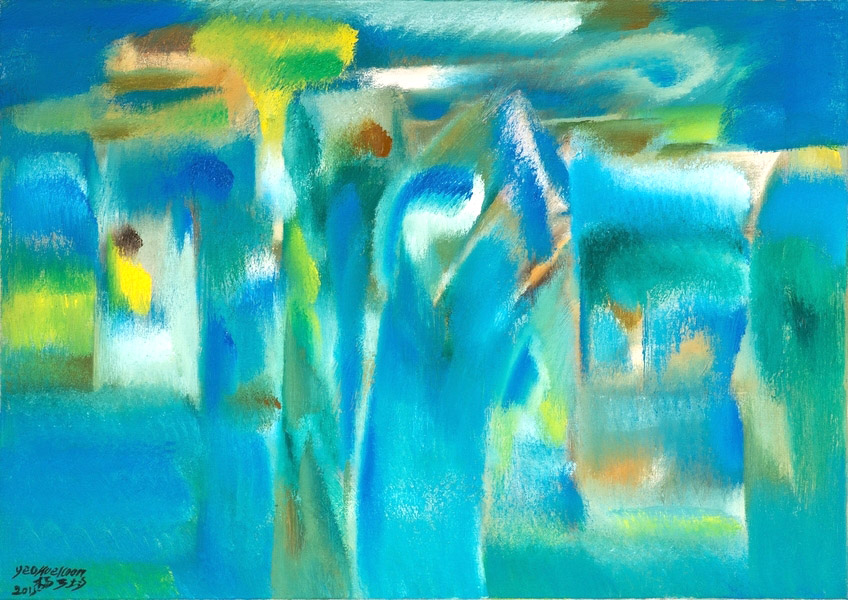
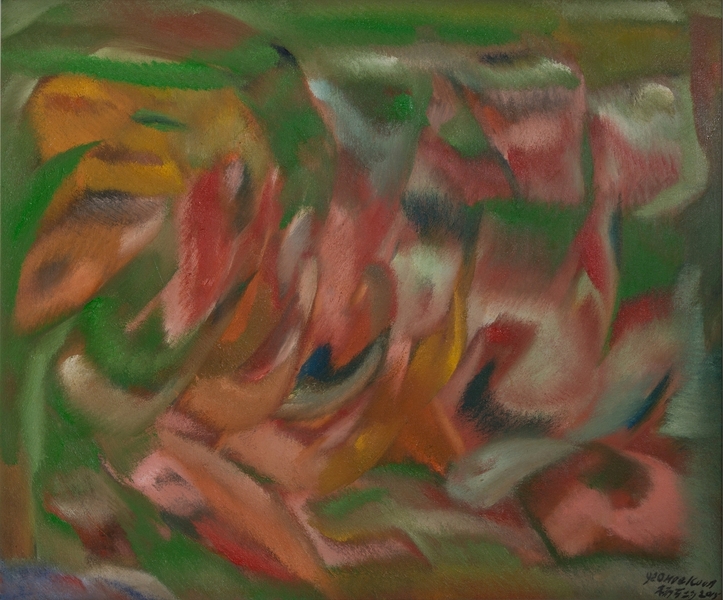
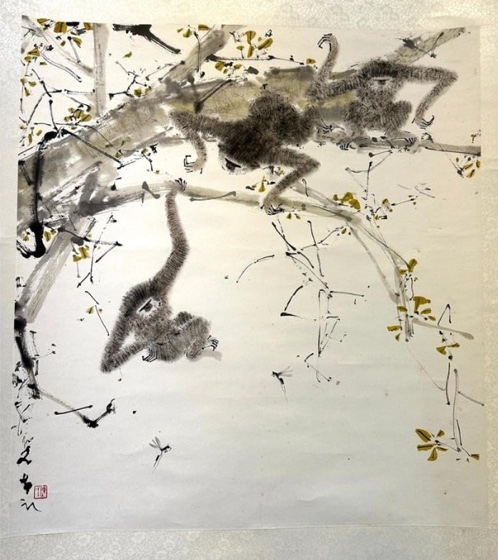
Student's sample artworks:

zhou aiden
teen preparing creative work art course Visual Arts Centre portfolio preparation

About Our Professional Team at Visual Arts Centre:

(Art educators | Venue & art exhibition event marketeer & planner | Art jamming, art workshops & activities planner & curator)

Since its establishment in 2016, the Visual Arts Centre has been an art education institution & art establishment supported by the Singapore Government. Our professional team & artists line-ups provide & customise services with art related courses, activities, exhibitions, tours & events.

Our Dhoby Ghaut Art Studio & Exhibition Gallery, conveniently located above Dhoby Ghaut MRT and nestled within the verdant Dhoby Ghaut Green Park, is a wonderful place for individuals: kids/teens/adults to join beginner friendly professional art course & improve art skills & techniques.

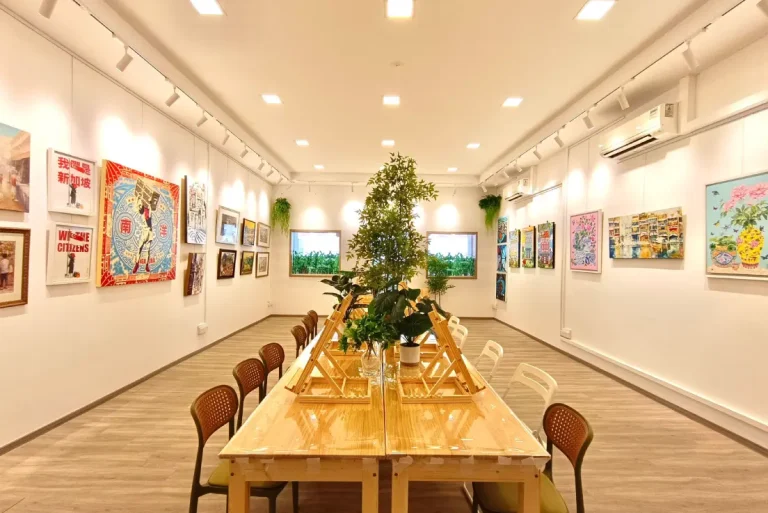
Within our Chinatown Art Gallery & Studio, we curate art exhibitions featuring local artists & their artworks. Providing platforms for public to appreciate art. Introducing local Nanyang-style art workshops & interesting art programmes with family friendly & tourist-friendly concepts. 

Why Choose Visual Arts Centre & why our Professional Art Courses are the Best Art Course for kids, teens/youths, adult, seniors?

  1. Suitable for All Ages – Kids & Children (6-9YO), Children (6-9YO), Teenagers (10-12YO), Youths (13-18YO), Adults & Seniors!
  2. All levels of Art Experience are Welcomed – Beginners, Intermediate & Advanced
  3. Full Professional Teachers’ Guidance– experienced art academy graduate & be guided under art academy teaching approach
  4. All Art Materials are Provided – except digital device* (depends on availability)
  5. Flexible Drop-in Schedules to Choose From – Monday to Sunday with options of morning, afternoon, evening and even night session (after work)
  6. Tailored Learning Objectives & Outcomes – depends on your interested mediums & art experience
  7. Ongoing Registrations 
  8. Convenient, Spacious & Therapeutic Art Studios – above Dhoby Ghaut MRT & near Chinatown MRT 
Our Location

Dhoby Ghaut Art Studio

Address:

10 Penang Road, #01-02 Dhoby Ghaut Green,
Singapore (238469)

Exit from Dhoby Ghaut MRT Station Exit B and turn left, we are there in 30m!

VAC Chinatown Art Gallery & Studio

Address:

20B Mosque Street, Singapore (059500)
*2 minutes walk from Chinatown MRT Station Exit A

Take a left turn upon exiting the Chinatown MRT Station Exit A (Pagoda Street). Turn right to go to Mosque Street. Finally, walk towards 20B, we’re on the 3rd floor of the shophouse.

Foundation In Digital Art

Embark on a captivating journey into the vibrant world of digital art! Our Foundation in Digital Art workshop invites budding creatives aged nine and above to unleash their imagination and hone their artistic skills in a dynamic, supportive environment. From mastering basic digital tools to crafting mesmerizing digital masterpieces, children will explore a spectrum of techniques guided by seasoned mentors. Through hands-on activities and interactive sessions, participants will discover the endless possibilities of digital expression while fostering creativity and critical thinking. Join us for an exhilarating adventure where young artists transform ideas into stunning visual realities, igniting a passion for digital art

Colour & Texture Exploration With Acrylic Painting & Collage
Prepare to unleash your inner artist in a kaleidoscope of color and creativity with ‘Colour Blast: Acrylic Painting & Collage Techniques’! Dive into a whirlwind adventure where vibrant hues and mesmerizing textures collide in a symphony of imagination. From mastering the art of seamless color blending to discovering the magic of mixed media collage, this journey is a playground for your artistic soul. With each brushstroke, explore new techniques that breathe life into your canvas, transforming it into a vibrant tapestry of expression. Join us and let your creativity run wild as you embark on this colorful escapade!”
World of Manga [Foundation & Styling]
A manga art workshop for children and teenagers sounds like a fantastic idea! Here’s how you might structure it:
Introduction to Manga: Begin by introducing what manga is, its history, and its influence on popular culture worldwide. Show examples of different manga styles and genres to give participants an overview.
Basic Drawing Techniques: Start with the fundamentals of drawing, such as line work, shapes, and proportions. Provide step-by-step instructions on how to draw basic manga characters, focusing on simple shapes that can be built upon.
Character Design: Move on to character design concepts, including creating unique characters, designing their personalities, and developing backstories. Encourage participants to get creative and think outside the box.
Expression and Emotion: Teach how to convey emotions and expressions through facial expressions, body language, and positioning of characters. This can be a fun and interactive exercise where participants practice drawing various emotions.
Storytelling and Paneling: Explore the basics of storytelling in manga, including paneling techniques, pacing, and layout. Show examples of different panel structures and discuss how they affect the flow of the story.
Inking and Coloring: Introduce participants to inking techniques using pens or markers. You can also cover digital inking for those interested. Then, demonstrate basic coloring techniques using markers, colored pencils, or digital software.
Feedback and Collaboration: Provide opportunities for participants to share their work and receive feedback from their peers and instructors. Encourage collaboration by having them work together on short manga projects or collaborative drawings.
Final Showcase: End the workshop with a showcase of participants’ work. This could be in the form of an exhibition, digital gallery, or printed booklet. Celebrate everyone’s creativity and progress throughout the workshop.
Remember to create a supportive and encouraging environment where participants feel free to express themselves and explore their creativity. And don’t forget to have fun! Manga is all about imagination and passion, so let that spirit shine through in your workshop.
Academy Drawing Traditions
The academy drawing and sketching tradition, rooted in centuries of artistic practice, emphasizes disciplined study of form, proportion, and technique. Originating from Renaissance workshops and formalized by institutions like the Royal Academy, it prioritizes meticulous observation and mastery of fundamental skills. Students progress from basic exercises to complex compositions, learning to depict still life and common objects with precision and expression. This tradition values both classical principles and innovation, encouraging artists to push boundaries while maintaining a deep respect for tradition. Through rigorous training and critique, artists within this tradition cultivate a strong foundation for creative exploration and artistic excellence.
Chinese Ink Painting and Calligraphy
This course on Chinese ink painting and calligraphy introduces young learners to the rich traditions of Chinese art. Through hands-on activities, students explore the basics of brush techniques, ink control, and the delicate art of Chinese script. They learn to appreciate the cultural significance of calligraphy and painting, developing skills in creating elegant strokes and expressive brushwork. The course fosters creativity, patience, and fine motor skills, while also providing insights into Chinese history and aesthetics. By the end, children gain confidence in their artistic abilities and a deeper understanding of Chinese cultural heritage.
Funk with Graffiti
Funk With Graffiti Workshop for children is an engaging and creative program aimed at introducing young artists to the vibrant world of graffiti and funk-inspired street style art. Participants learn the basics of graffiti history, techniques, and safety. Guided by professional graffiti artists, children explore the art of designing their unique tags, emphasizing creativity, expression, and individuality. The workshop includes hands-on activities, from sketching concepts to creating final designs with spray paint on provided surfaces. By the end of the session, children gain confidence in their artistic abilities and an appreciation for graffiti and funk as legitimate forms of street art. Each child completes two original artworks, which they proudly take home, showcasing their newfound skills and personal style.
Batik Tales

In the Batik Introduction Handkerchief Painting workshop, participants will learn the traditional art of batik, a wax-resist dyeing technique originating from Indonesia. The workshop begins with a brief history and overview of batik, highlighting its cultural significance and various techniques. Participants will then observe a demonstration of applying wax with tjanting tools and dyeing the fabric. Following the demonstration, each participant will design and create their own batik handkerchief, applying wax to create patterns and then dyeing their fabric. The workshop concludes with a group discussion, allowing participants to share their creations and reflect on their learning experience.