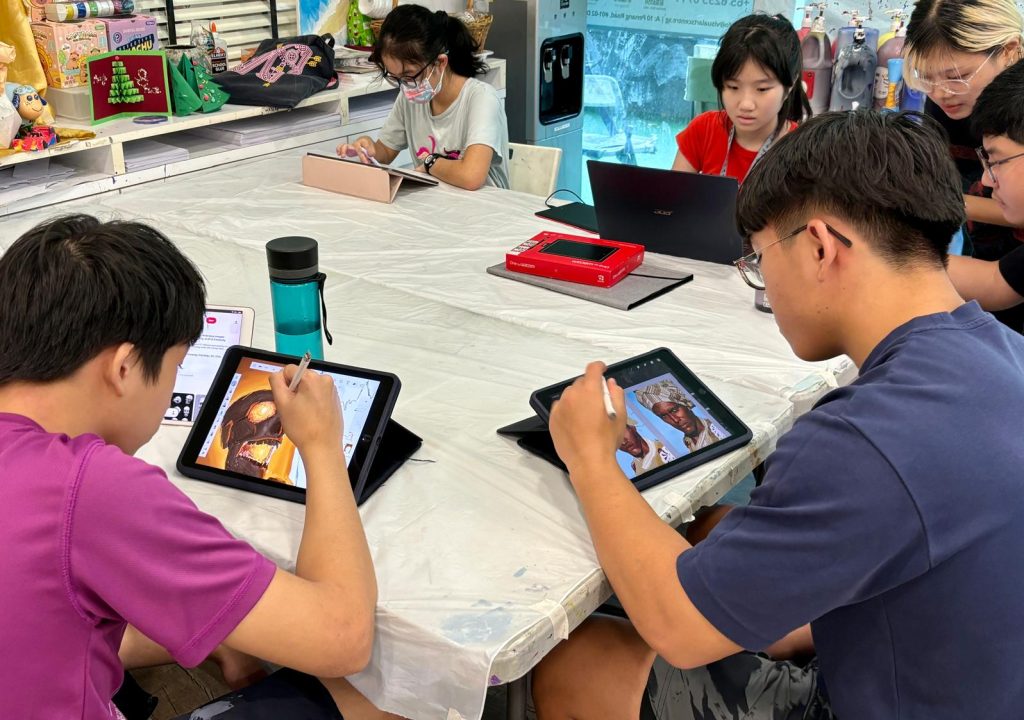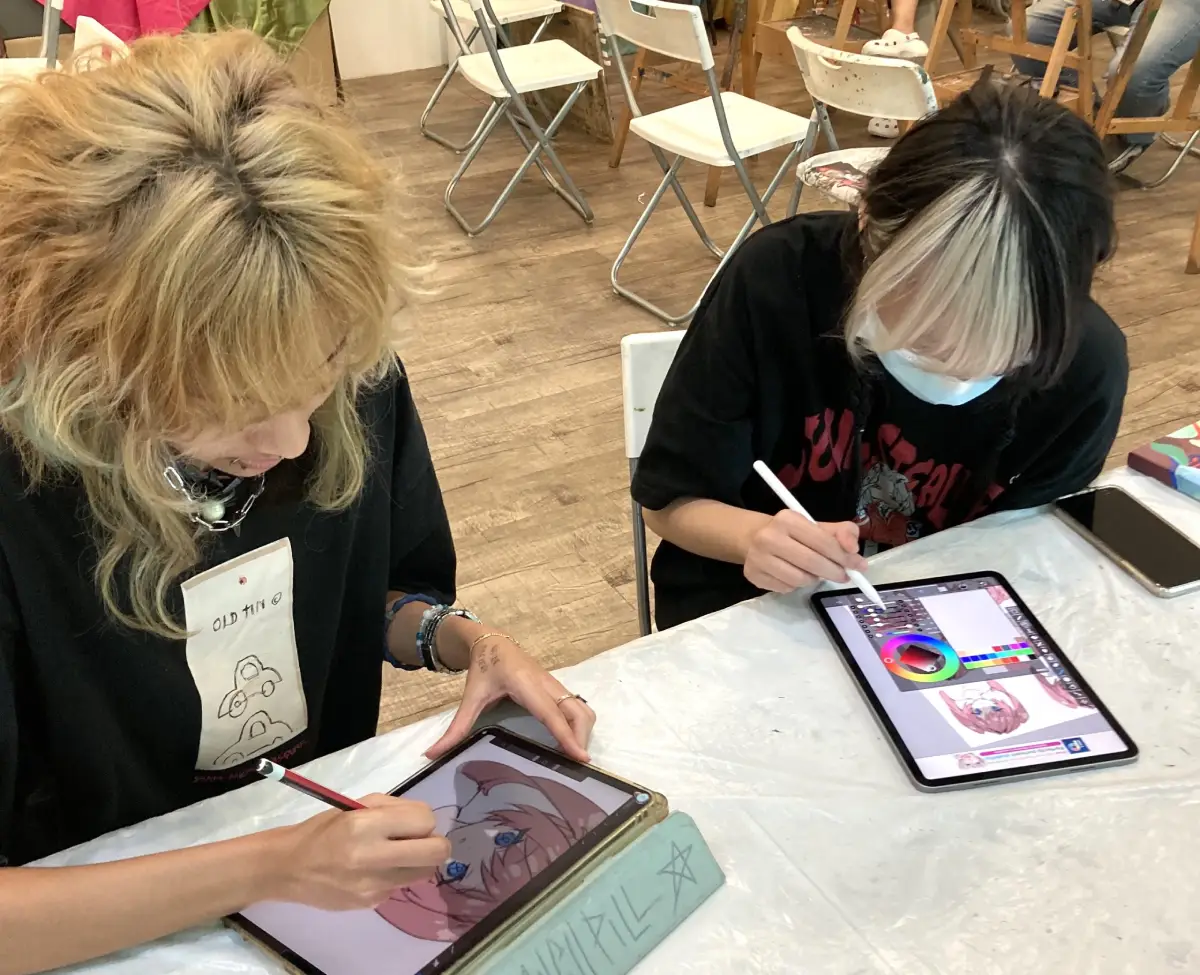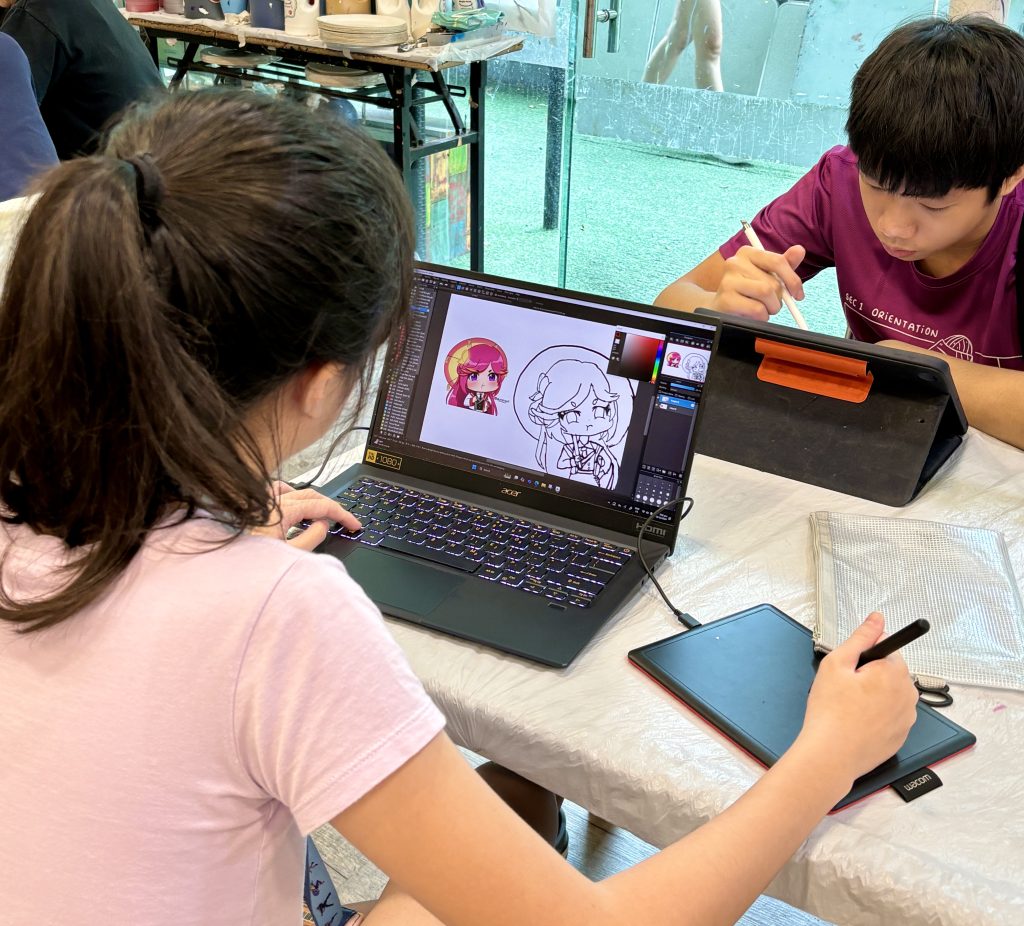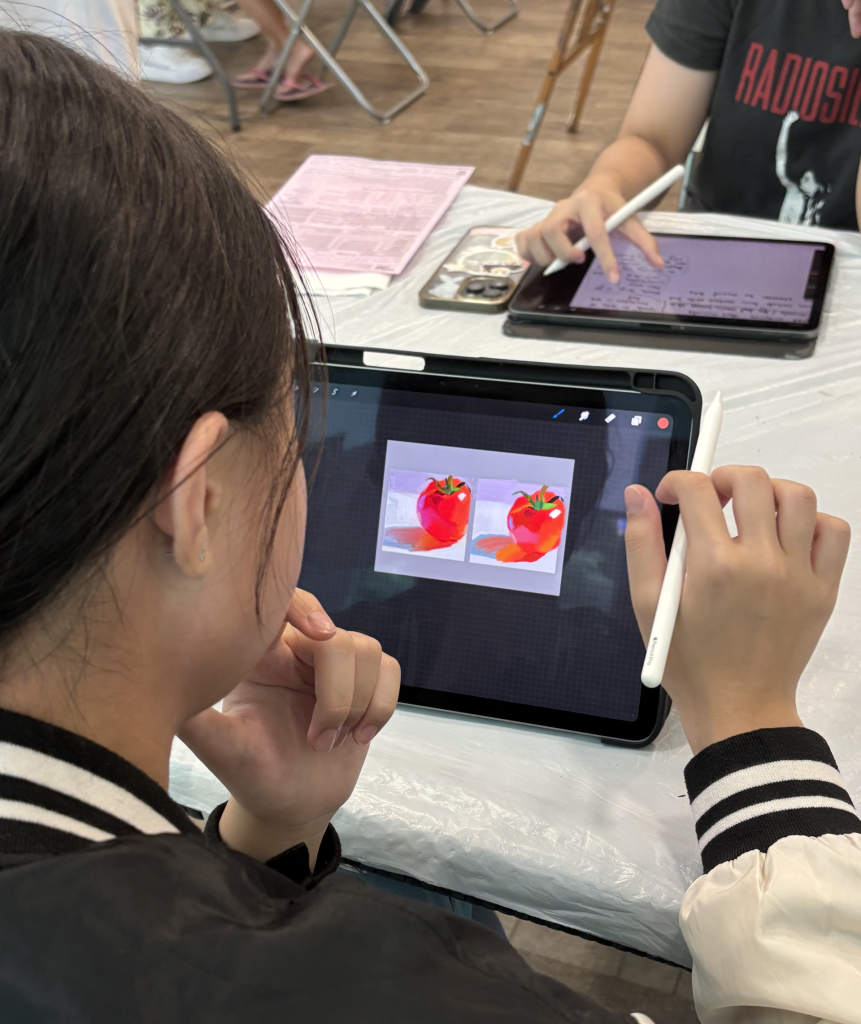
Best Professional Digital Drawing & Painting Course in Singapore
Professional Digital Drawing & Painting
Art Course
(Professional guidance | Beginner friendly)
Manga, Anime, Animation, Character Art, Icons, Concept Art
previous arrow
next arrow

Professional Digital Drawing & Painting Art Course | Art Class | Art Lesson

(Beginners friendly | Full professional teachers guidance | Ages 7 & up)

Best Digital Drawing & Painting Art Course in Singapore by Visual Arts Centre Singapore Suitable for all ages beginner friendly EAE, DSA, Lasalle, Polytechnic, NAFA SOTA, Secondary, O-Level Art, N-Level Art, University

Why Choose Visual Arts Centre?

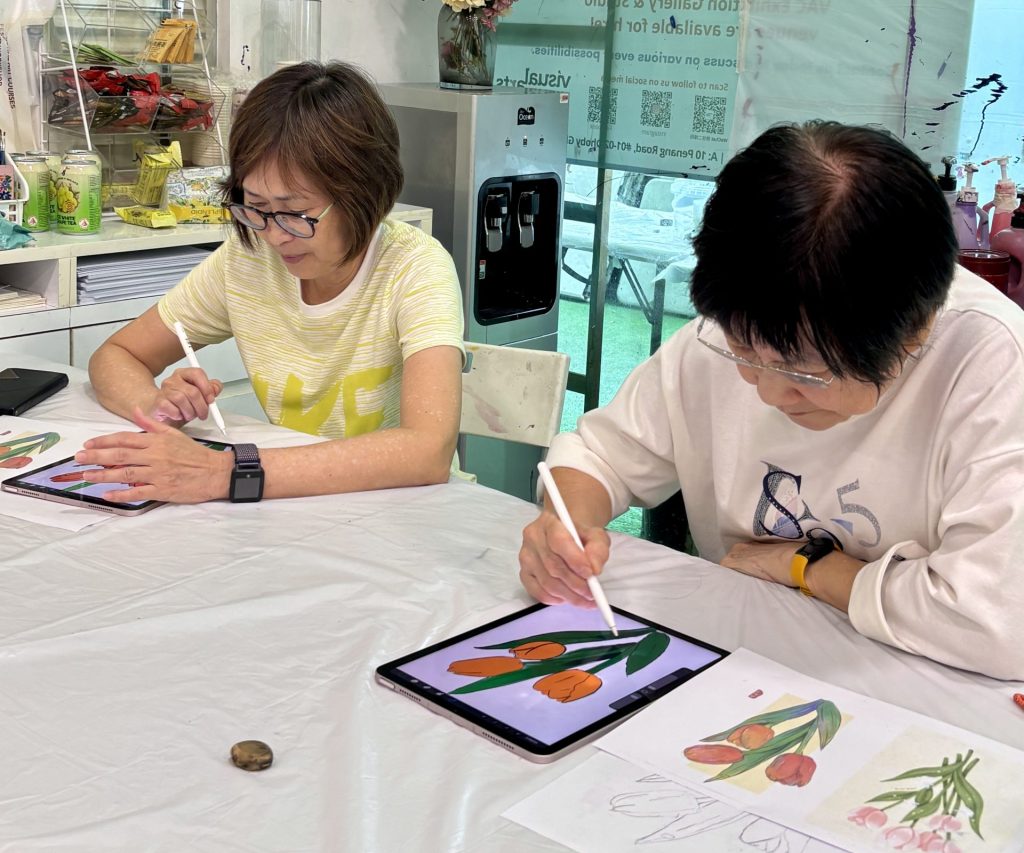
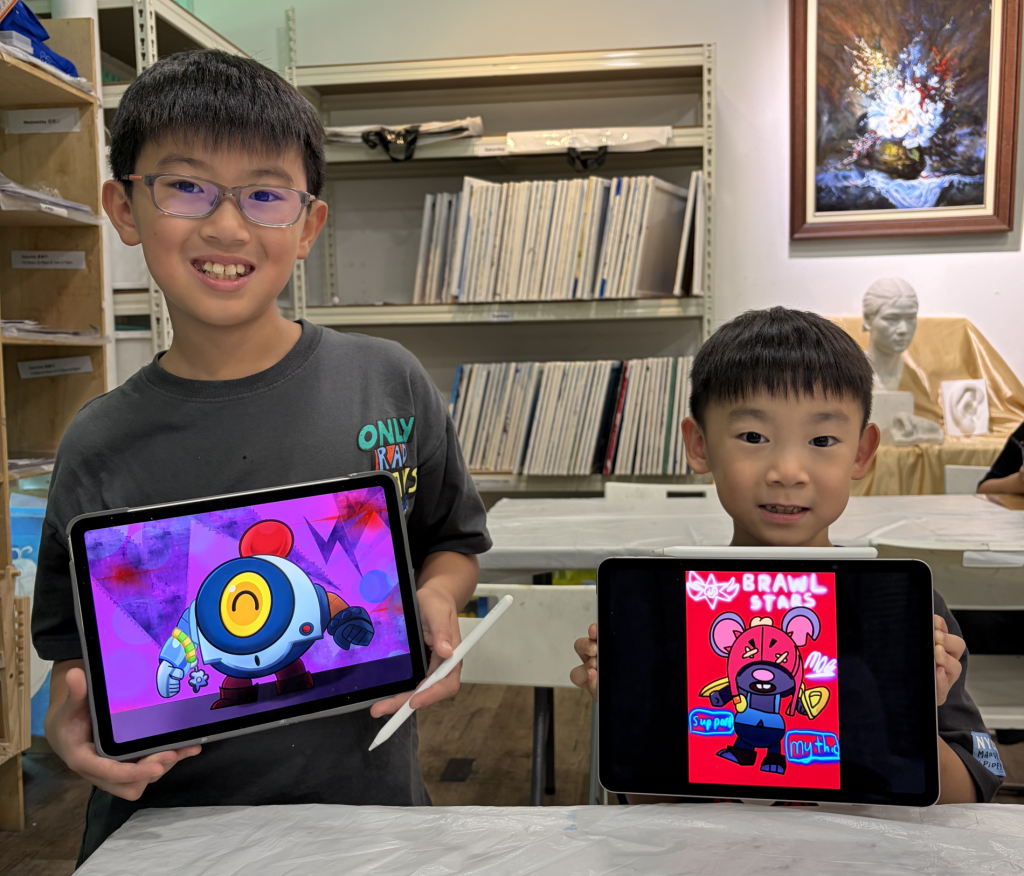
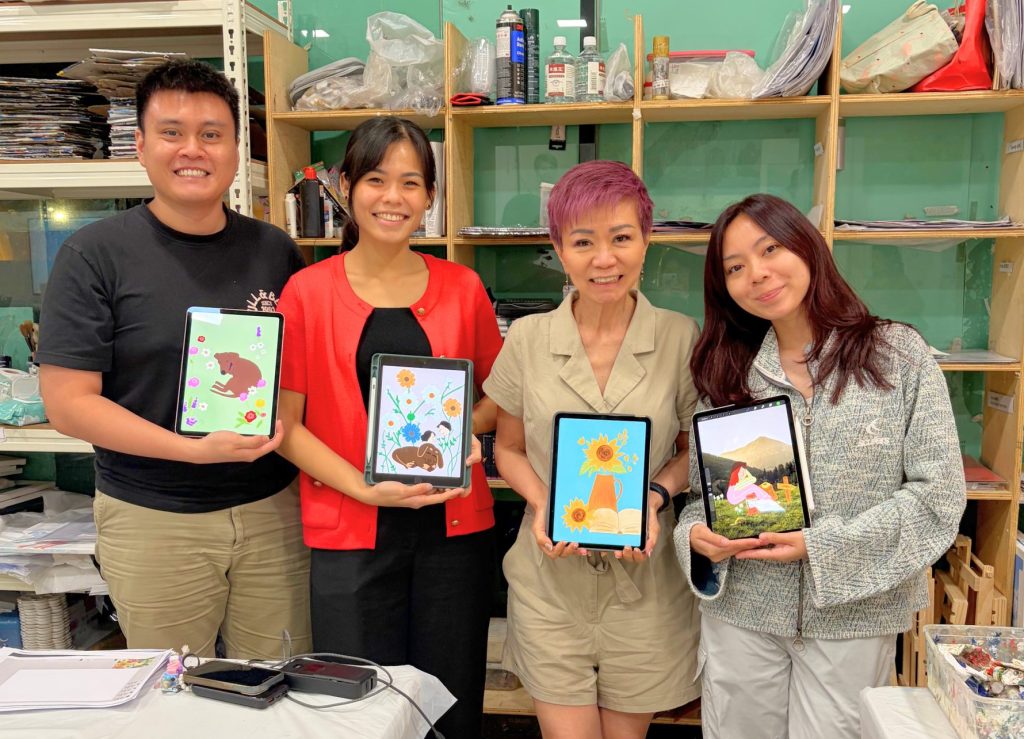
Our Professional Digital Drawing & Painting Art Course at Visual Arts Centre is widely regarded as the best Digital Art Course in Singapore for complete beginners, enthusiasts, hobbyists, and even professional artists alike! Thanks to our comprehensive teaching system, which combines academic drawing foundations, digital drawing techniques and advances to professional-rendered digital drawing skills. Our course covers everything from building a solid foundation in drawing fundamentals to character and shape/pose/gesture design, progressing on to completing and understanding the process of digital artwork creation. Students get to learn digital art in a systematic manner to go on and create original digital artworks independently! Visual Arts Centre’s Professional Digital Drawing & Painting Art Course is the best choice for beginners and experienced artists to ensure proper learning progression!

Professional Digital Painting Course at Visualartscentre Singapore

A Comprehensive Overview from Basics to Digital Art Creation

At its core, digital drawing is still drawing, where the software is merely a tool or medium that aids you. It is recommended to build a solid foundation in traditional drawing studies first. Starting directly with digital art is okay, but practising fundamentals is crucial, and we will guide you step-by-step to develop a strong foundation.

I.Core Course Fundamentals: Building a Solid Foundation in Drawing from the Ground Up

The main pitfall for the majority of beginner manga artists that hinders their progress is trying to learn how to draw eyes, hair, and other facial features without understanding the foundational logic of drawing. This causes them to struggle when trying to draw different angles or poses. In Visual Arts Centre, we take a completely different approach by training students in the fundamentals of drawing before they move on to stylisation and manga creation.

Best Professional Digital Drawing & Painting Art Course in Singapore by Visual Arts Centre For All Ages

1. Line Work – Understanding Clean & Dynamic Line Art

Linework is a key part of digital art where understanding line weight and line flow is crucial in making an artwork that is able to convey form and structure clearly. To do this, learners will practice their straight lines, arcs, and curves to develop pen control to draw fluid and clean line art.

This will be trained and practised through outlining and referencing: animals, still life, and various subjects to understand contouring, shape and form.

2. Understanding of Form, Structure and Shape Composition

Knowing how to break down complex subjects and challenging concepts into a clear and technically correct artwork can be difficult; however, developing your fundamentals in traditional art studies can help you better understand how to create a professional digital artwork.

Best Digital Drawing & Painting Art Course in Singapore by Visual Arts Centre Singapore

2a. Breaking Down Complex Subjects Into Geometric Shapes

Best Professional Digital Drawing & Painting Art Course in Singapore by Visual Arts Centre For All Ages

Animals, buildings and facial features can be difficult to draw from scratch. Understanding how to use geometric shapes, such as cubes, spheres, cylinders and cones, can help you to break down these complex structures and improve your accuracy and clarity.

2b. Prespective Drawing

Having accurate perspective is a crucial part of creating an artwork. Having wrong perspective in digital artworks can look odd and confuse your viewer. We will teach you to understand one-point and two-point perspective by practising perspective drawing techniques through urban sketching. This is very helpful for those aiming to use digital art as a tool for interior design too!

Best Digital Drawing & Painting Art Course in Singapore by Visual Arts Centre Singapore

2c. Anatomy of Humans, Animals and Various Creatures

You will be introduced to anatomy through understanding how to simplify the structure of bones and muscles. You need not have in-depth anatomical knowledge, but having an understanding of the proportions of the head to neck, torso and limbs is essential. Especially when you wish to create your own exaggerated characters in the future while maintaining anatomical understanding.

3. Rendering of Light & Shadow

In digital artworks, there are three main components of a finished piece: highlights, mid-tones and shadows. To render these three components, there needs to be transitional shades and a balance of hard and light edges to create a visually strong digital art piece with specular highlights and cast shadows.

To practice this, you will be trained through first sketching geometric forms → refining into still life subjects → developing into complex character sketching & drawing. Progressing in subject difficulty will help you to better understand basic shapes before moving onto more challenging ones.

Best Digital Drawing & Painting Art Course in Singapore by Visual Arts Centre Singapore

4. Colour Theory

The three main components of Colour Theory are hue, value and saturation. Other parts of colour theory you have to consider while making a digital artwork are when to use or balance warm and cool colours, analogous colours, complementary colours and how these colours are used to create atmosphere. You will learn to understand how colours interact in a scene to create vivid, dynamic work.

Best Digital Drawing & Painting Art Course in Singapore by Visual Arts Centre Singapore

4. Sketching Practice & Drafts

To quickly capture movement and proportions effectively when drawing characters and various subjects, you will be taught to focus on the general shape and expression instead of narrowing into small details immediately. Knowing how to see things as a full picture will help you to sketch less stiffly and create more lively works.

II. A Complete Learning Path from Scratch

Stage 1: Laying the Foundation using Traditional Drawing
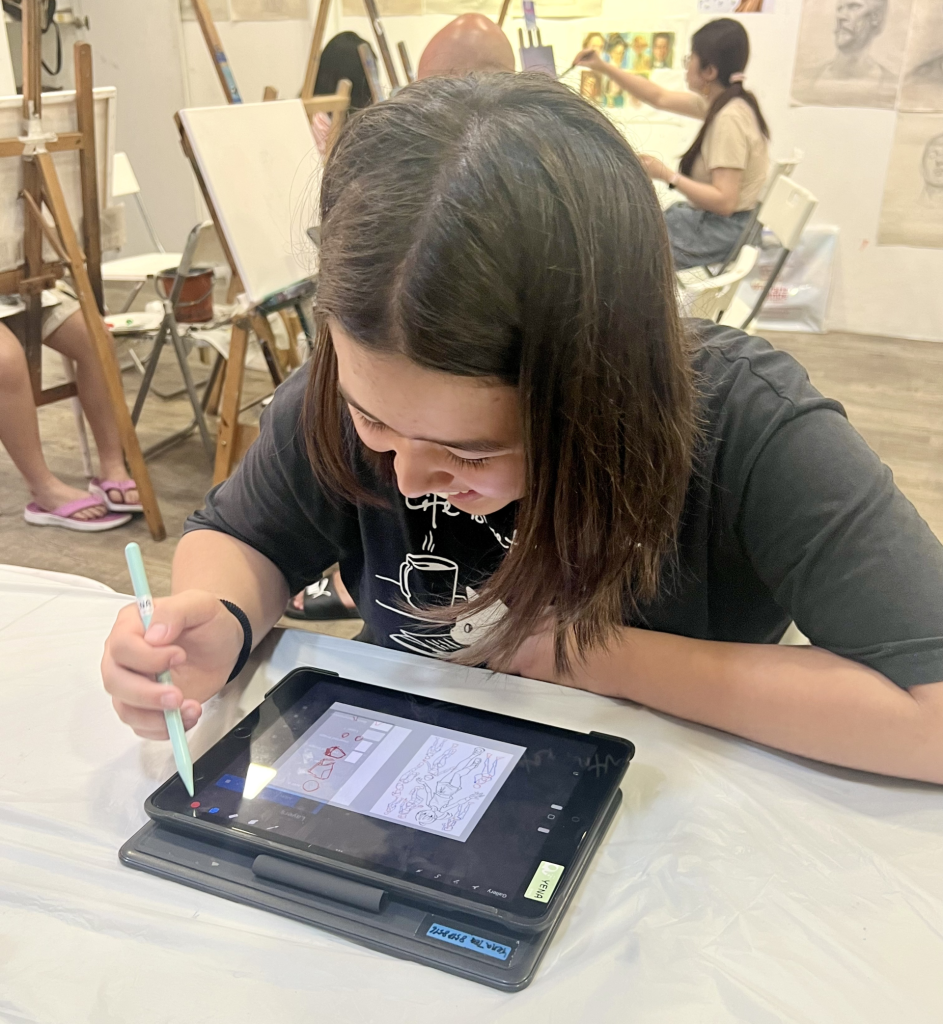
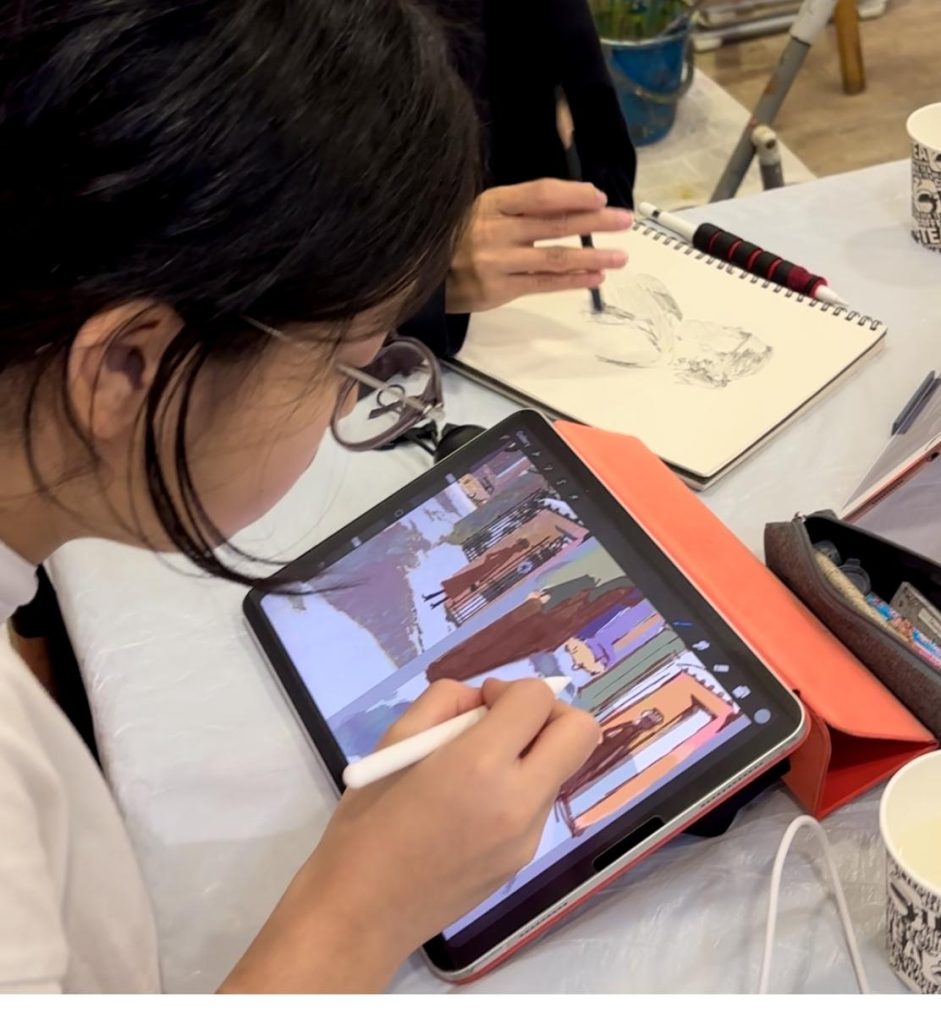
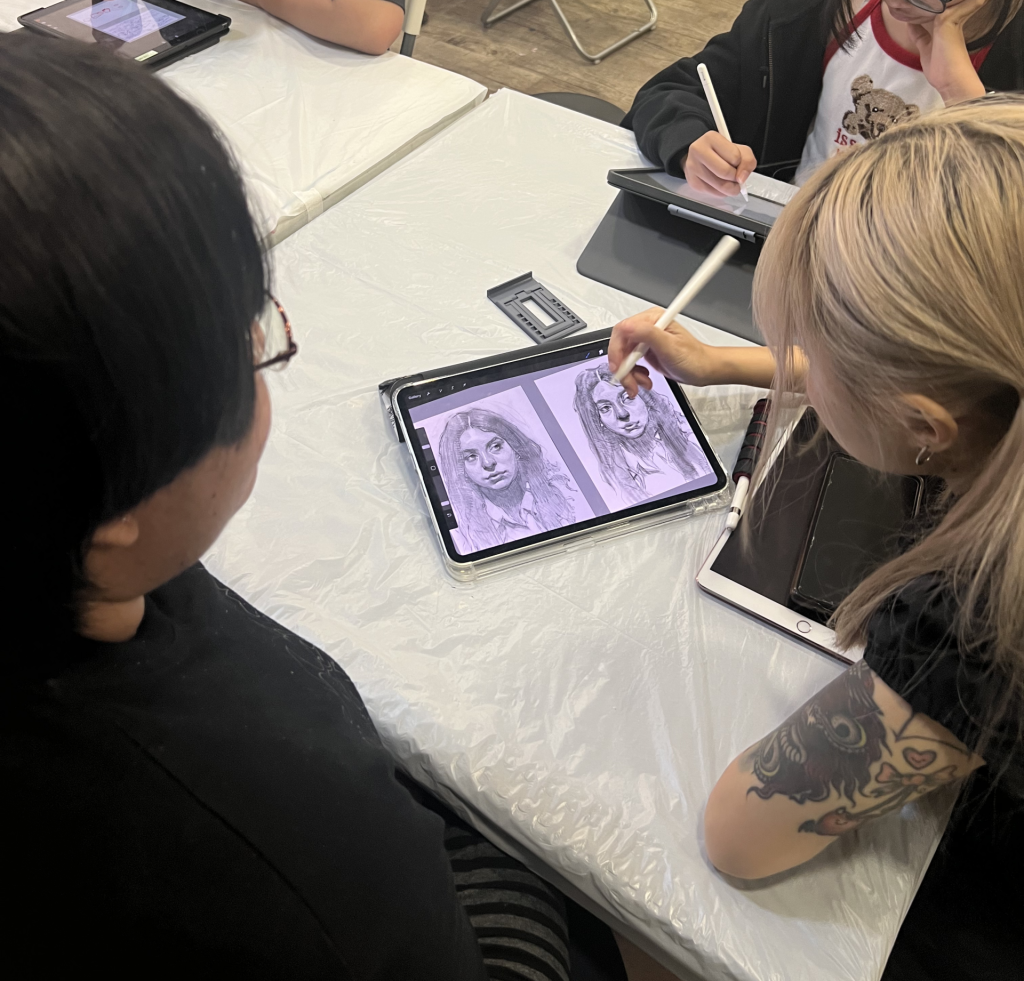
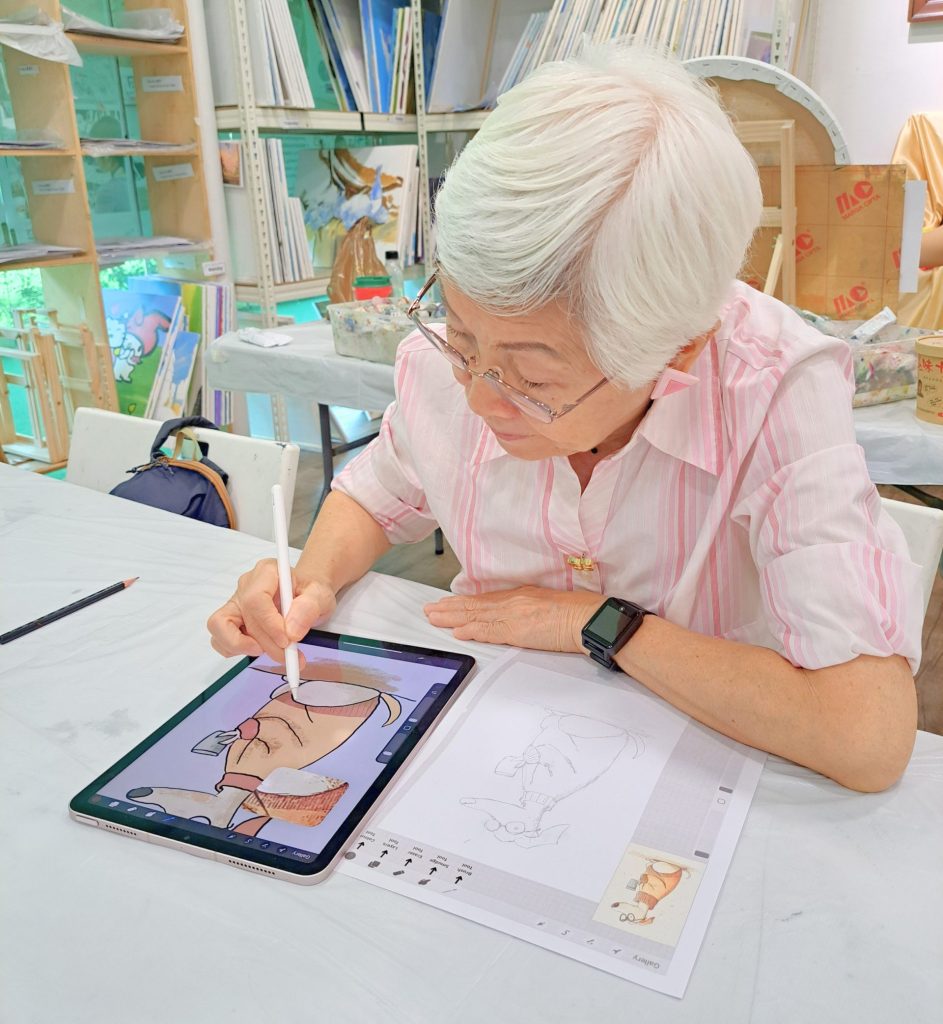
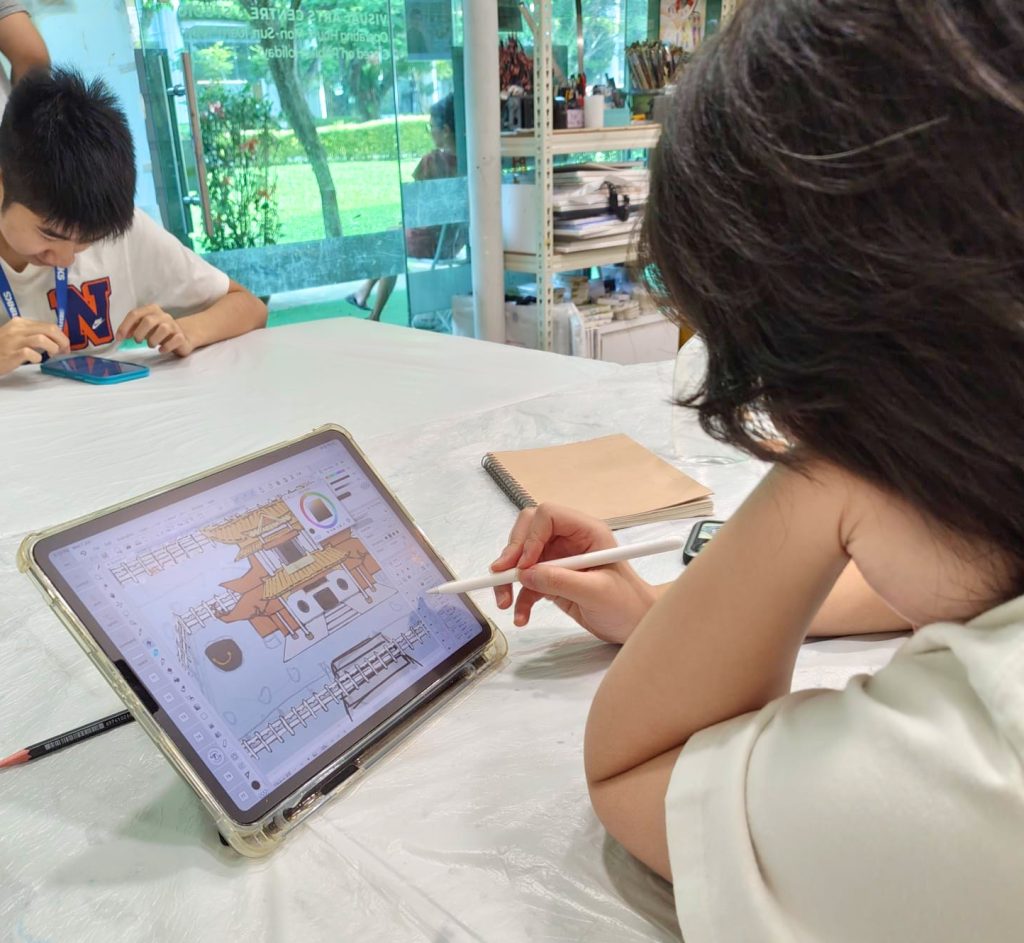
Stage 2: Transitioning to Digital Drawing & Painting and Familiarisation with Digital Software Tools
Stage 3: Digital Drawing Studies and Exercises
Stage 4: Creation of Original Digital Artworks

Best Professional One-on-One Digital Art Digital Drawing & Painting Art Course in Singapore by Visual Arts Centre

Understanding and Introduction to Digital Art Software Tools & Creation

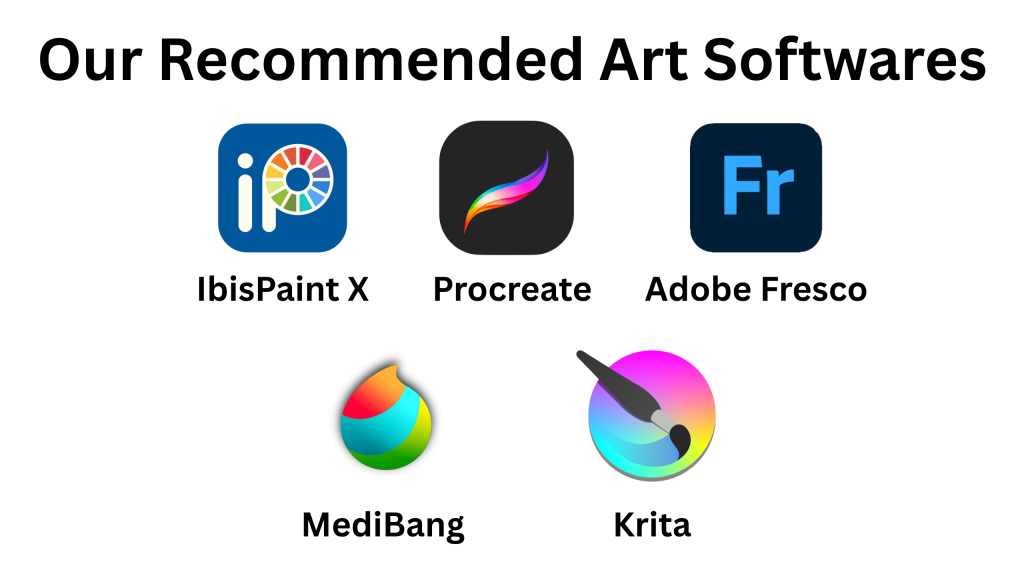
Our Recommended Softwares for Digital Art

For iPad: Procreate (One-time payment), IbisPaint X, Adobe Fresco
For Andriod/PC: Krita, MediBang, IbisPaint X

Best Digital Drawing & Painting Art Course in Singapore by Visual Arts Centre Singapore

Digital Art Software Tools Familiarisation

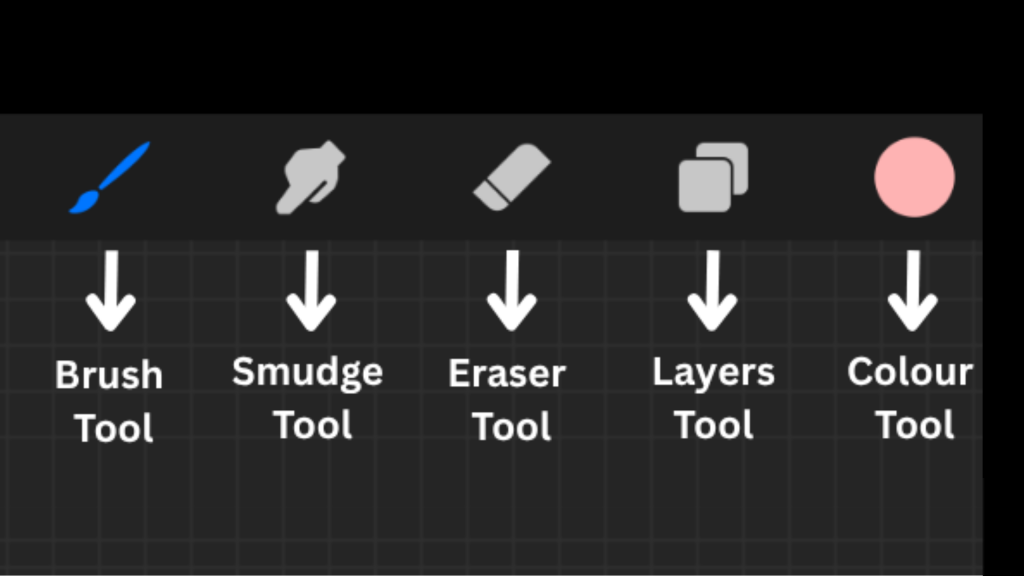
Components of Digital Drawing Softwares you will need to be familiar with are: Brushes, Erasers, Layer Modes, Layer Usage, Layer Organisation, Selection Tool, Blending Modes, Filters, and how to save, export, or import with the software. Layers is the most fundamental tool within digital drawing & painting, which makes it stand out from traditional drawing.

To familiarise yourself with digital drawing & painting, you can practice by taking drawings you have drawn traditionally by hand and tracing over them to get used to the pressure sensitivity and digital drawing tools.

Best Professional Digital Drawing & Painting Art Course in Singapore by Visual Arts Centre For All Ages

Digital Drawing Studies and Exercises

1. Flat Colours → Shading in Light and Shadow

First, learners will begin by colouring in the flat colours of their line art. After having the flat colours, you will continue by shading in light and shadow by sectioning out where the light and shadow will be. This is the most effective practice process for beginners to develop and understand the digital art process.

Best Digital Drawing & Painting Art Course in Singapore by Visual Arts Centre Singapore

2. Refining Texture: Eg. Hair, Fur, Fabrics, Foliage

Moving on, after applying light and shadow, you will be taught how to add transitional tones and texture through rendering.

This will be trained and practised through outlining and referencing: animals, still life, and various subjects to understand contouring, shape and form.

3. Colour Balancing, Overlays, Filters

After an artwork has been rendered, some colours might clash, or the image might not look whole. This creates a flat-looking artwork. To fix this issue, we can use overlays and colour modes, colour balancing and curves to refine the final drawing to make it look complete and harmonious.

Best Professional Digital Drawing & Painting Art Course in Singapore by Visual Arts Centre For All Ages
Best Digital Drawing & Painting Art Course in Singapore by Visual Arts Centre Singapore

Our Visual Arts Centre Professional Digital Drawing & Painting Art Course offers a comprehensive curriculum where we will teach you from traditional hand-drawing studies to progress to digital art creation. We have a structured teaching system in which our professional art teachers will teach and guide you. Our course is highly specialised to be able to guide artists of all skil levels: whether you be a completed beginner or an artist who has ben drawing for years. We will guide you through your artistic journey to help you progress to a level to be able to independently create original projects and artworks. This course enables students to master digital painting techniques in a short period of time.

About Visual Arts Centre:

Visual Arts Centre offers specialised Professional Art Courses such as Oil Painting, Acrylic Painting, Watercolour Painting, Drawing & Sketching, Urban Sketching, Chinese Ink Painting & Calligraphy, Art Therapy and Digital Drawing & Painting. Through our Art Courses, you will gain the understanding and knowledge of the human figure and colour theory, which will also be acquired through studying manga. These can also be applied to oil portraiture and realistic illustrations. On the flip side, understanding and having a solid foundation in realistic drawing can enhance one’s ability to render figures in comics, thereby forming a helpful loop of artistic skills.

If you wish to expand into Illustration, prepare a portfolio for DSA – MOE, SOTA, EAE, AEP, Lasalle, NAFA, College, Universities, or intend to study art abroad, Visual Arts Centre can provide comprehensive step-by-step guidance in portfolio creation, development of art techniques, creative processes, and interview skills.

Our Location

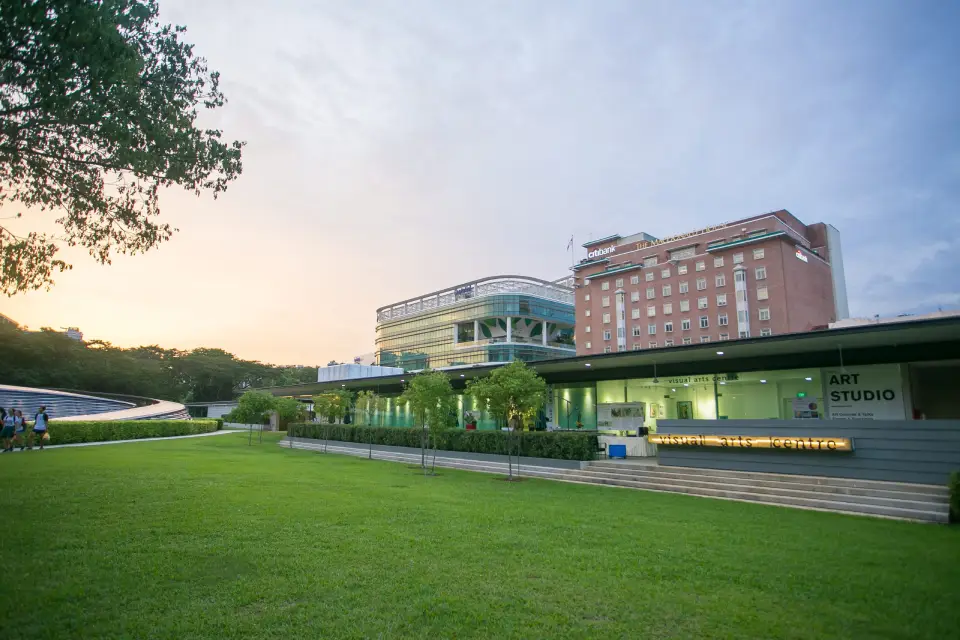
Dhoby Ghaut Art Studio

Address:

10 Penang Road, #01-02 Dhoby Ghaut Green,
Singapore (238469)

Exit from Dhoby Ghaut MRT Station Exit B and turn left, we are there in 30m!

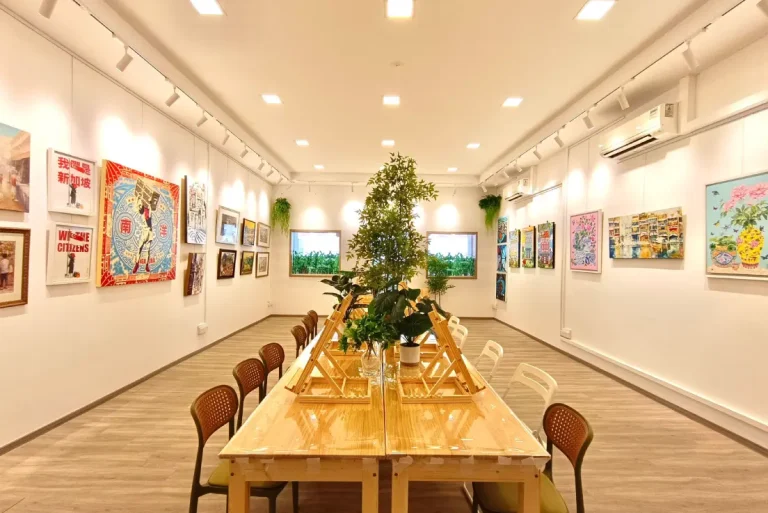
VAC Chinatown Art Gallery & Studio

Address:

20B Mosque Street, Singapore (059500)
*2 minutes walk from Chinatown MRT Station Exit A

Take a left turn upon exiting the Chinatown MRT Station Exit A (Pagoda Street). Turn right to go to Mosque Street. Finally, walk towards 20B, we’re on the 3rd floor of the shophouse.

Enquire With Us on the Professional Manga Drawing & Coloured Illustration Art Course:

Have any questions? Please drop us an enquiry form and we’ll respond to you as soon as we can!

"*" indicates required fields

This field is for validation purposes and should be left unchanged.
Name*
Foundation In Digital Art

Embark on a captivating journey into the vibrant world of digital art! Our Foundation in Digital Art workshop invites budding creatives aged nine and above to unleash their imagination and hone their artistic skills in a dynamic, supportive environment. From mastering basic digital tools to crafting mesmerizing digital masterpieces, children will explore a spectrum of techniques guided by seasoned mentors. Through hands-on activities and interactive sessions, participants will discover the endless possibilities of digital expression while fostering creativity and critical thinking. Join us for an exhilarating adventure where young artists transform ideas into stunning visual realities, igniting a passion for digital art

Colour & Texture Exploration With Acrylic Painting & Collage
Prepare to unleash your inner artist in a kaleidoscope of color and creativity with ‘Colour Blast: Acrylic Painting & Collage Techniques’! Dive into a whirlwind adventure where vibrant hues and mesmerizing textures collide in a symphony of imagination. From mastering the art of seamless color blending to discovering the magic of mixed media collage, this journey is a playground for your artistic soul. With each brushstroke, explore new techniques that breathe life into your canvas, transforming it into a vibrant tapestry of expression. Join us and let your creativity run wild as you embark on this colorful escapade!”
World of Manga [Foundation & Styling]
A manga art workshop for children and teenagers sounds like a fantastic idea! Here’s how you might structure it:
Introduction to Manga: Begin by introducing what manga is, its history, and its influence on popular culture worldwide. Show examples of different manga styles and genres to give participants an overview.
Basic Drawing Techniques: Start with the fundamentals of drawing, such as line work, shapes, and proportions. Provide step-by-step instructions on how to draw basic manga characters, focusing on simple shapes that can be built upon.
Character Design: Move on to character design concepts, including creating unique characters, designing their personalities, and developing backstories. Encourage participants to get creative and think outside the box.
Expression and Emotion: Teach how to convey emotions and expressions through facial expressions, body language, and positioning of characters. This can be a fun and interactive exercise where participants practice drawing various emotions.
Storytelling and Paneling: Explore the basics of storytelling in manga, including paneling techniques, pacing, and layout. Show examples of different panel structures and discuss how they affect the flow of the story.
Inking and Coloring: Introduce participants to inking techniques using pens or markers. You can also cover digital inking for those interested. Then, demonstrate basic coloring techniques using markers, colored pencils, or digital software.
Feedback and Collaboration: Provide opportunities for participants to share their work and receive feedback from their peers and instructors. Encourage collaboration by having them work together on short manga projects or collaborative drawings.
Final Showcase: End the workshop with a showcase of participants’ work. This could be in the form of an exhibition, digital gallery, or printed booklet. Celebrate everyone’s creativity and progress throughout the workshop.
Remember to create a supportive and encouraging environment where participants feel free to express themselves and explore their creativity. And don’t forget to have fun! Manga is all about imagination and passion, so let that spirit shine through in your workshop.
Academy Drawing Traditions
The academy drawing and sketching tradition, rooted in centuries of artistic practice, emphasizes disciplined study of form, proportion, and technique. Originating from Renaissance workshops and formalized by institutions like the Royal Academy, it prioritizes meticulous observation and mastery of fundamental skills. Students progress from basic exercises to complex compositions, learning to depict still life and common objects with precision and expression. This tradition values both classical principles and innovation, encouraging artists to push boundaries while maintaining a deep respect for tradition. Through rigorous training and critique, artists within this tradition cultivate a strong foundation for creative exploration and artistic excellence.
Chinese Ink Painting and Calligraphy
This course on Chinese ink painting and calligraphy introduces young learners to the rich traditions of Chinese art. Through hands-on activities, students explore the basics of brush techniques, ink control, and the delicate art of Chinese script. They learn to appreciate the cultural significance of calligraphy and painting, developing skills in creating elegant strokes and expressive brushwork. The course fosters creativity, patience, and fine motor skills, while also providing insights into Chinese history and aesthetics. By the end, children gain confidence in their artistic abilities and a deeper understanding of Chinese cultural heritage.
Funk with Graffiti
Funk With Graffiti Workshop for children is an engaging and creative program aimed at introducing young artists to the vibrant world of graffiti and funk-inspired street style art. Participants learn the basics of graffiti history, techniques, and safety. Guided by professional graffiti artists, children explore the art of designing their unique tags, emphasizing creativity, expression, and individuality. The workshop includes hands-on activities, from sketching concepts to creating final designs with spray paint on provided surfaces. By the end of the session, children gain confidence in their artistic abilities and an appreciation for graffiti and funk as legitimate forms of street art. Each child completes two original artworks, which they proudly take home, showcasing their newfound skills and personal style.
Batik Tales

In the Batik Introduction Handkerchief Painting workshop, participants will learn the traditional art of batik, a wax-resist dyeing technique originating from Indonesia. The workshop begins with a brief history and overview of batik, highlighting its cultural significance and various techniques. Participants will then observe a demonstration of applying wax with tjanting tools and dyeing the fabric. Following the demonstration, each participant will design and create their own batik handkerchief, applying wax to create patterns and then dyeing their fabric. The workshop concludes with a group discussion, allowing participants to share their creations and reflect on their learning experience.